MODERATOR: Ajit Zacharias\, Senior Scholar\, Levy Institute
SPEAKERS: Jacques Mazier\, Professor\, Universit y of Paris North\, CEPN-CNRS
“Financial Integration and Stabilizati on in a Monetary Union without or with Bank Rationing”
(Powe rPoint presentation in PDF)
Malcolm Sawyer\, Professor\, Un iversity of Leeds
“The Effectiveness of Fiscal Policy in the Stock -flow Levy Model” (PDF)
(PowerPoint presentat ion in PDF)
MODERATOR: Thomas Masterson\, Research Scholar\, Lev y Institute
SPEAKERS: Stephen Kinsella\, Lecturer\, University of Limerick
“Debt-deflation Traps within Small Open Economies: A S tock-flow Consistent Perspective”
Slide presentation (PDF)
Jan Toporowski\, Reader in Economics\, University of London
“The Stock-flow Consistent Appro ach with Active Financial Markets” (PDF)
(PowerPoint presentation in PDF)
SPEAK ER: John Maloney\, Professor\, University of Exeter Business School< br />“Godley\, Cambridge and the Treasury”
Participants
Stephen Kinsella
University of Limeri
ck
Jan Kregel
Levy Economics Institute and Tallinn Techni
cal University
Marc Lavoie
University of Ottawa
Edwin Le Heron
Bordeaux Institute of Political Studies and CED (Ce
ntre Émile Durkheim)
Tiago Mata
Center for the History of
Political Economy\, Duke University
Jacques Mazier
Unive
rsity of Paris North\, CEPN-CNRS
Dimitri B. Papadimitriou
Levy Economics Institute
Malcolm Sawyer
University of Le
eds
Anwar Shaikh
New School for Social Research
Jan Toporowski
School of Oriental and African Studies\, University
of London
L. Randall Wray
Levy Economics Institute and U
niversity of Missouri–Kansas City
Gennaro Zezza
Levy Econ
omics Institute and University of Cassino
Organized by the Levy Economics Institu te of Bard College with support from the Ford Foundation
Levy Ins
titute
Blithewood
Annandale-on-Hudson\, New York
June 18–26\, 2011
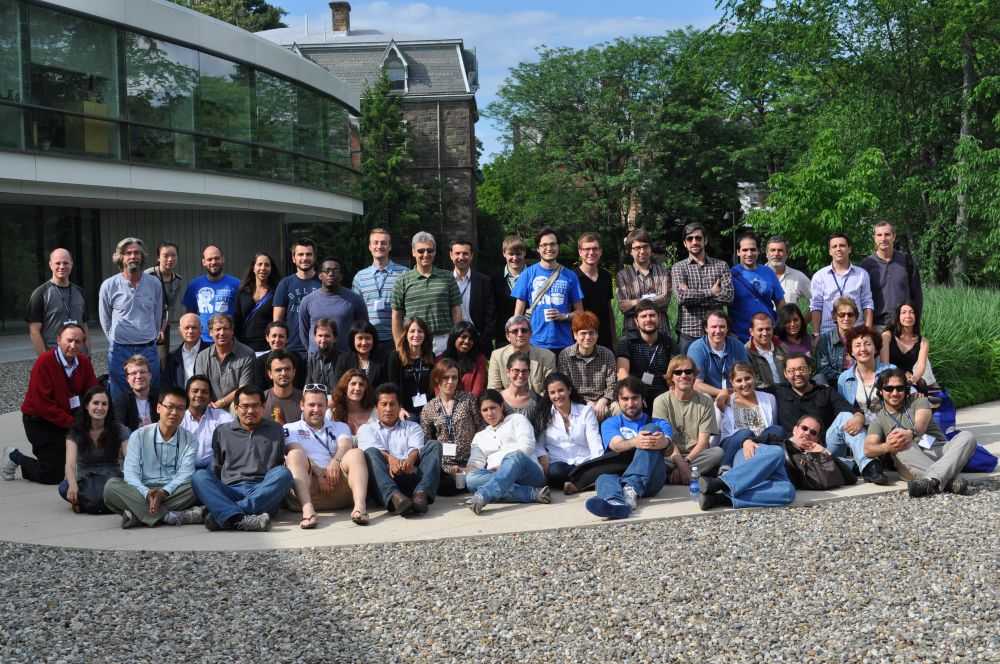
The Levy Economics Institute of Bard College held its second annual Minsky Summer Seminar Jun e 18–26\, 2011\, with 48 students attending. The Seminar provided a rigorou s discussion of both the theoretical and applied aspects of Minsky’s econom ics\, with an examination of meaningful prescriptive policies relevant to t he current economic and financial crisis.
The Summer Seminar is of pa rticular interest to graduate students\, recent graduates\, and those at th e beginning of their academic or professional careers. The program is organ ized by Jan Kregel\, Dimitri B. Papadimitriou\, and L. Randall Wray\, and t he teaching staff includes well-known economists concentrating on and expan ding Minsky's work.
A user name and password are required for the Summer Seminar webpage.
- Participating students may log in to the Summer Seminar webpage by clicking here
LOCATION:Blithewood Manor GEO:42.022548;-73.910724 ORGANIZER;CN="Levy Admin":MAILTO:phpdev@bard.edu URL;VALUE=URI:https://www.levyinstitute.org/events/event/the-hyman-p-minsky -summer-seminar/ END:VEVENT BEGIN:VEVENT UID:20240424T1306Z-1713963963.8194-EO-7250-1@::1 STATUS:CONFIRMED DTSTAMP:20260917T055412Z CREATED:19700101T000000Z LAST-MODIFIED:20260715T183709Z DTSTART;TZID=America/New_York:20110823T000000 DTEND;TZID=America/New_York:20110824T000000 SUMMARY: Why Time Deficits Matter: Policy Implications for Poverty Eradicat ion Strategies DESCRIPTION: A Levy Institute Research Project undertaken with the generous support of the UNDP and ILO Blithewood Annandale-on-Hudson\, New York Augu st 23–24\, 2011 The purpose of this workshop was to discuss...more X-ALT-DESC;FMTTYPE=text/html:
A Levy Institute Research Project undertaken with the generous support of the UNDP and ILO
Annandale-on-Hudson\, New York
August 23–24\, 2011
The purpose of this workshop was to disc uss the estimates of time poverty and time-adjusted income poverty for Arge ntina\, Chile\, and Mexico. Participants discussed data and methods\; issue s in the cross-country comparisons of poverty estimates\; major findings\, emphasizing the ways in which the time-income poverty measure diverges from the standard income-poverty measure for the overall population and for spe cific population subgroups\; policy implications of the findings\; planning for the finalization of the country reports\; and dissemination of the stu dy's findings.
This workshop was the second in an ongoing series. The first\, held in February 2011\, is outlined here.
Tuesday\, August 23\, 2011
| 7:3 0−9:00 a.m. | Breakfast at the hotel |
| 9:00 a.m. | Pickup from hotel and transportation to Blithewood |
| 9:30−10:30 a.m. | Time a
nd Income Poverty: Conceptual Overview and Comparison of Major Findings acr
oss Argentina\, Chile\, and Mexico Ajit Zacharias\, Levy Institute |
| 10:30−11:00 a.m. | Break |
| 11:0 0 a.m. − 12:00 p.m. | Data Issues\, Quality of St
atistical Matching\, and Employment Simulation in the Measurement of Time a
nd Income Poverty Thomas Masterson\, Levy Institute |
| Lunch | |
| 1:30−2:45 p.m. | Argentina Valeria Esquivel\, Instituto de C iencias\, Universidad Nacional de General Sarmiento |
| 2:45−3:15 p.m. | Break< /td> |
| 3:15 p.m.−4:30 p.m. | |
| 4:30−4:45 p.m. | Break |
| 4:45−6:00 p.m. | Mexi
co Mónica E. Orozco Corona\, INMUJERES Armando Sanchez Vargas \, Universidad Nacional Autónoma de México |
| 6:15 p.m. − | Transportation from Bl ithewood to restaurant for dinner |
Wednesday\, August 24
| 9:00 a.m. | Pickup from hotel and transportation to Blithewood |
| 9:15−10:15 a.m. | Income Poverty\, Time Poverty\, and Unpaid Work: Social Prot
ection Regimes in Argentina\, Chile\, and Mexico Rania Antonopoulo s\, Levy Institute |
| < b>10:15−11:15 a.m. | Roundtable All part icipants |
| 11:15−11:30 a.m.< /td> | Break |
| 11:30 a.m. − 12:30 p.m. | Meeting with Countr y Specialist I |
| 12:30−2:00 p.m. | Lunch |
| 2:00−3:00 p.m. | Meeting with Countr y Specialist II |
| 3:00−4:00 p.m. | Meeting with Country Specialist III |
| 4:15 p.m. − | Departure for New York (for those returning to NYC) |
| 6:00 p.m. | D inner (for those returning to NYC the next morning) |
| 10:15–11:45 a.m. | Registration |
| 11:45 a. m. – 1:30 p.m. | Lunch |
| 1:30–2:45 p.m. | Welcome and Introdu
ction: Minsky and the Levy Institute Dimitri B. Papadimitriou< /strong>\, Levy Institute |
| 2:45 –3:15 p.m. | Break |
| 3:15–4:30 p.m. | General Introduction to
Minsky and Financial Fragility L. Randall Wray\, Lev y Institute and University of Missouri–Kansas City |
| 4:30 p.m. – | Welcome Reception |
| Until 7:00 p.m. | Dinner: Kline Commons |
Sunday\, Jun e 17
| 8:30−9:45 a.m. | General Introduction to Minsky and Financial Reform Jan Kregel \, Levy Institute and Tallinn Technical University |
| 9:45−10:15 a.m. | Break |
| 10:15−11:45 a.m. | New Fiscalism Mario Seccareccia\, Canadian Centre for Policy Alternatives and University of Ottawa |
| 11:45 a.m. − 1:30 p.m. | Lunch |
| 1:30−2:45 p.m. | Functional Finance: Old and New Pavlina R. Tcherneva\, Levy Institute |
| 2:45−3:15 p.m.< /td> | Break |
| 3:1 5−4:30 p.m. | Heinz 57 Varieties: Money Manager Capi
talism L. Randall Wray\, Levy Institute and University of Misso uri–Kansas City |
| 4:30p.m. − | Student Activities |
| Until 7:00 p.m. | Dinner: Kline Commons |
Monday\, June 18
| 8:30–9:45 a.m. | Minsky and Modern Money < b>Stephanie A. Kelton\, Levy Institute and University of Missouri–Kansa s City |
| 9:45–10:15 a.m. | Break |
| 10:15– 11:45 a.m. | International Dimensions of Financial F
ragility Jan Kregel\, Levy Institute and Tallinn Technical Univ ersity |
| 11:45 a.m. – 1:30 p.m.< /b> | Lunch |
| 1:30–2:45 p.m. | Minsky and Employment Guarantee Fadhel Kaboub\, Levy Institute and Denison University | 2:45−3:15 p.m. | B reak |
| 3:15−4:30 p.m. | |
| 4:30 p.m. − | Student Activities |
| Until 7:00 p.m. | Dinner: Kline Commons |
Tuesday\, June 19
| 8:30–9:45 a.m. | War
on Poverty Stephanie A. Kelton\, Levy Institute and University of Missouri–Kansas City |
| 9:45– 10:15 a.m. | Break |
| 10:15–11:45 a.m. | Minsky and EU Financi
al Reform Mario Tonveronachi\, Università de Siena |
| 11:45 a.m. – 1:30 p.m. | Lunch |
| 1:30–2:45 p.m. | Veblen\, Minsky\, and Evolutionary Economics John F. Henry\, University of Missouri–Kansas City |
| 2:45−3:15 p.m. | Break |
| 3:15−4:30 p.m. | Panel: Designing ELR Programs Fadhel Kaboub\, Levy Instit ute and Denison University |
| 4:3 0 p.m. − | Student Activities |
| Until 7:00 p.m. | Dinner: Kli ne Commons |
Wednesday\, June 20
| 8:30–9:45 a.m. | Minsky and the
Theory of Asset Market Speculation Frank Veneroso\, Veneroso As sociates\, LLC |
| 9:45–10:15 a.m. | Break |
| < b>10:15–11:45 a.m. | Costing ELR Scott T. Fu llwiler\, Wartburg College |
| 11:45 a.m.–1:00 p.m. | Lunch |
| 1:00–6:30 p.m. | Trip to the Home of Franklin D. Roosevelt and the FDR Presidential Library and Museum\, Hyde Park |
| 6:30 p.m. – | Picnic Supper: Blithewood |
Th ursday\, June 21
| 8:30–9:45 a.m. | Minsky’s Big Bank – Big Government Interpretation of Postw
ar Stability Éric Tymoigne\, Levy Institute and Lewis and Clark College |
| 9:45–10:15 a.m. | Break |
| 10:1 5–11:45 a.m. | Stock-flow Consistent Economic Models
Gennaro Zezza\, Levy Institute and Università di Cassino | <
/tr>
| 11:45 a.m. – 1:30 p.m. | Lunch |
| 1:30−2:45 p .m. | Minsky–Godley and the Financial Balances Appro
ach Robert W. Parenteau\, Levy Institute and MacroStrategy Edge |
| 2:45−3:15 p.m. | Break |
| 3:15−4:30 p.m . | Minsky’s “Two Price” Theory Éric Tymoign e\, Levy Institute and Lewis and Clark College |
| 4:30 p.m. − | Stock-flow Lab |
| Until 7:00 p.m. | Dinner: Kline Commons |
Friday\, June 2 2
| 8:30–9:45 a.m. | Special Lecture |
| 9:45−10:15 a .m. | Break |
| 10:15−11:45 a.m. | Minsky’s Theory of Consumpti
on Steven M. Fazzari\, Levy Institute and Washington University –St. Louis |
| 11:45 a.m. − 1:30 p .m. | Lunch |
| 1:30−2:45 p.m. | Minsky–Godley and the Levy Mod el |
| 2:45−3:15 p.m. | Break |
| 3:15−4:30 p .m. | Central Bank Operations Scott T. Fullw iler\, Wartburg College |
| 4: 30 p.m. − | Stock-flow Lab |
| Until 7:00 p.m. | Dinner: Kline Commons |
Saturday\, June 23
| 8:30–9:45 a.m. | Levy Forecast Dimitri B. Papadimitriou\, Levy Institute |
| 9:45−10:15 a.m. | Break |
| 10:15–11:45 a.m. | Low-cost Housing and the Mortgage Crisis Gary A. Dymski\, Un iversity of California\, Riverside |
| 11:45 a.m. – 1:30 p.m. | Lunch |
| 1:30–2:45 p.m. | Minsky
and the Theory of Investment Steven M. Fazzari\, Levy Institut e and Washington University–St. Louis |
| 2:45–3:15 p.m. | Break |
| 3:15–4:30 p.m. | Panel: Mins
ky and Systemic Reform Jan Kregel\, Levy Institute and Tallinn Technical University Mario Tonveronachi\, Universitá de SienaÉric Tymoigne\, Levy Institute and Lewis and Clark College Gary A. Dymski\, University of California\, Riverside |
| Stock-f low Lab | |
| Until 7:00 p.m. | Dinner |
Sunday\, June 24
| 8:30–9:45 a.m. | Com
munity Development Banks Gary A. Dymski\, University of Califor nia\, Riverside |
| 9:45−10:15 a.m . | Break |
| 10:15−11:45 a.m. | Instability and the Single Cur
rency Robert W. Parenteau\, Levy Institute and MacroStrategy Ed ge |
| 11:45 a.m. − 1:30 p.m.< /td> | Lunch |
| 1:3 0−2:45 p.m. | Canadian Bank Regulation: More Lucky t
han Good? Marshall Auerback\, Levy Institute and Economists for Peace and Security |
| 2:45−3:15 p.m. | Break |
| 3:15−4:30 p.m. | Panel: Global Economic Outloo
k Frank Veneroso\, Veneroso Associates\, LLC Marshall A uerback\, Levy Institute and Economists for Peace and Security Robert W. Parenteau\, Levy Institute and MacroStrategy Edge Dim itri B. Papadimitriou\, Levy Institute |
| 4:30 p.m. − | Closure |
| 7:00 p.m. | Closing Dinn
er: Blithewood Speaker: Paul A. McCulley\, Society of Fellows\, Global Interdependence Center\; formerly\, PIMCO |
LOCATION:Blithewood Manor GEO:42.022548;-73.910724 ORGANIZER;CN="Levy Admin":MAILTO:phpdev@bard.edu URL;VALUE=URI:https://www.levyinstitute.org/events/event/the-hyman-p-minsky -summer-seminar-3/ END:VEVENT BEGIN:VEVENT UID:20240424T1306Z-1713963963.8352-EO-7255-1@::1 STATUS:CONFIRMED DTSTAMP:20260917T055412Z CREATED:19700101T000000Z LAST-MODIFIED:20260715T182907Z DTSTART;TZID=America/New_York:20121126T000000 DTEND;TZID=America/New_York:20121127T000000 SUMMARY: Hyman P. Minsky Conference on Financial Instability\,Berlin\, Germ any DESCRIPTION: Debt\, Deficits\, and Unstable Markets Organized by the Levy E conomics Institute and ECLA of Bard with support from the Ford Foundation\, The German Marshall Fund of the United States\, and...more X-ALT-DESC;FMTTYPE=text/html:
Debt\, Deficits\, and Unstable Markets
Organized by the Levy Economics Institute and ECLA of Bard with sup port from the Ford Foundation\, The German Marshall Fund of the United Stat es\, and Deutsche Bank AG
Deutsche Bank AG
U
nter den Linden 13–15
Frederick Hall\, Fourth Floor
November 26–27\, 2012
The purpos e of this conference is to gain a better understanding of the causes of fin ancial instability and its implications for the global economy. A key motiv ation is the challenge to global growth affected by the eurozone debt crisi s\; the impact of the credit crunch on economic and financial markets\; the larger implications of government deficits and the debt crisis for US\, Eu ropean\, and Asian economic policy\; and central bank independence and fina ncial reform.
Click here for the conference procee dings.
Organized by the Athens Development and Governance Institute and the Levy Economics Institute of Bard College< /p>
Athinais Cultural Centre
Athens\, Greece
March 8–9\, 2013< /p>
This two-day forum drew academics\, journalists\, and policymake rs from throughout the United States and the European Union (EU). Topics in cluded postcrisis challenges and policy choices in the EU\; national strate gic and security challenges in southeast Europe and the eastern Mediterrane an\; democratic governance\, accountability\, and social oversight\; sustai nable development\; social cohesion\; and prerequisites and priorities for social change.
To view the events program\, click her e.
LOCATION:Blithewood Manor GEO:42.022548;-73.910724 ORGANIZER;CN="Levy Admin":MAILTO:phpdev@bard.edu URL;VALUE=URI:https://www.levyinstitute.org/events/event/exiting-the-crisis -the-challenge-of-an-alternative-policy-road-map/ END:VEVENT BEGIN:VEVENT UID:20240424T1306Z-1713963963.8433-EO-7258-1@::1 STATUS:CONFIRMED DTSTAMP:20260917T055412Z CREATED:19700101T000000Z LAST-MODIFIED:20260715T183708Z DTSTART;TZID=America/New_York:20130411T000000 DTEND;TZID=America/New_York:20130411T000000 SUMMARY: Lecture by Nicos Christodoulakis\, Former Greek Economics and Fina nce Minister DESCRIPTION: Presented by the Bard College Economics Program and the Levy E conomics Institute Weis Cinema\, Bard College April 11\, 2013\, 4 p.m. Nico s Christodoulakis was the Greek Minister of the Economy and Finance...more X-ALT-DESC;FMTTYPE=text/html:
Presented by the Bard College Economics Program and the Levy Economics Institute
Weis Cinema\, Bard College
April 11 \, 2013\, 4 p.m.
Nicos Christodoulakis was the Greek Ministe r of the Economy and Finance from 2001 to 2004 and a member of the Greek Pa rliament from 1999 to 2007. He is currently professor of economics at the A thens University of Economics and Business\, and a research associate at LS E\, Hellenic Observatory. While Minister of the Economy and Finance\, Chris todoulakis was chairman of the Economic and Financial Affairs Council (ECOF IN) during Greece’s presidency of the Council of the European Union. He als o chaired Eurogroup\, where he particpated in international meetings with t he G7\, IMF\, and World Bank. He was previously Minister for Development\, with responsibility for Greece’s energy\, industry\, trade\, tourism\, and research sectors. He is a regular speaker at international economic and fin ancial conferences
This talk is part of the ongoing Economics Seminar Series\, which is dedicated to facilitating the exchange of econom ic ideas within the greater Bard community.
LOCATION:Blithewood Manor GEO:42.022548;-73.910724 ORGANIZER;CN="Levy Admin":MAILTO:phpdev@bard.edu URL;VALUE=URI:https://www.levyinstitute.org/events/event/lecture-by-nicos-c hristodoulakis-former-greek-economics-and-finance-minister/ END:VEVENT BEGIN:VEVENT UID:20240424T1306Z-1713963963.8464-EO-7256-1@::1 STATUS:CONFIRMED DTSTAMP:20260917T055412Z CREATED:19700101T000000Z LAST-MODIFIED:20260715T183708Z DTSTART;TZID=America/New_York:20130417T000000 DTEND;TZID=America/New_York:20130419T000000 SUMMARY: 22nd Annual Hyman P. Minsky Conference: Building a Financial Struc ture for a More Stable and Equitable Economy DESCRIPTION: A conference organized by the Levy Economics Institute of Bard College with support from the Ford Foundation Ford Foundation New York Cit y April 17–19\, 2013 In 2008–09\, the world experienced...more X-ALT-DESC;FMTTYPE=text/html:A conference organized by the Levy Econ omics Institute of Bard College with support from the Ford Foundation
Ford Foundation
New York City
April 17–19\, 2013
In 2 008–09\, the world experienced its worst financial and economic crisis sinc e the Great Depression. Global employment and output collapsed\, and an est imated 84 million people fell into extreme poverty. Given the fragility and uneven progress of the economic recovery\, social conditions are expected to improve only slowly. Meanwhile\, austerity measures in response to high government debt in some of the advanced economies are making the recovery e ven more uncertain.
It’s time to put global finance back in its prope r place as a tool to achieving sustainable development. This means substant ial downsizing\, careful reregulation\, universal social protections\, and an active\, permanent employment-creation program. Therefore\, the 2013 Min sky Conference will address both financial reform and poverty in the contex t of Minsky’s work on financial instability and his proposal for a public j ob guarantee. Panels will focus on the design of a new\, more robust\, and stable financial architecture\; fiscal austerity and the sustainability of the US economic recovery\; central bank independence and financial reform\; the larger implications of the eurozone debt crisis for the global economi c system\; improving governance of the social safety net\; the institutiona l shape of the future financial system\; strategies for promoting poverty e radication and an inclusive economy\; sustainable development and market tr ansformation\; time poverty and the gender pay gap\; and policy and regulat ory challenges for emerging-market economies.
LOCATION:Blithewood Manor GEO:42.022548;-73.910724 ORGANIZER;CN="Levy Admin":MAILTO:phpdev@bard.edu URL;VALUE=URI:https://www.levyinstitute.org/events/event/22nd-annual-hyman- p-minsky-conference-building-a-financial-structure-for-a-more-stable-and-eq uitable-economy/ END:VEVENT BEGIN:VEVENT UID:20240424T1306Z-1713963963.85-EO-7259-1@::1 STATUS:CONFIRMED DTSTAMP:20260917T055412Z CREATED:19700101T000000Z LAST-MODIFIED:20260715T183707Z DTSTART;TZID=America/New_York:20130505T000000 DTEND;TZID=America/New_York:20130505T000000 SUMMARY: What Economists Can Learn from Human Rights Law DESCRIPTION: Presented by the Bard College Economics Program and the Levy E conomics Institute Room 102\, Hegeman Hall\, Bard College May 5\, 2013\, 4: 45 p.m. Philip L. Harvey is professor of law and...more X-ALT-DESC;FMTTYPE=text/html:Room 102\, He geman Hall\, Bard College
May 5\, 2013\, 4:45 p.m.
Philip L. Harvey is professor of law and economics at Rutgers Sch ool of Law\, where he teaches Contracts\, Labor and Employment Law\, Law an d Economics\, and Social Welfare Law and Policy. Harvey’s research focuses on public policy options for securing economic and social human rights\, wi th a particular emphasis on the right to work. He received his BA from Yale University\, his Ph.D. in economics from the New School for Social Researc h\, and his JD from Yale Law School. After clerking for the Hon. Robert L. Carter in the Southern District of New York\, he worked as a litigation ass ociate specializing in employment disputes at the New York firm of Debevois e and Plimpton. He has been a visiting scholar at the Russell Sage Foundati on and a visiting professor of law and economics at the Yale School of Orga nization and Management\, and was the first Joanne Woodward Professor of Pu blic Policy at Sarah Lawrence College.
This talk is part of t he ongoing Economics Seminar Series\, which is dedicated to facilitating th e exchange of economic ideas within the greater Bard community.
LOCATION:Blithewood Manor GEO:42.022548;-73.910724 ORGANIZER;CN="Levy Admin":MAILTO:phpdev@bard.edu URL;VALUE=URI:https://www.levyinstitute.org/events/event/what-economists-ca n-learn-from-human-rights-law/ END:VEVENT BEGIN:VEVENT UID:20240424T1306Z-1713963963.8531-EO-7254-1@::1 STATUS:CONFIRMED DTSTAMP:20260917T055412Z CREATED:19700101T000000Z LAST-MODIFIED:20260715T183707Z DTSTART;TZID=America/New_York:20130614T000000 DTEND;TZID=America/New_York:20130622T000000 SUMMARY: The Hyman P. Minsky Summer Seminar DESCRIPTION: Organized by the Levy Economics Institute of Bard College with support from the Ford Foundation Levy Institute Blithewood Annandale-on-Hu dson\, New York June 14–22\, 2013 The Levy Economics Institute of...more X-ALT-DESC;FMTTYPE=text/html:
Organized by the Levy Economics Institu te of Bard College with support from the Ford Foundation
Levy
Institute
Blithewood
Annandale-on-Hudson\, New York
Jun e 14–22\, 2013
The Levy Economics Institute of Bard College h eld its fourth annual Hyman P. Minsky Summer Seminar in June\, with 55 stud ents participating. The Seminar provided a rigorous discussion of both the theoretical and the applied aspects of Minsky’s economics\, with an examina tion of meaningful prescriptive policies relevant to the current economic a nd financial crisis.
The Summer Seminar is of particular interest to graduate students\, recent graduates\, and those at the beginning of their academic or professional career. The program is organized by Jan Kregel\, Dimitri B. Papadimitriou\, and L. Randall Wray\, and the teaching staff inc ludes well-known economists concentrating on and expanding Minsky’s work.
A user name and password are required for the Summer S eminar webpage. Participating students may log in to the S ummer Seminar webpage by clicking he re.
Hyman P. Minsky Summer Seminar 2013 Program
Schedule
Friday\, June 14
Dimitri B. Papadimit riou\, Levy Institute
L. Ra ndall Wray\, Levy Institute and University of Missouri–Kansas City
Saturday\, June 15
| 8:30−9: 45 a.m. | General Introduction to Minsky and Fi
nancial Reform Jan Kregel\, Levy Institute and Tallin n University of Technology |
| Break | |
| 10:15−11:45 a.m. | Veblen\, Minsky\, and Evolutionary Economics John F. Henry\, University of Missouri–Kansas City |
| 11:45 a.m. − 1:30 p.m. | Lun ch\, Manor Café |
| 1:30−2:45 p.m. | Functional Finance: Old and New |
| 2:45−3:15 p.m. | Break |
| 3:15−4: 30 p.m. | Minsky and Modern Money L. Randall Wray\, Levy Institute and University of Missouri–Kansas City |
| 4:30−5:30 p.m. | Student Activities |
| 5:30−7:00 p.m. | Dinner\, M anor Café |
Sunday\, June 16
| 8:30−9:45 a.m. | Central B
ank Operations Scott T. Fullwiler\, Wartburg College< /td> |
| 9:45−10:15 a.m.< /td> | Break |
| International Dimensions o
f Financial Fragility Jan Kregel\, Levy Institute and Tallinn University of Technology | |
| 11:45 a.m. − 1:30 p.m. | Lunch\, Manor Café |
| 1:30−2:45 p.m. | Minsky and EU Financial Reform Mario Tonveronachi\, Università de Siena |
| 2:45−3:15 p.m. | Break |
| 3:15−4:30 p.m. | < td valign="top">Heinz 57 Varieties: Money Manager Capitalism|
| 4:30−5:30 p.m. | Student Activities |
| Dinner\, Manor Café |
Monday\, June 17
| < strong>8:30−9:45 a.m. | Minsky and Employment G
uarantee Fadhel Kaboub\, Levy Institute and Denison U niversity |
| 9:45−10:15 a.m. | Break |
| 10:15−11:45 a.m. | Green Jobs and G
uaranteed Employment Mathew Forstater\, Levy Institut e and Center for Full Employment and Price Stability\, University of Missou ri–Kansas City |
| 11:45 a.m. − 1:30 p.m. | Lunch\, Manor Café |
| 1:30−2:45 p.m. | Costing ELR Scott T. Fullwiler\, Wartburg Coll ege |
| 2:45−3:15 p.m. | Break |
| Panel: Designing ELR Prog
rams Rania Antonopoulos\, Levy Institute Fadhel Kaboub\, Levy Institute and Denison University | 4:30−5:30 p.m. | Student Activities |
| Dinner\, Manor Café |
Tuesday\, June 18
| Minsky’s “Two Price” Theo
ry Éric Tymoigne\, Levy Institute and Lewis and Clark College | |
| 9:45−10:15 a.m.< /strong> | Break |
| 10:15−11:45 a.m. | Minsky–Godley and
the Levy Model Gennaro Zezza\, Levy Institute and Un iversità di Cassino |
| 11:45 a.m. − 1:00 p.m. | Lunch\, Manor Café |
| 1:00 p.m. | Departure for Franklin D. Roosevelt National Site |
| 6:00 p.m. | Pic nic Supper at Blithewood |
Wednesday\, June 19
| 8:30−9:45 a.m. | Minsky–Godley and the Financial Balances Approach Mar c Lavoie\, University of Ottawa |
| 9:45−10:15 a.m. | Break |
| 10:15−11:45 a.m. | |
| 11:45 a.m. − 1:30 p.m. | |
| 1:30−2:45 p.m. | Stock-flow Consistent
Economic Models Marc Lavoie\, University of Ottawa |
| 2:45−3:15 p.m. | Break |
| 3:15−4:30 p.m. | Introduction to Stock-flow Lab
Gennaro Zezza\, Levy Institute and Università di Cas sino |
| 4:30−6:00 p.m. | Stock-flow Lab\, Henderson Computer Center |
| 6:00−7:00 p.m. | Dinner\, Manor Café |
Thursday\, Ju ne 20
| 8:30−9:45 a.m. | < td valign="top">Eastern European Internal Adjustment: Estonia|
| 9:45−10:15 a.m. | Break |
| 10:15−11:45 a.m . | Rethinking Fiscal Policy Pavli na Tcherneva\, Levy Institute and Bard College |
| 11:45 a.m. − 1:30 p.m. | Lunch\, Manor Café |
| Minsky and the Theory of In
vestment Steven M. Fazzari\, Levy Institute and Washi ngton University–St. Louis | |
| Break | |
| 3:15−4:30 p.m. | Lo
w-cost Housing and the Mortgage Crisis Gary A. Dymski \, School of Business and Economics\, University of Leeds |
| 4:30−6:00 p.m. | Stock-flow Lab\, Henderson Computer Center |
| 6:00−7:00 p.m. | Dinner\, Manor Café |
Friday\, June 21
| 8:30−9:45 a.m. | Minsky’s
Theory of Consumption Steven M. Fazzari\, Levy Insti tute and Washington University–St. Louis |
| 9:45−10:15 a.m. | Break |
| 10:15−11:45 a.m. | |
| 11:45 a.m. − 1:30 p.m. | Lunch\, Manor Café |
| 1:30−2:45 p.m. | Greece: T
he Euro and the Sovereign Debt Crisis Dimitri B. Papadimitriou \, Levy Institute Gennaro Zezza\, Levy Insti tute and Università di Cassino |
| Break | |
| 3:15−4:30 p.m. | Panel: Minsky and Systemic Regulatory Reform Jan Kregel\, Levy Institute and Tallinn University of Technology Mar io Tonveronachi\, Università de Siena L. Randall Wray \, Levy Institute and University of Missouri–Kansas City |
| 4:30−6:00 p.m. | Stock-flow Lab\, Henderson Computer Center |
| 6:00−7:00 p.m. | D inner\, Manor Café |
Saturday\, June 22
Frank Veneroso\, Veneroso Associates\, LLC
Leonardo Burlamaqui\, Program Officer\, Ford Foundation
Dimitri B. Papadimitriou\, Levy Institute
Dimitri B. Papadimitriou\, Levy Institut e
Frank Veneroso\, Veneroso Associates\, LLC
S peaker: Paul A. McCulley\, Society of Fellows\, Global Int erdependence Center\; formerly\, Managing Director\, PIMCO
LOCATION:Blithewood Manor GEO:42.022548;-73.910724 ORGANIZER;CN="Levy Admin":MAILTO:phpdev@bard.edu URL;VALUE=URI:https://www.levyinstitute.org/events/event/the-hyman-p-minsky -summer-seminar-4/ END:VEVENT BEGIN:VEVENT UID:20240424T1306Z-1713963963.8559-EO-7260-1@::1 STATUS:CONFIRMED DTSTAMP:20260917T055412Z CREATED:19700101T000000Z LAST-MODIFIED:20260715T182805Z DTSTART;TZID=America/New_York:20130926T000000 DTEND;TZID=America/New_York:20130927T000000 SUMMARY: Financial Governance after the Crisis\,Rio de Janeiro\, Brazil DESCRIPTION: Cosponsored by the Levy Economics Institute of Bard College an d MINDS – Multidisciplinary Institute for Development and Strategies\, with support from the Ford Foundation Everest Rio Hotel Rio de Janeiro\,...more X-ALT-DESC;FMTTYPE=text/html:
Cosponsored by the Levy Economics Insti tute of Bard College and MINDS – Multidisciplinary Institute for Developmen t and Strategies\, with support from the Ford Foundation
Evere
st Rio Hotel
Rio de Janeiro\, Brazil
September 26–27\, 2013
This conference is organized as part of the Levy Institute’s global re search agenda and in conjunction with the Ford Foundation Project on Financ ial Instability\, which draws on Hyman Minsky's extensive work on the struc ture of financial governance and the role of the state.
Among the key topics the conference will address are: designing a financial structure to promote investment in emerging markets\; the challenges to global growth p osed by continuing austerity measures\; the impact of the credit crunch on economic and financial markets\; and the larger effects of tight fiscal pol icy as it relates to the United States\, the eurozone\, and the BRIC countr ies.
LOCATION:Everest Rio Hotel GEO:-22.985489;-43.207556 ORGANIZER;CN="Levy Admin":MAILTO:phpdev@bard.edu URL;VALUE=URI:https://www.levyinstitute.org/events/event/financial-governan ce-after-the-crisisrio-de-janeiro-brazil/ END:VEVENT BEGIN:VEVENT UID:20240424T1306Z-1713963963.8594-EO-7261-1@::1 STATUS:CONFIRMED DTSTAMP:20260917T055412Z CREATED:19700101T000000Z LAST-MODIFIED:20260715T182640Z DTSTART;TZID=America/New_York:20131108T000000 DTEND;TZID=America/New_York:20131109T000000 SUMMARY: The Eurozone Crisis\, Greece\, and the Experience of Austerity\,At hens\, Greece DESCRIPTION: Organized by the Levy Economics Institute of Bard College with support from the Ford Foundation November 8–9\, 2013 Megaron Athens Intern ational Conference Centre This conference was organized as part of...more X-ALT-DESC;FMTTYPE=text/html:Organized by the Levy Economics Institu
te of Bard College with support from the Ford Foundation
November 8–9\, 2013
Megaron Athens International Conference Centre
This conference was organized as part of the Levy Institute’s intern ational research agenda and in conjunction with the Ford Foundation Project on Financial Instability\, which draws on Hyman Minsky's extensive work on the structure of financial systems to ensure stability and the role of gov ernment in achieving a growing and equitable economy.
Among the key t opics addressed: the challenges to global growth and employment posed by th e continuing eurozone debt crisis\; the impact of austerity on output and e mployment\; the ramifications of the credit crunch for economic and financi al markets\; the larger implications of government deficits and debt crises for US and European economic policies\; and central bank independence and financial reform.
For video\, click here.
LOCATION:Megaron Athens International Conference Centre GEO:40.712728;-74.006015 ORGANIZER;CN="Levy Admin":MAILTO:phpdev@bard.edu URL;VALUE=URI:https://www.levyinstitute.org/events/event/the-eurozone-crisi s-greece-and-the-experience-of-austerityathens-greece/ END:VEVENT BEGIN:VEVENT UID:20240424T1306Z-1713963963.8624-EO-7271-1@::1 STATUS:CONFIRMED DTSTAMP:20260917T055412Z CREATED:19700101T000000Z LAST-MODIFIED:20260715T183707Z DTSTART;TZID=America/New_York:20131125T000000 DTEND;TZID=America/New_York:20131125T000000 SUMMARY: Rania Antonopoulos: Responding to the Unemployment Crisis in Greec e DESCRIPTION: Presented as part of the MMx seminar “The Disparate Impact of Unemployment: Macroeconomic Policy as a Tool for Race\, Gender\, and Age Di scrimination\,” hosted by the Modern Money Network Columbia...more X-ALT-DESC;FMTTYPE=text/html:Presented as part of the MMx
seminar “The Disparate Impact of Unemployment: Macroeconomic Policy as a To
ol for Race\, Gender\, and Age Discrimination\,” hosted by the Modern Money
Network
November 25\, 2013
Rania Antonopoulos \, senior scholar and director of the Levy Institute’s Gender Equality and the Economy program\, outlines her proposal for an employer-of-last-resort program in Greece.
LOCATION:Blithewood Manor GEO:42.022548;-73.910724 ORGANIZER;CN="Levy Admin":MAILTO:phpdev@bard.edu URL;VALUE=URI:https://www.levyinstitute.org/events/event/rania-antonopoulos -responding-to-the-unemployment-crisis-in-greece/ END:VEVENT BEGIN:VEVENT UID:20240424T1306Z-1713963963.8661-EO-7265-1@::1 STATUS:CONFIRMED DTSTAMP:20260917T055412Z CREATED:19700101T000000Z LAST-MODIFIED:20260715T183707Z DTSTART;TZID=America/New_York:20140311T000000 DTEND;TZID=America/New_York:20140311T000000 SUMMARY: Employer of Last Resort: Growth and Fiscal Effects DESCRIPTION: Organized by the Observatory on Economic and Social Developmen ts\, Labour Institute\, Greek General Confederation of Labour\, Athens (INE -GSEE) Park Hotel Athens\, Greece March 11\, 2014 For the event program\, ...more X-ALT-DESC;FMTTYPE=text/html:
Organized by the Observatory on Economi c and Social Developments\, Labour Institute\, Greek General Confederation of Labour\, Athens (INE-GSEE)
Park Hotel
Athens\,
Greece
March 11\, 2014
For the event program\, click here.
LOCATION:Blithewood Manor GEO:42.022548;-73.910724 ORGANIZER;CN="Levy Admin":MAILTO:phpdev@bard.edu URL;VALUE=URI:https://www.levyinstitute.org/events/event/employer-of-last-r esort-growth-and-fiscal-effects/ END:VEVENT BEGIN:VEVENT UID:20240424T1306Z-1713963963.8695-EO-7263-1@::1 STATUS:CONFIRMED DTSTAMP:20260917T055412Z CREATED:19700101T000000Z LAST-MODIFIED:20260715T183706Z DTSTART;TZID=America/New_York:20140409T000000 DTEND;TZID=America/New_York:20140410T000000 SUMMARY: 23rd Annual Hyman P. Minsky Conference DESCRIPTION: The National Press Club Washington\, D.C. April 9–10\, 2014 Or ganized by the Levy Economics Institute with support from the Ford Foundati on Click here for video. Despite the appearance of greater...more X-ALT-DESC;FMTTYPE=text/html:The National Press Club
Washi
ngton\, D.C.
April 9–10\, 2014Organized by the Levy Economics Institute with support from the Ford
Foundation
Click here for video.
Despite the appearance of greater stability in t he US financial system since the 2008–09 global recession\, the economic re covery remains fragile and uneven\, and social conditions are expected to i mprove even more slowly. In Europe\, the introduction of fiscal austerity t o deal with the high government debt produced by crisis response measures h as worsened the prospects for recovery in many countries—prospects that are unlikely to improve for years to come. Further\, decoupling of the Asian a nd emerging-market economies has failed to materialize\; these countries ar e also suffering from the sluggish recovery in the developed economies.
In this context of global uncertainty\, with growth and employment well below normal levels\, the 2014 Minsky Conference addressed both financial r eform and prosperity\, drawing from Minsky’s work on financial instability and his proposal for achieving full employment. Panels focused on the desig n of a new\, more robust\, and stable financial architecture\; fiscal auste rity and the sustainability of the US and European economic recovery\; cent ral bank independence and financial reform\; the larger implications of the eurozone debt crisis for the global economic system\; the impact of the re turn to more traditional US monetary policy on emerging markets and develop ing economies\; improving governance of the social safety net\; the institu tional shape of the future financial system\; strategies for promoting an i nclusive economy and more equitable income distribution\; and regulatory ch allenges for emerging-market economies.
Some of the issues addressed by the conference's keynote speakers included the longer-term challenges fo r the American economy\, US monetary policy and goals\, the financial cycle and real convergence in the euro area\, the return of the Great Moderation \, reform of the financial system\, and policies aimed at achieving sustain able growth and full employment.
LOCATION:Blithewood Manor GEO:42.022548;-73.910724 ORGANIZER;CN="Levy Admin":MAILTO:phpdev@bard.edu URL;VALUE=URI:https://www.levyinstitute.org/events/event/23rd-annual-hyman- p-minsky-conference/ END:VEVENT BEGIN:VEVENT UID:20240424T1306Z-1713963963.8732-EO-7266-1@::1 STATUS:CONFIRMED DTSTAMP:20260917T055412Z CREATED:19700101T000000Z LAST-MODIFIED:20260715T183706Z DTSTART;TZID=America/New_York:20140416T000000 DTEND;TZID=America/New_York:20140416T000000 SUMMARY: Lecture by Nicos Christodoulakis\, Former Greek Economics and Fina nce Minister DESCRIPTION: Presented by the Bard College Economics Program and the Levy E conomics Institute Reem-Kayden Center Laszlo Z. Bito ’60 Auditorium\, Bard College April 16\, 2014\, 4:30 p.m. From 1996 to 2004\,...more X-ALT-DESC;FMTTYPE=text/html:Presented by the Bard College Economics Program and the Levy Economics Institute
Reem-Kayden Center Lasz
lo Z. Bito ’60 Auditorium\, Bard College
April 16\, 2014\, 4:30 p.m.
From 1996 to 2004\, Nicos Christodoulakis was successively deputy mini ster of finance\, minister for industry and energy\, and minister of the ec onomy and finance in Greece. He was chairman of the Economic and Financial Affairs Council (ECOFIN) during Greece’s presidency of the Council of the E uropean Union in 2002–03 and also chaired the Eurogroup\, where he particpa ted in international meetings with the G7\, International Monetary Fund\, a nd World Bank. From 1999 to 2007\, Christodoulakis served as a member of th e Greek Parliament with the PASOK party. He is currently professor of econo mic analysis at the Athens University of Economics and Business and a resea rch associate at LSE\, Hellenic Observatory\, having previously taught at t he University of Cyprus and Charles University\, Prague.
During his l ong and distinguished career in academia and public service\, Christodoulak is has published a number of books and articles on economic policy and econ omic crises during his long and distinguished career. His most recent books include Can the Titanic Be Saved? From the Memorandum\, Back to Growth (2011) and Economic Theories and Crises: The Cycle of Rationality and Folly (2012).
This talk is part of the ongoing Economics Seminar Series\, which is dedicated to facilitating the exchange of econom ic ideas within the greater Bard community.
LOCATION:Blithewood Manor GEO:42.022548;-73.910724 ORGANIZER;CN="Levy Admin":MAILTO:phpdev@bard.edu URL;VALUE=URI:https://www.levyinstitute.org/events/event/lecture-by-nicos-c hristodoulakis-former-greek-economics-and-finance-minister-2/ END:VEVENT BEGIN:VEVENT UID:20240424T1306Z-1713963963.8775-EO-7262-1@::1 STATUS:CONFIRMED DTSTAMP:20260917T055412Z CREATED:19700101T000000Z LAST-MODIFIED:20260715T183222Z DTSTART;TZID=America/New_York:20140613T000000 DTEND;TZID=America/New_York:20140621T000000 SUMMARY: The Hyman P. Minsky Summer Seminar DESCRIPTION: Organized by the Levy Economics Institute of Bard College with support from the Ford Foundation Levy Institute Blithewood Annandale-on-Hu dson\, New York June 13–21\, 2014 The fifth annual Minsky Summer Seminar... more X-ALT-DESC;FMTTYPE=text/html:Organized by the Levy Economics Institu te of Bard College with support from the Ford Foundation
Levy
Institute
Blithewood
Annandale-on-Hudson\, New York
Jun e 13–21\, 2014
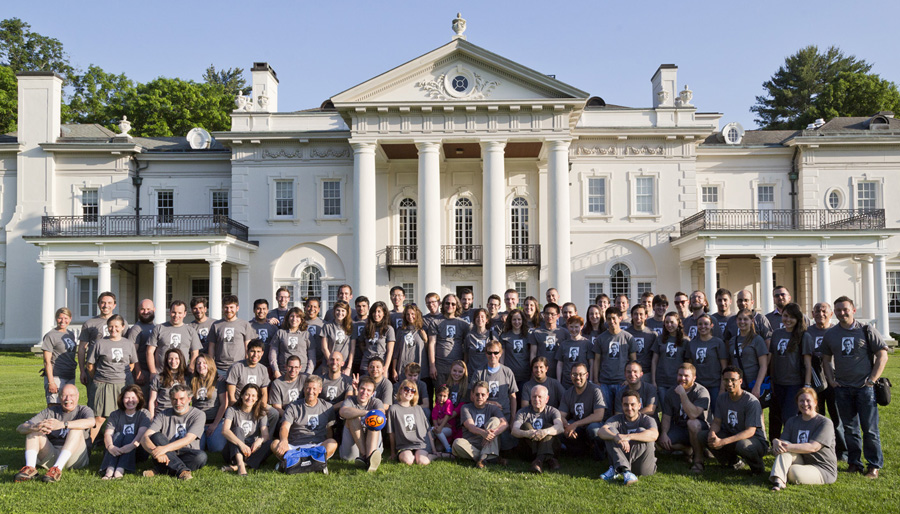
The fifth annual Minsky Summer Semina r was held at the Levy Economics Institute in June\, with 59 students parti cipating. The Summer Seminar provides a rigorous discussion of both the the oretical and the applied aspects of Minsky’s economics\, with an examinatio n of meaningful prescriptive policies relevant to the current economic and financial crisis. Organized by Jan Kregel\, Dimitri B. Papadimitriou\, and L. Randall Wray\, the Seminar program is geared toward graduate students an d those at the beginning of their academic or professional careers. The tea ching staff includes well-known economists concentrating on and expanding M insky’s work.
A user name and password are required for the S ummer Seminar webpage. Participating students may log in to the Summer Semi nar webpage by clicking here.
Schedule
Friday\, June 13
| Breakfast: Kline Commons | |
| 10:45 a.m. − 12:00 p.m. | Registration at Reem-Kayden Center for Science and Computation |
| 11:30 a.m . −1:30 p.m. | Lunch: Kline Commons | 1:30−2:45 p.m. | Welcome and Introduction: Minsky and the Levy Institute |
| 2:45−3:15 p.m. | B reak |
| 3:15−4:30 p.m. | General Introduction to Minsky’s Approach to Finan
cial Macroeconomics L. Randall Wray\, Levy Institute and University of Missouri–Kansas City |
| 4:30 p.m. — | Welcome Reception a t Reem-Kayden Center for Science and Computation |
| 5:30−7:00 p.m. | Dinner : Kline Commons |
Saturday\, June 14
| 7:30−9:00 a.m. | B reakfast: Kline Commons |
| 9 :00−10:15 a.m. | General Introduction to Minsky
: Financial Instability and Financial Regulation Jan Kregel\, Levy Institute and Tallinn University of Technology |
| Break | |
| 10:45 a.m. − 12:00 p.m. | Veblen\, Minsky\, and Evolutiona
ry Economics John F. Henry\, University of Missouri–K ansas City |
| 12:00−1:30 p.m . | Lunch: Kline Commons |
| 1:30−2:45 p.m. | Th
e Minsky–Schumpeter Connection Leonardo Burlamaqui\, University of the State of Rio de Janeiro |
| 2:45−3:15 p.m. | Break |
| 3:15−4:30 p.m. | Minsky and Modern Money Stephanie A. Kelton\, Levy Institute and University of Missouri–Kansas City |
| Student Activities | |
| 5 :30−7:00 p.m. | Dinner: Kline Commons |
Sunday\, June 15
| Breakfast: Kline Commons | |
| 9:00−10:15 a.m. | Balance the Economy\, Not the Budget Stephan ie A. Kelton\, Levy Institute and University of Missouri–Kansas Ci ty |
| 10:15−10:45 a.m. | Break |
| International D
imensions of Financial Fragility Jan Kregel\, Levy In stitute and Tallinn University of Technology | |
| 12:00−1:30 p.m. | Lunch: Kl ine Commons |
| 1:30−2:45 p.m . | Functional Finance: Old and New |
| 2:45−3:15 p.m. | Break |
| 3:15−4:3 0 p.m. | Heinz 57 Varieties: Money Manager Capi
talism L. Randall Wray\, Levy Institute and Universit y of Missouri–Kansas City |
| 4:30−5:30 p.m. | Student Activities | 5:30−7:00 p.m. | Dinner: Kline Commons |
Monday\, June 16
| 7:30−9:00 a.m. | Breakfast: Kline Commons |
| 9:00−10:15 a.m. | Minsky and Emplo
yment Guarantee Fadhel Kaboub\, Levy Institute\, Deni son University\, and Binzagr Institute for Sustainable Prosperity |
| 10:15−10:45 a.m. | Break |
| 10:45 a.m. − 12:00 p.m. | Green Jobs and Guaranteed E
mployment Mathew Forstater\, Levy Institute\, Univers ity of Missouri–Kansas City\, and Binzagr Institute for Sustainable Prosper ity |
| 12:00−1:30 p.m. | Lunch: Kline Commons |
| 1:30−2:45 p.m. | Cost and
Impact of ELR in Greece and South Africa Rania Antonopoulos\, Levy Institute |
| 2 :45−3:15 p.m. | Break |
| 3:15−4:30 p.m. | Panel
: Designing ELR Programs Rania Antonopoulos\, Levy In stitute Fadhel Kaboub\, Levy Institute\, Denison Univ ersity\, and Binzagr Institute for Sustainable Prosperity |
| 4:30−5:30 p.m. | WPA John Henry\, University of Missouri–Kansas Cit y Student Activities |
| 5:30−7:00 p.m. | Dinner: Kline Commons |
Tuesday\, June 17
| Breakfast: Kline Commons< /td> | |
| 9:00−10:15 a.m.< /td> | Minsky and EU Financial Reform Mario Tonv eronachi\, University of Siena |
| 10:15−10:45 a.m. | Break |
| 10:45 a.m. − 12:00 p.m. | Rethinking Fiscal Policy Pavlina R. Tche rneva\, Levy Institute and Bard College |
| 12:00−1:00 p.m. | Lunch : Kline Commons |
| 1:00 p.m. — | Bus Departs for Franklin D. Roosevelt Hist oric Site |
| 6:00 p.m. | Picnic Supper at Blithewood |
| 7:30−9:0 0 a.m. | Breakfast: Kline Commons |
| 9:00−10:15 a.m. | Community Development Banks Ronnie J. Phillips\, Colorado State University\, Fort Collins |
| 10:15−10:45 a.m. | Break |
| 10:45 a.m. − 12:00 p.m. | Stock-flow Consistent Economic Models |
| 12:00−1:30 p.m. | Lunch: Kline Commons |
| 1:30−2:45 p .m. | Minsky–Godley and the Levy Model |
| 2:45−3:15 p.m. | < td valign="top">Break|
| 3:1 5−4:30 p.m. | Intro to Stock-flow Lab | <
/tr>
| 4:30−6:00 p.m. | |
| Dinner: Kline Commons |
Thursday\, June 19
| 7:30−9:00 a.m. | Breakfast: Kline Com mons |
| 9:00−10:15 a.m. | Special Lecture Robert J. Barbera\, RJB Advisors and The Johns Hopkins University |
| 10:15−10:45 a.m. | Break |
| 10:45 a.m. − 12:0 0 p.m. | Minsky–Godley and the Financial Balanc
es Approach Marc Lavoie\, University of Ottawa |
| 12:00−1:30 p.m. | |
| 1:30−2:45 p.m. | Minsky's Approach t
o Cash-flow Supervision Ronnie J. Phillips\, Colorado State University\, Fort Collins |
| 2:45−3:15 p.m. | Break |
| 3:15−4:30 p.m. | Panel: Central Banking and Extraordinary Measures Chair: J an Kregel\, Levy Institute and Tallinn University of Technology Ron Phillips\, Colorado State University\, Fort Collins Mario Tonveronachi\, University of Siena |
| 4:30−6:00 p.m. | Stock-flow Lab |
| 6:00−7:00 p.m. | Dinner: Klin e Commons |
Friday\, June 20
| 7:30−9:00 a.m. | Breakfast : Kline Commons |
| 9:00−10:1 5 a.m. | Minsky and the Theory of Investment Steven M. Fazzari\, Levy Institute and Washington Unive rsity–St. Louis |
| 10:15−10: 45 a.m. | Break |
| 10:45 a.m. − 12:00 p.m. | Gr
eece\, the Euro\, and the Sovereign Debt Crisis Dimitri B. Pap adimitriou\, Levy Institute |
| 12:00−1:30 p.m. | Lunch: Kline Comm ons |
| 1:30−2:45 p.m. | Financial Instability in the New Economy |
| 2:45−3:15 p.m. | Break |
| 3:15−4:30 p.m. | Eastern European Internal Adjustment: Estonia Rainer Kattel\, Tallinn University of Technology |
| 4:30−6:00 p.m. | Stock-flow Lab |
| Dinner: Kline Commons | < /tr>
Saturday\, June 21
| 7:30−9:00 a.m. | Breakfast: Kline Commo ns |
| 9:00−10:15 a.m. | Levy Forecast Michalis Nikiforos\, Levy Institute |
| 10:1 5−10:45 a.m. | Break |
| 10:45 a.m. − 12:00 p.m. | Minsky\, Consumption\, and Inequality Steven M. Fazzari\, Levy Institute and Washington University–St. Louis |
| 12:00−1:30 p.m. | Lunch: Kline Commons |
| 1:30−2:45 p.m. | Minsky’s Economic Countercult
ure Frank Veneroso\, Veneroso Associates\, LLC |
| 2:45−3:15 p.m. | Break |
| 3:15− 4:30 p.m. | Panel: Employment and Inflation Out
look Chair: Jan Kregel\, Levy Institute and Tallinn U niversity of Technology Dan Alpert\, Westwood Capital Steven M. Fazzari\, Levy Institute and Washington Un iversity–St. Louis Frank Veneroso\, Veneroso Associat es\, LLC |
| 4:30−5:30 p.m. | Closure |
| 6:00−8:00 p.m. | Dinner at Blithewo
od Speaker: Dan Alpert\, Westwood Capital |
LOCATION:Blithewood Manor GEO:42.022548;-73.910724 ORGANIZER;CN="Levy Admin":MAILTO:phpdev@bard.edu URL;VALUE=URI:https://www.levyinstitute.org/events/event/the-hyman-p-minsky -summer-seminar-5/ END:VEVENT BEGIN:VEVENT UID:20240424T1306Z-1713963963.8808-EO-7264-1@::1 STATUS:CONFIRMED DTSTAMP:20260917T055412Z CREATED:19700101T000000Z LAST-MODIFIED:20260715T183222Z DTSTART;TZID=America/New_York:20140925T000000 DTEND;TZID=America/New_York:20140928T000000 SUMMARY: The 12th International Post Keynesian Conference DESCRIPTION: Kansas City\, Missouri September 25–28\, 2014 Cosponsored by t he University of Missouri–Kansas City\, Journal of Post Keynesian Economics \, and Levy Economics Institute of Bard College\, with support from the For d...more X-ALT-DESC;FMTTYPE=text/html:
Kansas City\, Missouri
Septem
ber 25–28\, 2014
Cosponsored by the University of Missouri–K ansas City\, Journal of Post Keynesian Economics\, and Levy Economic s Institute of Bard College\, with support from the Ford Foundation
T he 2014 Post Keynesian Conference will address many of the traditional area s of research covered by Post-Keynesian and other heterodox approaches to e conomics\, with keynotes by Lord Robert Skidelsky\, James K. Galbraith\, an d Bruce Greenwald. Special panels will include “Money and the Real World\,” in honor of Paul Davidson\; “Connecting Approaches in Heterodox Economics” \; “Reflections on Frederic Lee's Contributions to Heterodox Economics”\; a nd “Heterodox Microeconomics and Social Provisioning: A Session in Honor of Fred Lee.”
Jan A. Kregel’s multifaceted research agen da has included macroeconomic theory and policy\, methodology\, growth and capital theory\, unemployment\, development and trade\, uncertainty\, formu lation of risk\, the role of the state\, finance\, the financial structure and instability\, central banking\, macroprudential supervision\, globaliza tion\, the Economic and Monetary Union\, and the European sovereign debt cr isis. His contributions to any one of these areas would manifest a truly di stinguished career. This Festschrift Conference provided an opportunity for scholars from many parts of the world who have been influenced by Jan’s re search to celebrate his contributions to the field of economics. The confer ence addressed issues of economic theory\, employment policy\, economic dev elopment\, financial instability and crises\, and financial regulation. The complete essays form the chapters of a volume specially commissioned for t his occasion.
By invitation only.
Thursday\, October 23
SPEAKER: Dimitri B. Papadimitriou \, President\, Levy Institute
MODERATOR: Dimitri B. Papadimitrio u\, President\, Levy Institute
SPEAKERS: Mathew Forsta ter\, Research Associate\, Levy Institute\, and Professor\ , University of Missouri–Kansas City
“The Reconstruction of Polit ical Economy: Alternative\, Parallel Paths to Rediscovering the Distinctive ly Classical Surplus Approach”
Mario Tonveronachi\, Profess or\, University of Siena
“Post-Keynesian\, Post-Sraffian Economic s: An Outline”
L. Randall Wray\, Senior Scholar\, Levy Inst itute\, and Professor\, University of Missouri–Kansas City
“Money in The General Theory: The Contributions of Jan Kregel”< /td>
MODERATOR: L. Randall Wray\, Senio r Scholar\, Levy Institute\, and Professor\, University of Missour i–Kansas City
SPEAKERS: Leonardo Burlamaqui\, Research Scholar\, Levy Institute\, and Professor\, State University of Ri o de Janeiro\; and Rainer Kattel\, Professor\, Tallinn Univ ersity of Technology
“Development Theory: Convergence\, Catch-up\ , or Leapfrogging? A Schumpeter-Minsky-Kregel Approach”
C. P. Chand rasekhar\, Professor\, Jawaharlal Nehru University
“Devel opment Finance in the Era of Financial Liberalization”
MODERATOR: Mathe w Forstater\, Research Associate\, Levy Institute\, and Pr ofessor\, University of Missouri–Kansas City
SPEAKERS: Luiz Ca rlos Bresser-Pereira\, Emeritus Professor\, Getulio Vargas Foundati on
“The Access to Demand”
Roberto Frenkel\, Senio r Researcher\, Center for the Study of the State and Society (CEDES)“The New Millennium Argentine Saga: From Crisis to Success and from Suc cess to Failure”
MODERAT OR: C. P. Chandrasekhar\, Professor\, Jawaharlal Nehru Universit y
SPEAKERS: Jayati Ghosh\, Professor\, Jawaharlal Nehr u University
“Can Employment Schemes Work? The Case of the Rural Employment Guarantee in India”
Pavlina R. Tcherneva\, Resea rch Associate\, Levy Institute\, and Professor\, Bard College
“Full Employment\, Inflation\, and Income Distribution: Evaluating th e Impact of Alternative Fiscal Policies”
MODERATOR: Pavlina R. Tcherneva\, Research Associate\, Levy Institute\, and Pro fessor\, Bard College
SPEAKERS: José Antonio Ocampo\, Professor\, School of International and Public Affairs\, Columbia Universit y
“Global Governance for Financial Stability”
Fernando J. Cardim de Carvalho\, Emeritus Professor\, Federal University of Ri o de Janeiro
“Can Basel III Work When Basel II Didn’t?”
LOCATION:Blithewood Manor GEO:42.022548;-73.910724 ORGANIZER;CN="Levy Admin":MAILTO:phpdev@bard.edu URL;VALUE=URI:https://www.levyinstitute.org/events/event/jan-a-kregel-fests chrift-conference/ END:VEVENT BEGIN:VEVENT UID:20240424T1306Z-1713963963.8884-EO-7267-1@::1 STATUS:CONFIRMED DTSTAMP:20260917T055412Z CREATED:19700101T000000Z LAST-MODIFIED:20260715T183221Z DTSTART;TZID=America/New_York:20141121T000000 DTEND;TZID=America/New_York:20141122T000000 SUMMARY: Europe at the Crossroads: A Union of Austerity or Growth Convergen ce? DESCRIPTION: Coorganized by the Levy Economics Institute of Bard College an d Economia Civile with support from the Ford Foundation\, the Friedrich-Ebe rt-Stiftung\, and Marinopoulos AE Megaron Athens International Conference C entre Athens\, Greece...more X-ALT-DESC;FMTTYPE=text/html:
Coorganized by the Levy Economics Insti tute of Bard College and Economia Civile with support from the Ford Foundat ion\, the Friedrich-Ebert-Stiftung\, and Marinopoulos AE
Megar
on Athens International Conference Centre
Athens\, Greece
Novembe
r 21–22\, 2014
On November 21 and 22\, the Levy Economics Institu te of Bard College held its second annual conference at the Megaron Athens International Conference Centre in Athens\, Greece. Co-organized by the Lev y Institute and Economia Civile\, the conference focused on the continuing debate surrounding the eurozone’s systemic instability\; proposals for bank ing union\; regulation and supervision of financial institutions\; monetary \, fiscal\, and trade policy in Europe\, and the spillover effects for the US and the global economy\; the impact of austerity policies on US and Euro pean markets\; and the sustainability of government deficits and debt.
LOCATION:Blithewood Manor GEO:42.022548;-73.910724 ORGANIZER;CN="Levy Admin":MAILTO:phpdev@bard.edu URL;VALUE=URI:https://www.levyinstitute.org/events/event/europe-at-the-cros sroads-a-union-of-austerity-or-growth-convergence/ END:VEVENT BEGIN:VEVENT UID:20240424T1306Z-1713963963.8921-EO-7270-1@::1 STATUS:CONFIRMED DTSTAMP:20260917T055412Z CREATED:19700101T000000Z LAST-MODIFIED:20260715T183221Z DTSTART;TZID=America/New_York:20150415T000000 DTEND;TZID=America/New_York:20150416T000000 SUMMARY: 24th Annual Hyman P. Minsky Conference DESCRIPTION: Organized by the Levy Economics Institute of Bard College with support from the Ford Foundation The National Press Club Washington\, D.C. April 15–16\, 2015 The 2015 Minsky Conference addressed\,...more X-ALT-DESC;FMTTYPE=text/html:Organized by the Levy Economics Institu te of Bard College with support from the Ford Foundation
The N
ational Press Club
Washington\, D.C.
April 15–16\, 2015
The 2015 Minsky Conference addressed\, among other issues\, the de sign\, flaws\, and current status of the Dodd-Frank Wall Street Reform Act\ , including implementation of the operating procedures necessary to curtail systemic risk and prevent future crises\; the insistence on fiscal austeri ty exemplified by the recent pronouncements of the new Congress\; the susta inability of the US economic recovery\; monetary policy revisions and centr al bank independence\; the deflationary pressures associated with the ongoi ng eurozone debt crisis and their implications for the global economy\; str ategies for promoting an inclusive economy and a more equitable income dist ribution\; and regulatory challenges for emerging market economies.
LOCATION:Blithewood Manor GEO:42.022548;-73.910724 ORGANIZER;CN="Levy Admin":MAILTO:phpdev@bard.edu URL;VALUE=URI:https://www.levyinstitute.org/events/event/24th-annual-hyman- p-minsky-conference/ END:VEVENT BEGIN:VEVENT UID:20240424T1306Z-1713963963.8956-EO-7272-1@::1 STATUS:CONFIRMED DTSTAMP:20260917T055412Z CREATED:19700101T000000Z LAST-MODIFIED:20260715T183221Z DTSTART;TZID=America/New_York:20150420T000000 DTEND;TZID=America/New_York:20150420T000000 SUMMARY: Bard Labor Workshop DESCRIPTION: Levy Economics Institute Blithewood Annandale-on-Hudson\, N.Y. April 20\, 2015 Cosponsored by the Levy Economics Institute of Bard Colleg e and SEIU 775 This daylong workshop will address three primary themes: the ...more X-ALT-DESC;FMTTYPE=text/html:Levy Economics Institute
Blit
hewood
Annandale-on-Hudson\, N.Y.
April 20\, 2015
Cosponsored by the Levy Economics Institute of Bard College and SEIU 775
This daylong workshop will address three primary themes: the sta te of the American labor movement\, the future of work\, and new models of organizing and worker power. An expert panel will address each topic\, foll owed by a Q&A session.
The workshop is free and open to the public . For further information\, contact Azfar Khan: akhan@bard.edu\; 845-758-7776. To download the workshop flyer\ , click here.
Program
| 10:00−10:15 a.m. | Intro
duction David Kettler\, Bard College |
| 10:15−10:50 a.m. | <
b>Keynote David Rolf\, SEIU 775 |
| 10:50 a.m. − 12:00 p.m. | <
b>Panel 1: State of the Unions Labor experts from academia\, nonpr ofits\, and the private sector will take a deep dive into the state of the American labor movement and explore where it may be headed. MODERATOR: Ruth Milkman\, City University of New York PANELISTS: < b>Keith Mestrich\, Amalgamated Bank Teresa Ghilarducci\, The New School Haeyoung Yoon\, National Employme nt Law Project Stephanie Luce\, City University of New Y ork |
| 12:00−1:10 p.m. | Lunch Break |
| 1:10−2:20 p.m. | Panel 2: The Future of W
ork This panel features thinkers from diverse fields investigating the future of work\, including the changing nature of jobs\, the workplace \, and attitudes toward work. MODERATOR: Dorian Warren\, Col umbia University PANELISTS: Andy Stern\, Columbia Univer sity Larry Mishel\, Economic Policy Institute < b>Felicia Wong\, Roosevelt Institute Tom Kochan\, Massachusetts Institute of Technology |
| 2:20−2:40 p.m. | Break |
| 2:40−3:50 p.m. | Panel 3: New Models of Organizing and Worker Power The worker organizers\, philanthropists\, academics\, and activists on this panel will discuss new models for building worker power\, examples of successful expe riments\, what we have learned\, and where the movement should go from here . MODERATOR: Janice Fine\, Rutgers University PANEL ISTS: Carmen Rojas\, The Workers Lab Dan Cantor\, Working Families Party Rick McGahey\, The New School Dan Beckmann\, IB5K |
| 3:50−4:00 p.m. | Closing Remar ks |
| 4:00 p.m. | Reception |
Presented by the Bard College Economics Program and the Levy Economics Institute
Room 202\, Olin Hall\,
Bard College
May 4\, 2015\, 5:00 p.m.
Sophie Mitra is associate professor in the department of economics at Fordham University\, with resea rch interests in disability\, development\, and applied microeconomics. She holds an MA in development economics and a doctorate in economics from the University of Paris I Panthéon–Sorbonne. Before doing her doctorate\, she was a development practitioner and worked for the Overseas Development Inst itute\, London\, as a fellow in Fiji. Mitra has recently studied the associ ation between disability and poverty\, the economic impact of disability on set\, multidimensional poverty and disability in the United States\, social protection programs\, and the effects of mental health problems on employm ent and poverty. She has published in numerous peer-reviewed journals\, inc luding the American Economic Review\, Health Economics\, Social Science and Medicine\, and World Development\, and has also served as editor and reviewer.
This talk is part of the ongoing Economics Seminar Series\, which is dedicated to facilitating the e xchange of economic ideas within the greater Bard community.
LOCATION:Blithewood Manor GEO:42.022548;-73.910724 ORGANIZER;CN="Levy Admin":MAILTO:phpdev@bard.edu URL;VALUE=URI:https://www.levyinstitute.org/events/event/the-many-faces-of- poverty-in-the-united-states/ END:VEVENT BEGIN:VEVENT UID:20240424T1306Z-1713963963.9033-EO-7268-1@::1 STATUS:CONFIRMED DTSTAMP:20260917T055412Z CREATED:19700101T000000Z LAST-MODIFIED:20260715T183220Z DTSTART;TZID=America/New_York:20150612T000000 DTEND;TZID=America/New_York:20150620T000000 SUMMARY: The Hyman P. Minsky Summer Seminar DESCRIPTION: Organized by the Levy Economics Institute of Bard College with support from the Ford Foundation Levy Institute Blithewood Annandale-on-Hu dson\, New York June 12–20\, 2015 The sixth Minsky Summer Seminar...more X-ALT-DESC;FMTTYPE=text/html:Organized by the Levy Economics Institu te of Bard College with support from the Ford Foundation
Levy
Institute
Blithewood
Annandale-on-Hudson\, New York
June 12–20\, 2015
The sixth Minsky Summer S eminar was held at the Levy Economics Institute in June 2015\, with 53 stud ents participating. The annual Seminar provides a rigorous discussion of bo th the theoretical and applied aspects of Minsky’s economics\, and is of pa rticular interest to graduate students and those at the beginning of their academic or professional careers. The Summer Seminar program is organized b y Jan Kregel\, Dimitri B. Papadimitriou\, and L. Randall Wray\, and the tea ching staff includes well-known economists concentrating on and expanding M insky's work.
A user name and password are required for the S ummer Seminar webpage\; participating students may log in by clicking here.
Schedule
Friday\, June 12
| 7:30−9:30 a.m. | Breakf ast: Kline Commons |
| 10:45 a.m.−12:00 p.m. | Registration: Levy Institute\ , Blithewood (only for participants who did not register on Thursday night) |
| 12:00−1:30 p.m. | Lunch: Kline Commons |
| 1:30−2:45 p.m. | Welcome and
Introduction: Minsky and the Levy Institute Dimitri B. Papadim itriou\, Levy Institute |
| 2:45−3:15 p.m. | Break |
| 3:15−4:30 p.m. | General Introduction to Minsky’s Approach to Financial MacroeconomicsL. Randall Wray\, Levy Institute and University of Mis souri–Kansas City |
| 4:30−5: 30 p.m. | Welcome Reception |
| 5:00−7:00 p.m. | Dinner: Kline Commons |
Saturday\, June 13
| Breakfast: Kline Commons | |
| General Introduction to
Minsky: Financial Instability and Financial Regulation Jan Kr egel\, Levy Institute and Tallinn University of Technology | |
| 10:15−10:45 a.m. | |
| 10:4 5 a.m. − 12:00 p.m. | Heinz 57 Varieties: Money
Manager Capitalism Éric Tymoigne\, Lewis & Clark Col lege |
| 12:00−1:30 p.m. | Lunch: Kline Commons |
| 1:30−2:45 p.m. | Minsky\,
Kalecki and the Profits Equation Tracy Mott\, Univer sity of Denver |
| 2:45−3:15 p.m. | Break |
| 3:15−4:30 p.m. | Veblen\, Minsk
y and Evolutionary Economics John F. Henry\, Universi ty of Missouri–Kansas City |
| Student Activities | |
| Dinner: Kline Commons |
Sunday\, June 14
| 7:30−9:00 a.m. | Breakfast: Kline Commons |
| 9:00−10:15 a.m. | Minsky’s Big Bank –
Big Government Interpretations of Postwar Stability Éric Tymoi gne\, Lewis & Clark College |
| 10:15−10:45 a.m. | Break | 10:45 a.m. − 12:00 p.m. | International Dimensions of Financial Fragility |
| 12:00−1:30 p.m. | Lunch: Kline Commons |
| 1:30−2:45 p.m. | Minsky an
d Modern Money L. Randall Wray\, Levy Institute and U niversity of Missouri–Kansas City |
| 2:45−3:15 p.m. | Break |
| Central Bank Operations Scott Fullwiler\, Wartbu rg College and Presidio Graduate School | |
| 3:15−4:30 p.m. | Boom Bust B
oom\, a film by Terry Jones L. Randall Wray\, Le vy Institute and University of Missouri–Kansas City |
| 5:00−7:00 p.m. | Din ner: Kline Commons |
Monday\, June 15
| 7:30−9:00 a.m. | Breakfast: Kline Commons |
| 9:00−10:15 a.m. | Functional Finance: Old and N
ew Pavlina R. Tcherneva\, Levy Institute and Bard Col lege |
| 10:15−10:45 a.m. | Break |
| 10:45 a.m. − 12:00 p.m. | Minsky and Em
ployment Guarantee Fadhel Kaboub\, Levy Institute\, D enison University\, and Binzagr Institute for Sustainable Prosperity |
| 12:00−1:30 p.m. | |
| 1:30−2:45 p.m. | Green Jobs and Guar
anteed Employment (War on Poverty?) Mathew Forstater\ , Levy Institute\, University of Missouri–Kansas City\, and Binzagr Institu te for Sustainable Prosperity |
| Break | |
| 3:15−4:30 p.m. | Cost and Impact of ELR Scott Fullwiler\, Wartburg Co llege and Presidio Graduate School |
| 4:30 p.m. | New Deal Responses to the
Depression: WPA John F. Henry\, University of Missou ri–Kansas City |
| 5:00−7:00 p.m. | Dinner: Kline Commons |
| 7:30–9 :00 a.m. | Breakfast: Kline Commons | 9:00−10:15 a.m. | The Experience of ELR in Greece Dimitri B. Papadimit riou\, Levy Institute |
| Break | |
| 10:45 a.m. − 12:00 p.m. | Stock-flow Consistent Economic Models Marc Lavoie \, University of Ottawa |
| 12:00−1:30 p.m. | Lunch: Kline Commons< /td> |
| 1:30−2:45 p.m. | Minsky–Godley and the Levy Model Gennaro Z ezza\, Levy Institute and University of Cassino |
| 2:45−3:15 p.m. | Break |
| 3:30−4:30 p.m. | Intro to Stock-flow Lab Gennaro Ze zza\, Levy Institute and University of Cassino |
| 4:30 p.m. | Stoc
k-flow Lab Gennaro Zezza\, Levy Institute and Univers ity of Cassino\; Michalis Nikiforos\, Levy Institute< /td> |
| 5:00−7:00 p.m. | Dinner: Kline Commons |
Wedn esday\, June 17
| 7:30−9:00 a.m. | Breakfast: Kline Commons |
| 9:00−10:15 a.m. | Fin
ancial Instability and Shadow Banking in China Yan Liang\, Willamette University |
| Break | |
| 10:45 a.m. − 12:00 p.m. | Minsky–Godley and the Financial Balances Approach Ma rc Lavoie\, University of Ottawa |
| 12:00−2:30 p.m. | Lunch: Kline Commons |
| 1:00−6:00 p.m. | Trip to F.D.R. Memorial Library\, Hyde Park |
| 6:30 p.m. | Picnic Supper: Blithewood |
Thursda y\, June 18
| 7:30−9:00 a.m. | Breakfast: Kline Commons |
| 9:00−10:15 a.m. | Minsky
and the Theory of Investment Theory Steven M. Fazzari \, Levy Institute and Washington University–St. Louis |
| 10:15−10:45 a.m. | Break |
| 10:45 a.m. − 12:00 p.m. | Greece\, the Euro\, and the Sovereign D
ebt Crisis Gennaro Zezza\, Levy Institute and Univers ity of Cassino |
| 12:00−1:30 p.m. | Lunch: Kline Commons |
| 1:30−2:45 p.m. | Rethinking Fiscal Policy Pavlina R. Tcherneva\, Lev y Institute and Bard College |
| Break | |
| 3:15−4:30 p.m. |
Minsky and EU Financial Reform Mario Tonveronachi\, U niversity of Siena |
| 4:30−6 :00 p.m. | Stock-flow Lab Gennaro Zezza\, Levy Institute and University of Cassino\; Mi chalis Nikiforos\, Levy Institute |
| 6:00−7:00 p.m. | Dinner: Klin e Commons |
Friday\, June 19
| 7:30−9:00 a.m. | Breakfast : Kline Commons |
| 9:00−10:1 5 a.m. | The Minsky–Schumpeter Connection Leonardo Burlamaqui\, University of the State of Rio de Ja neiro |
| 10:15−10:45 a.m. | Break |
| 10:45 a.m. − 12:00 p.m. | Minsky’s The
ory of Consumption Steven M. Fazzari\, Levy Institute and Washington University–St. Louis |
| 12:00−1:30 p.m. | Lunch: Kline Comm ons |
| 1:30−2:45 p.m. | Greece: Negotiating the Survival of the Euro < strong>Dimitri B. Papadimitriou\, Levy Institute Jan Kregel\, Levy Institute and Tallinn University of Technology | <
/tr>
| 2:45−3:15 p.m. | |
| 3:15 −4:30 p.m. | Panel: Central Banking and Extraor
dinary Measures: ECB QE Mario Tonveronachi\, Universi ty of Siena L. Randall Wray\, Levy Institute and Univ ersity of Missouri–Kansas City |
| Stock-f
low Lab Gennaro Zezza\, Levy Institute and University of Cassino\; Michalis Nikiforos\, Levy Institute | |
| 6:00−7:00 p.m. | Dinner: Kline Commons |
Saturda y\, June 20
| 7:30−9:00 a.m. | Breakfast: Kline Commons |
| 9:00−10:15 a.m. | Levy In
stitute Forecast Michalis Nikiforos\, Levy Institute< /td> |
| 10:15−10:45 a.m. | Break |
| Minsky’s Economic
Counterculture Frank Veneroso\, Veneroso Associates\, LLC | |
| 12:00−1:30 p.m. | Lunch: Kline Commons |
| 1:30−3:00 p.m. | Panel: R
ecovery Watch-USA\, EU\, EMS Jan Kregel\, Levy Instit ute and Tallinn University of Technology Frank Veneroso\, Veneroso Associates\, LLC |
| Break | |
| 3:30−6:00 p.m. | Stock-flow Lab Gennaro Zezza\, Levy Institute and U niversity of Cassino\; Michalis Nikiforos\, Levy Inst itute |
| 6:30−8:00 p.m. | Closing Dinner: Blithewood Speaker: Robert J. Barbera\, RJB Advisors and The Johns Hopkins University< /td> |
LOCATION:Blithewood Manor GEO:42.022548;-73.910724 ORGANIZER;CN="Levy Admin":MAILTO:phpdev@bard.edu URL;VALUE=URI:https://www.levyinstitute.org/events/event/the-hyman-p-minsky -summer-seminar-6/ END:VEVENT BEGIN:VEVENT UID:20240424T1306Z-1713963963.907-EO-7275-1@::1 STATUS:CONFIRMED DTSTAMP:20260917T055412Z CREATED:19700101T000000Z LAST-MODIFIED:20260715T183220Z DTSTART;TZID=America/New_York:20150911T000000 DTEND;TZID=America/New_York:20150911T000000 SUMMARY: Distributional Impacts of Climate Policy: A Comprehensive Approach DESCRIPTION: Levy Economics Institute of Bard College Annandale-on-Hudson\, New York September 11\, 2015 The purpose of the workshop is to present the Inequality Impact Assessment (IIA) model as well as preliminary...more X-ALT-DESC;FMTTYPE=text/html:
Levy Economics Institute of B
ard College
Annandale-on-Hudson\, New York
September 11\, 2015
The purpose of th
e workshop is to present the Inequality Impact Assessment (IIA) model as we
ll as preliminary findings of the model’s application to cap-and-trade carb
on dioxide emission reduction policies\, and to discuss revisions\, modific
ations\, and future additions to the model.
This research is supported by a grant from the Institute for New Economic Thinking (INET).
Presented by the Bard College Econ
omics Department and Economics Club\, and the Levy Economics Institute
Weis Cinema\, Bard College
October 6\, 2015\, 4:4
5 p.m.
Cristina Marcuzzo is a full professor of political ec
onomy at the Sapienza University of Rome\, with research interests in Keyne
sian economics and the history of thought. She earned a diploma in the phil
osophy of science from the University of Milan in 1974 and a master of scie
nce in economics from the London School of Economics in 1977. She has held
academic positions in universities across Italy\, as well as had fellowship
s and other academic posts at US institutions such as UCLA\, UC Berkeley\,
and Harvard University.
Marcuzzo is president of the Association for
the History of Political Economy and has served as the head of various univ
ersity research projects on speculation and instability in financial market
s. She has published numerous books across a variety of subjects\, from the
history of Keynesian thought to her recent book on the development of the
Latin American economy. She has served as a referee for many peer-reviewed
journals\, including the American Economic Review\, Cambridge Jou
rnal of Economics\, European Journal of the History of Economic Thought\, H
istory of Political Economy\, and Economica Politica\, and has a
lso been published in many top journals.
This talk is part of
the ongoing Economics Seminar Series\, which is dedicated to furthering th
e exchange of economic ideas in the greater Bard community.
A workshop organized by the Levy Econom ics Institute of Bard College with the generous support of The William and Flora Hewlett Foundation
Convene Conference Center
101 Park Avenue\, New York City
March 9–11\, 2016
Parti
cipation by invitation only
The goal of this workshop was to
advance the current framework that integrates gender and unpaid work into
macroeconomic analysis and enables the development of gender-aware and equi
table economic policies. Both theoretical and empirical studies employing i
nnovative methodologies and new datasets were presented\, as well as papers
that provided a comprehensive picture of the state of the art\, identify g
aps\, and indicate directions for future research.
Topics included th e relationships between economic structure\, growth regime\, and gender ine quities\; mechanisms and the extent to which unpaid work constrains women’s participation in paid work and access to economic opportunities\; the impl ications of women’s labor market participation for their well-being and for intrahousehold allocation of time\; structural\, macroeconomic\, and micro economic aspects of women’s employment in the informal sector\; formulation and analysis of gender-aware policy interventions\; and frameworks for int egrating the role of unpaid work in measures of well-being.
A user name and password are required for the workshop webpage\, which includes t he program\, speakers’ presentations\, papers\, and audio of the proceeding s\; invitees may log in by clicking here.
LOCATION:Blithewood Manor GEO:42.022548;-73.910724 ORGANIZER;CN="Levy Admin":MAILTO:phpdev@bard.edu URL;VALUE=URI:https://www.levyinstitute.org/events/event/gender-and-macroec onomics/ END:VEVENT BEGIN:VEVENT UID:20240424T1306Z-1713963963.9173-EO-7276-1@::1 STATUS:CONFIRMED DTSTAMP:20260917T055412Z CREATED:19700101T000000Z LAST-MODIFIED:20260715T183219Z DTSTART;TZID=America/New_York:20160412T000000 DTEND;TZID=America/New_York:20160413T000000 SUMMARY: 25th Annual Hyman P. Minsky Conference DESCRIPTION: Organized by the Levy Economics Institute of Bard College with support from the Ford Foundation Levy Economics Institute of Bard College Blithewood Annandale-on-Hudson\, New York 12504 April 12–13\, 2016 The...mo re X-ALT-DESC;FMTTYPE=text/html:Organized by the Levy Economics In stitute of Bard College with support from the Ford Foundation
< p>Levy Economics Institute of Bard CollegeBlithewood
Ann andale-on-Hudson\, New York 12504
April 12–13\, 2016
The 2016 Minsky Conference will address whether what appear s to be a global economic slowdown will jeopardize the implementation and e fficiency of Dodd-Frank regulatory reforms\, the transition of monetary pol icy away from zero interest rates\, and the “new” normal of fiscal policy\, as well as the use of fiscal policies aimed at achieving sustainable growt h and full employment. Is economic policy leading to another Minsky moment?
Click here for video coverage of the individual speakers and panels.
LOCATION:Blithewood Manor GEO:42.022548;-73.910724 ORGANIZER;CN="Levy Admin":MAILTO:phpdev@bard.edu URL;VALUE=URI:https://www.levyinstitute.org/events/event/25th-annual-hyman- p-minsky-conference/ END:VEVENT BEGIN:VEVENT UID:20240424T1306Z-1713963963.9205-EO-7279-1@::1 STATUS:CONFIRMED DTSTAMP:20260917T055412Z CREATED:19700101T000000Z LAST-MODIFIED:20260715T183218Z DTSTART;TZID=America/New_York:20160509T000000 DTEND;TZID=America/New_York:20160509T000000 SUMMARY: Capitalism: Competition\, Conflict\, Crisis DESCRIPTION: Presented by the Bard College Economics Program and the Levy E conomics Institute Levy Economics Institute Blithewood\, Bard College May 9 \, 2016\, 5:00 p.m. One of the world’s leading heterodox economists\,...mor e X-ALT-DESC;FMTTYPE=text/html:Presented by the Bard College Economics Program and the Levy Economics Institute
Levy Economics Insti
tute
Blithewood\, Bard College
May 9\, 2016\, 5:00 p.m.
One of the world’s leading heterodox economists\, Anwar Shaikh is professor of economics at The New School for Social Research and an associa te editor of the Cambridge Journal of Economics. From 2000 to 2005 he was a senior scholar and member of the Macro Modeling Team at the Levy Economics Institute. He has written widely on international trade\, finance theory\, political economy\, econophysics\, US macroeconomic policy\, the welfare state\, growth theory\, inflation theory\, crisis theory\, national and global inequality\, and past and current global economic crises. His m ost recent book\, Capital ism: Competition\, Conflict\, Crises (Oxford University Press\, 20 16)\, takes a unique approach in developing an economic analysis of modern capitalism without any reliance on conventional assumptions of either perfe ct or imperfect competition\, and offers an alternative framework for under standing modern economies.
Shaikh’s intellectual biography is include d in the most recent edition of Eminent Economists II (Cambridge U niversity Press\, 2014)\, a compendium of essays on the personal philosophi es and theoretical approaches of influential living economists.
LOCATION:Blithewood Manor GEO:42.022548;-73.910724 ORGANIZER;CN="Levy Admin":MAILTO:phpdev@bard.edu URL;VALUE=URI:https://www.levyinstitute.org/events/event/capitalism-competi tion-conflict-crisis/ END:VEVENT BEGIN:VEVENT UID:20240424T1306Z-1713963963.9236-EO-7277-1@::1 STATUS:CONFIRMED DTSTAMP:20260917T055412Z CREATED:19700101T000000Z LAST-MODIFIED:20260715T183218Z DTSTART;TZID=America/New_York:20160610T000000 DTEND;TZID=America/New_York:20160618T000000 SUMMARY: The Hyman P. Minsky Summer Seminar DESCRIPTION: Organized by the Levy Economics Institute of Bard College with support from the Ford Foundation Levy Institute Blithewood Annandale-on-Hu dson\, New York June 10–18\, 2016 The seventh Minsky Summer Seminar was...m ore X-ALT-DESC;FMTTYPE=text/html:Organized by the Levy Economics Institu te of Bard College with support from the Ford Foundation
Levy Ins
titute
Blithewood
Annandale-on-Hudson\, New York
June 10 –18\, 2016
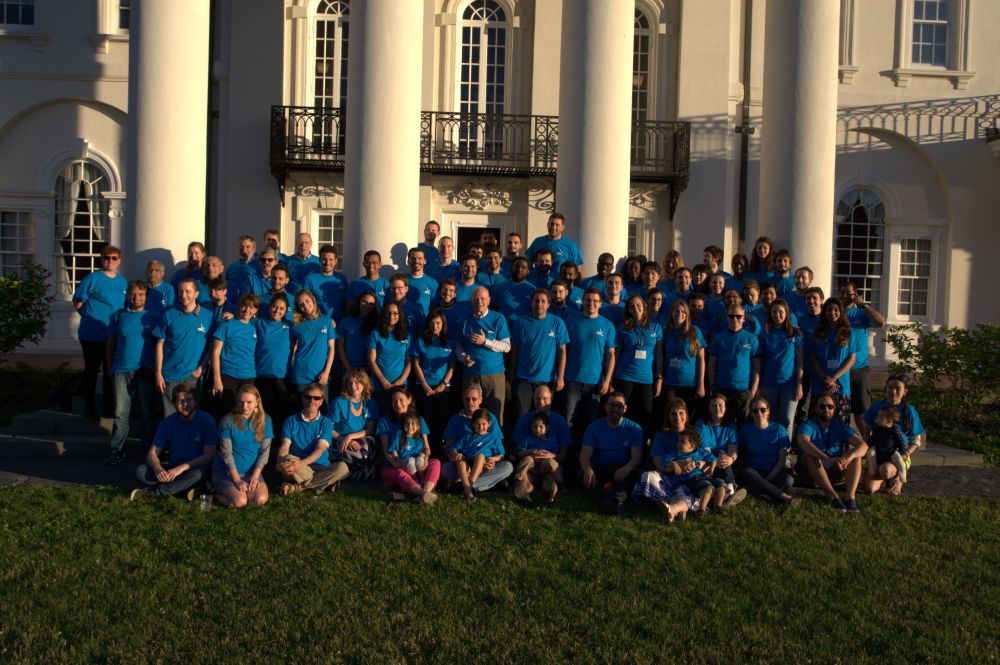
The seventh Minsky Summer Seminar was he ld at the Levy Economics Institute in June 2016\, with 61 students from 25 countries attending. The annual Summer Seminar provides a rigorous discussi on of both the theoretical and applied aspects of Minsky’s economics\, with an examination of meaningful prescriptive policies relevant to the current economic and financial crisis. Organized by Jan Kregel\, Dimitri B. Papadi mitriou\, and L. Randall Wray\, the Seminar program is geared toward gradua te students and those at the beginning of their academic or professional ca reers. The teaching staff includes well-known economists concentrating on a nd expanding Minsky’s work.
A user name and password are requ ired for the Summer Seminar webpage\; participating students may log in by clicking here.
ScheduleFriday\, June 107:30−9:00 a.m. Breakfast: Kline Commons 10:45 a.m.−12:00 p.m. Registration: Levy Ins
titute\, Blithewood (only for participants who did not register on Thursday
night) 12:00−1:30 p.m. Lunch: Kline Commons 1:30−2:45 p.m. Welco
me and Introduction: Minsky and the Levy Institute
Dimitri B.
Papadimitriou\, Levy Institute 2:45−3:15 p.m. Break 3:15−4:30 p.m. General Introduction to Minsky’s Approach to Financial Macroecon
omics
L. Randall Wray\, Levy Institute and Bard Colle
ge 4:30−5:30 p.m. Welcome Reception: Reem-Kayden Center (RKC) 5:30−7:00 p.m. Dinner: Kline Commons
Dimitri B. Papadimitriou\, Levy Institute
L. Randall Wray\, Levy Institute and Bard Colle ge
| 7:30−9:00 a.m. | Breakfast: Kline Commons |
| 9:00−10:15 a.m.< /strong> | General Introduction to Minsky: Financial Ins
tability and Financial Regulation Jan Kregel\, Levy I nstitute and Tallinn University of Technology |
| 10:15−10:45 a.m. | Break |
| 10:45 a.m. − 12:00 p.m. | Minsky's "Two Price" Price Theory Éric Tymoigne\, Lewis & Clark College |
| 12:00−1:30 p.m. | Lunch: Kline Commons |
| 1:30−2:45 p .m. | Minsky and Modern Money Step hanie A. Kelton\, Levy Institute\, US Senate Budget Committee\, Un iversity of Missouri–Kansas City |
| 2:45−3:15 p.m. | Break |
| 3:15−4:30 p.m. | Heinz 57 Varieties: Money Manager Capitalism L. Randall Wr ay\, Levy Institute and Bard College |
| 5:30−7:00 p.m. | Dinner: K line Commons |
| 7:30−9:00 a.m. | Breakfast: Kline Commons |
| Central Bank Operations Scott Fullwiler\, Univ ersity of Missouri–Kansas City\, Presidio Graduate School\, and Binzagr Ins titute for Sustainable Prosperity | |
| 10:15−10:45 a.m. | Break |
| 10:45 a.m. − 12:00 p.m. | < td valign="top">International Dimensions of Financial Fragility|
| 12:00−1:30 p.m. | Lunch: Kline Commons |
| 1:30−2:45 p.m. | Minsky\, Kal
ecki and the Profits Equation Tracy Mott\, University of Denver |
| 2:45−3:15 p.m. | Break |
| 3:15−4:30 p.m. | Veblen\, Minsky an
d Evolutionary Economics John Henry\, Levy Institute< /td> |
| 4:30−6:00 p.m. | Student Activities |
| 6:00−7:00 p.m. | Dinner: Kline Co mmons |
| 7:30−9:00 a.m. | Breakfast: Kline Commons |
| 9:00−10:15 a.m. |
Minsky's Big Bank-Big Government Interpretations of Post-war Stability Éric Tymoigne\, Lewis & Clark College |
| 10:15−10:45 a.m. | Break |
| 10:45 a.m. − 12: 00 p.m. | War on Poverty/ Communicating Policy< br />Stephanie A. Kelton\, Levy Institute\, US Senate Budg et Committee\, University of Missouri–Kansas City |
| 12:00−1:30 p.m. | Lunc h: Kline Commons |
| 1:30−2:4 5 p.m. | Minsky and Employment Guarantee < strong>Fadhel Kaboub\, Levy Institute\, Denison University\, and B inzagr Institute for Sustainable Prosperity |
| 2:45−3:15 p.m. | Break | < /tr>
| 3:15−4:30 p.m. | |
| 4:30−6:00 p.m. | Student A ctivities |
| 6:00−7:00 p.m.< /strong> | Dinner: Kline Commons |
| 7:30–9:00 a.m. | Breakfast: Kline Commons |
| 9:00−10:15 a.m. | Cost and Impact of ELR Scott Fullwiler\, University of Missouri–Kansas City\, Pre sidio Graduate School\, and Binzagr Institute for Sustainable Prosperity |
| 10:15−10:45 a.m. | Break |
| 10:45 a.m. − 12:00 p.m. | New Deal Responses t
o the Depression: WPA John Henry\, Levy Institute |
| 12:00−12:45 p.m. | Lunch: Kline Commons |
| 1:00−6:00 p.m. | Trip to F.D.R. Memorial Library\, Hyde Park |
| Picnic supper: Blithewood< /td> |
| 7:30−9:00 a.m. | Breakfast: Kline Commons |
| 9:00−10:15 a.m. | Eme
rging Market Financial Outlook Fernando J. Cardim de Carvalho< /strong>\, Levy Institute\, Federal University of Rio de Janeiro | 10:15−10:45 a.m. | Break |
| 10:45 a .m. − 12:00 p.m. | Functional Finance: Old and
New Pavlina R. Tcherneva\, Levy Institute and Bard Co llege |
| 12:00−1:30 p.m. | Lunch: Kline Commons |
| 1:30−2:45 p.m. | Minsky\
, Godley\, and the Financial Balances Approach Gennaro Zezza\, Levy Institute and University of Cassino |
| 2:45−3:15 p.m. | Brea k |
| 3:15−4:30 p.m. | Intro to Stock-Flow Lab Gennaro Zezza\, Levy Institute and University of Cassino\; Michalis N ikiforos\, Levy Institute |
| 4:30−6:00 p.m. | Stock-Flow Lab: Hend
erson Computer Resources Center Gennaro Zezza\, Levy Institute and University of Cassino\; Michalis Nikiforos\, Levy Institute |
| 6:00 −7:00 p.m. | Dinner: Kline Commons |
| 7:30−9:00 a.m. | Breakfast: Kline Commons |
| 9:00−10:15 a.m. | Minsky and the T
heory of Investment Steven M. Fazzari\, Levy Institut e and Washington University in St. Louis |
| 10:15−10:45 a.m. | Break |
| 10:45 a.m. − 12:00 p.m. | Financial Instability and Shadow Banking in China Yan Liang\, Willamette University |
| 12:00−1:30 p.m. | Lunch: Kline Commons |
| 1:30 −2:45 p.m. | Rethinking Fiscal Policy |
| 2:45−3:15 p.m. | Break |
| 3:15−4 :30 p.m. | Minsky and EU Financial Reform Mario Tonveronachi\, University of Siena |
| 4:30−6:00 p.m. | Stock-Flow Lab: Henderson Computer Resources Center Gennaro Zezza\, Levy Institute and University of Cassino\; M ichalis Nikiforos\, Levy Institute |
| 6:00−7:00 p.m. | Dinner: Kli ne Commons |
| 7:30−9:00 a .m. | Breakfast: Kline Commons |
| 9:00−10:15 a.m. | The Minsky–Schumpeter Connection Leonardo Burlamaqui\, University of the State of Rio de Janeiro |
| 10:15−10:45 a.m. | Brea k |
| 10:45 a.m. − 12:00 p.m. | Financial Fragility in Asia C. P. Chandrasekhar\, Jawaharlal Nehru University |
| 12:00−1:30 p.m. | Lunch: Kline Commons |
| 1: 30−2:45 p.m. | Greece\, the Euro and the Sovere
ign Debt Crisis Gennaro Zezza\, Levy Institute and Un iversity of Cassino |
| 2:45− 3:15 p.m. | Break |
| 3:15−4:30 p.m. | Policy Pa
nel: Latin America at a Turning Point? C. P. Chandrasekhar\, Jawaharlal Nehru University Fernando Cardim de Carvalh o\, Levy Institute\, Federal University of Rio de Janeiro |
| 4:30 −6:00 p.m. | Stock-Flow Lab: Henderson Computer
Resources Center Gennaro Zezza\, Levy Institute and University of Cassino\; Michalis Nikiforos\, Levy Ins titute |
| 6:00−7:00 p.m. | Dinner: Kline Commons |
| 7:30−9:00 a.m. | B reakfast: Kline Commons |
| 9 :00−10:15 a.m. | Levy Institute Forecast < strong>Michalis Nikiforos\, Levy Institute |
| 10:15−10:45 a.m. | B reak |
| 10:45 a.m. − 12:00 p .m. | Minsky and the Theory of Consumption Steven M. Fazzari\, Levy Institute and Washington Univers ity on St. Louis |
| 12:00−1: 30 p.m. | Lunch: Kline Commons |
| 1:30−2:45 p.m. | Minsky’s Economic Counter Culture Frank Veneroso\ , Veneroso Associates\, LLC |
| Break | |
| 3:15−4:30 p.m. | P
anel: Recovery Watch—USA\, EU\, Ems Robert J. Barbera \, Codirector\, Center for Financial Economics\, The Johns Hopkins Universi ty Mario Tonveronachi\, University of Siena |
| 4:30−6:00 p.m. | Stock-Flow Lab: Henderson Computer Resources Center Gennaro Z ezza\, Levy Institute and University of Cassino\; Mic halis Nikiforos\, Levy Institute |
| 6:30−9:00 p.m. | Closing Dinne r: Blithewood |
LOCATION:Blithewood Manor GEO:42.022548;-73.910724 ORGANIZER;CN="Levy Admin":MAILTO:phpdev@bard.edu URL;VALUE=URI:https://www.levyinstitute.org/events/event/the-hyman-p-minsky -summer-seminar-7/ END:VEVENT BEGIN:VEVENT UID:20240424T1306Z-1713963963.9284-EO-7281-1@::1 STATUS:CONFIRMED DTSTAMP:20260917T055412Z CREATED:19700101T000000Z LAST-MODIFIED:20260715T183218Z DTSTART;TZID=America/New_York:20161104T000000 DTEND;TZID=America/New_York:20161104T000000 SUMMARY: The Financial Regulation Conundrum: Why We Should Discriminate in Favor of Long-Term Finance DESCRIPTION: Presented by the Levy Economics Institute of Bard College and the Bard Economics Program Levy Institute November 4\, 2016\, at 11:00 a.m. Anemic growth rates\, rent-seeking financialization\, the liquidity trap\, ...more X-ALT-DESC;FMTTYPE=text/html:
Presented by the Levy Economics In stitute of Bard College and the Bard Economics Program
Levy
Institute
November 4\, 2016\, at 11:00 a.m.
Anemic growth rates\ , rent-seeking financialization\, the liquidity trap\, and rising inequalit y are not unrelated phenomena. Financialization and excessive leverage due to uncontrolled liquidity have made markets less rather than more efficient . But the solution to market woes lies in devising incentives to foster inv estment for growth and innovation rather than the anticapitalist rhetoric o f “occupy.” Modern financial regulation\, in its perennial quest for the un attainable ideal of financial stability in an ecosystem that is inherently unstable and evolving\, has achieved levels of unfathomable complexity—a sy stemic risk in itself. Further\, financialization and short-termism have re duced the level of long-term funding for investment\, thus hampering the al locative efficiency of markets. The speaker argues that\, in addition to fi scal incentives and sanctions\, the current regulatory system should be sim plified\, and should accept an increased financial instability risk in exch ange for higher funding allocations to long-term investment projects\, whic h would reheat growth and create jobs.
Emilios Avgouleas is the inaug ural holder of the International Banking Law and Finance Chair at the Unive rsity of Edinburgh\, director of the Edinburgh LLM in International Banking Law and Finance\, and a research associate at the Levy Institute. An exper t on financial market regulation\, banking law and finance\, and global eco nomic governance\, he has advised governments\, development organizations\, and central banks on issues ranging from sovereign debt restructuring and financial stability to economic development and market integrity. He is the author of Governance of Global Financial Markets: The Law\, the Econom ics\, the Politics (Cambridge\, 2012) and The Mechanics and Regula tion of Market Abuse: A Legal and Economic Analysis (Oxford\, 2005) an d a coauthor of the forthcoming Principles of Banking Law (3rd ed. \; Oxford).
LOCATION:Blithewood Manor GEO:42.022548;-73.910724 ORGANIZER;CN="Levy Admin":MAILTO:phpdev@bard.edu URL;VALUE=URI:https://www.levyinstitute.org/events/event/the-financial-regu lation-conundrum-why-we-should-discriminate-in-favor-of-long-term-finance/ END:VEVENT BEGIN:VEVENT UID:20240424T1306Z-1713963963.9318-EO-7282-1@::1 STATUS:CONFIRMED DTSTAMP:20260917T055412Z CREATED:19700101T000000Z LAST-MODIFIED:20260715T183218Z DTSTART;TZID=America/New_York:20170418T000000 DTEND;TZID=America/New_York:20170419T000000 SUMMARY: 26th Annual Hyman P. Minsky Conference DESCRIPTION: A conference organized by the Levy Economics Institute of Bard College Levy Economics Institute of Bard College Blithewood Annandale-on-H udson\, New York 12504 April 18–19\, 2017 The 2017 Minsky Conference addres sed...more X-ALT-DESC;FMTTYPE=text/html:A conference organized by the Levy Economics Institute of Bard College
Levy Economics Institut
e of Bard College
Blithewood
Annandale-on-Hudson\, New York 12504
April 18–19\, 2017
The 2017 Minsky Conference addressed the implications of the new administration’s “America First” pol icies\, focusing on the outlook for trade\, taxation\, fiscal\, and financi al regulation measures to generate domestic investments capable of moving t he growth rate beyond the “new normal” established in the aftermath of the Great Recession\, without jeopardizing financial stability. It also assesse d the impact of different financing schemes on both infrastructure investme nt and the return of central bank monetary policies to more neutral interes t rates\, as well as the new policy proposals' implications for the perform ance of European and Latin American economies.
Click here for video coverage of the indivi dual speakers and panels.
LOCATION:Blithewood Manor GEO:42.022548;-73.910724 ORGANIZER;CN="Levy Admin":MAILTO:phpdev@bard.edu URL;VALUE=URI:https://www.levyinstitute.org/events/event/26th-annual-hyman- p-minsky-conference/ END:VEVENT BEGIN:VEVENT UID:20240424T1306Z-1713963963.9352-EO-7280-1@::1 STATUS:CONFIRMED DTSTAMP:20260917T055412Z CREATED:19700101T000000Z LAST-MODIFIED:20260715T183217Z DTSTART;TZID=America/New_York:20170610T000000 DTEND;TZID=America/New_York:20170616T000000 SUMMARY: The Hyman P. Minsky Summer Seminar DESCRIPTION: Levy Economics Institute of Bard College Blithewood Annandale- on-Hudson\, N.Y. June 10–16\, 2017 The eighth Minsky Summer Seminar was hel d at the Levy Economics Institute in June 2017\, with 29 students...more X-ALT-DESC;FMTTYPE=text/html:Levy Economics Institute of Bard Colleg
e
Blithewood
Annandale-on-Hudson\, N.Y.
June 10–16\, 20 17
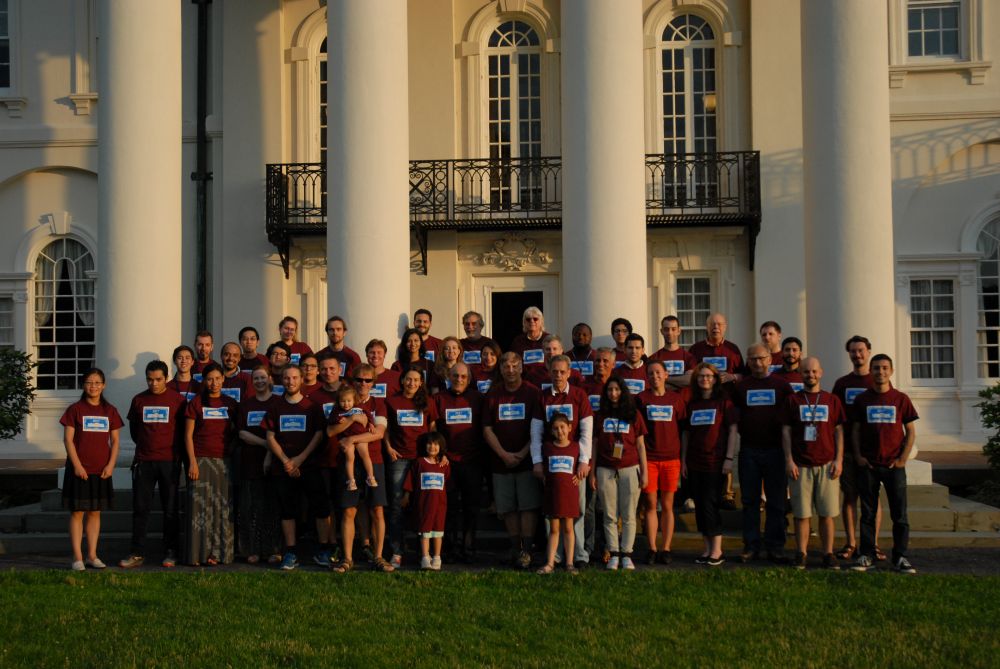
The eighth Minsky Summer Seminar was held at the Lev y Economics Institute in June 2017\, with 29 students from 18 countries att ending. The annual Summer Seminar provides a rigorous discussion of both th e theoretical and applied aspects of Minsky’s economics\, with an examinati on of meaningful prescriptive policies relevant to the current economic and financial crisis. Organized by Jan Kregel\, Dimitri B. Papadimitriou\, and L. Randall Wray\, the Seminar program is geared toward graduate students a nd those at the beginning of their academic or professional careers. The te aching staff includes well-known economists concentrating on and expanding Minsky’s work.
A user name and password are required for the Summer Seminar webpage\; participating students may log in by clicking here.
Schedule
| 7:30−9:00 a.m. | Breakfast: Kline Commons |
| 9:00−10:45 a.m. | Registration: Levy Institute\, Blithewo
od (Only for participants who did not register on Friday night ) |
| 10:45 a.m.−12: 00 p.m. | Welcome and Introduction: Minsky and
the Levy Institute Jan Kregel\, Levy Institute and Ta llinn University of Technology |
| Lunch: Kline Commons | |
| 1:30−2:45 p.m. | General Introduction to Minsky: Financial Instability and
Financial Regulation Felipe Rezende\, Bard College |
| 2:45−3:15 p.m. | Break |
| 3:15−4:30 p.m. | General Introduction to Minsky
’s Financial Macroeconomics Felipe Rezende\, Bard Col lege |
| 4:30−5:30 p.m. | Welcome Reception |
| 5:30−7:00 p.m. | Dinner: Klin e Commons |
| 7:30−9:00 a. m. | Breakfast: Kline Commons |
| 9:00−10:15 a.m. | Minsky and Modern Money L. Randall\, Wray\, Levy Institute and Bard College |
| Break | |
| 10:45 a.m. − 12:00 p.m. | International Dimensions of Financial Fragility Jan K regel\, Levy Institute and Tallinn University of Technology |
| 12:00−1:30 p.m. | |
| 1:30−2:45 p.m. | Minsky\, Kalecki\,
and the Profits Equation Tracy Mott\, University of D enver |
| 2:45−3:15 p.m. | Break |
| < strong>3:15−4:30 p.m. | Veblen\, Minsky\, and E
volutionary Economics John F. Henry\, Levy Institute< /td> |
| 5:30−7:00 p.m. | Dinner: Kline Commons |
| 7:30−9:00 a.m. | Breakfast: Kline Commons |
| 9:00−10:15 a.m. | Treasury–Central Bank Operations: How t
he Government Spends Stephanie A. Kelton\, Levy Insti tute and University of Missouri–Kansas City |
| 10:15−10:45 a.m. | Break |
| 10:45 a.m. − 12:00 p.m. | Functional Finance: Old and New Pavl ina R. Tcherneva\, Levy Institute and Bard College |
| Lunch: Kline Commons | |
| Minsky and Employment Guaran
tee Fadhel Kaboub\, Levy Institute\, Denison Universi ty\, and Binzagr Institute for Sustainable Prosperity | |
| 2:45−3:15 p.m. | B reak |
| 3:15−4:30 p.m. | Minsky–Godley and the Financial Balances Approach<
br />Introduction to Stock-flow Lab Gennaro Zezza\, L evy Institute and University of Cassino |
| 4:30−6:00 p.m. | Stock-flow Lab<
br />Gennaro Zezza\, Levy Institute and University of Cass
ino\; Michalis Nikiforos\, Levy Institute | 5:30−7:00 p.m. | Dinner: Kline Commons |
| 7:30−9:00 a.m. | Breakfast: Kline Com mons |
| 9:00−10:15 a.m. | War on Poverty Stephanie A. Kelton\, Levy Institute and University of Missouri–Kansas City | 10:15−10:45 a.m. | Break |
| 10:45 a. m. − 12:00 p.m. | New Deal Responses to the Dep
ression: WPA John Henry\, Levy Institute |
| 12:00−1:30 p.m. | Lunch: Kline Commons |
| Trip to F.D.R. Memorial L ibrary\, Hyde Park (http://www.f drlibrary.marist.edu/) | |
| Picnic supper: Levy Institut e |
| 7:30–9:00 a.m. | Breakfast: Kline Commons |
| 9:00−10:15 a.m. | H
einz 57 Varieties: Money Manager Capitalism L. Randall Wray\, Levy Institute and Bard College |
| 10:15−10:45 a.m. | Break |
| 10:45 a.m. − 12:00 p.m. | Minsky and the Theory of Investment Ste ven M. Fazzari\, Levy Institute and Washington University in St. L ouis |
| 12:00−1:30 p.m. | Lunch: Kline Commons |
| 1:30−2:45 p.m. | Rethinki
ng Fiscal Policy Pavlina R. Tcherneva\, Levy Institut e and Bard College |
| 2:45−3 :15 p.m. | Break |
| 3:15−4:30 p.m. | Minsky and
EU Financial Reform Mario Tonveronachi\, University of Siena |
| 4:30−6:00 p.m. | Stock-flow Lab Gennaro Zezza\, Levy Institute and University of Cassino\; Michalis Nik iforos\, Levy Institute |
| 5:30−7:00 p.m. | Dinner: Kline Commons< /td> |
| 7:30−9:00 a.m. | Breakfast: Kline Commons |
| 9:00−10:15 a.m. | Mins
ky and the Theory of Consumption Steven M. Fazzari\, Levy Institute and Washington University in St. Louis |
| 10:15−10:45 a.m. | Break |
| 10:45 a.m. − 12:00 p.m. | The Minsky–Schumpeter Connection < strong>Leonardo Burlamaqui\, University of the State of Rio de Jan eiro |
| 12:00−1:30 p.m. | Lunch: Kline Commons |
| 1:30−2:45 p.m. | Panel: E
merging Market Financial Outlook Fernando J. Cardim de Carvalh o\, Levy Institute and Federal University of Rio de Janeiro\; Arturo Huerta González\, Universidad Nacional Autónoma de México |
| 2:45−3:15 p.m. | Break |
| 3:15−4:30 p.m. | Panel: European Econo
mic Outlook Mario Tonveronachi\, University of Siena\ ; Gennaro Zezza\, Levy Institute and University of Ca ssino |
| 4:30−6:00 p.m. | Stock-Flow Lab Gennaro Zezza\, Levy Institute and University of Cassino\; Michalis Nikifo ros\, Levy Institute |
| Dinner: Kline Commons |
| 7:30−9:00 a.m. | Breakfast: Kline Commons |
| 9:00−10:15 a.m. | Levy Inst
itute Forecast Michalis Nikiforos\, Levy Institute |
| 10:15−10:45 a.m. | Break |
| 10:45 a.m. − 12:00 p.m. | Minsky’s Economic Co
unterculture Frank Veneroso\, Veneroso Associates\, L LC |
| 12:00−1:30 p.m. | Lunch: Kline Commons |
| 1:30−2:45 p.m. | New Admini
stration Policy Outlook Steven M. Fazzari\, Levy Inst itute and Washington University in St. Louis\; Frank Veneroso< /strong>\, Veneroso Associates\, LLC |
| 2:45−3:15 p.m. | Break |
| 3:15−6:00 p.m. | Stock-Flow Lab Gennaro Zezza\, Levy Institute and University of Cassino\; Michalis Nikiforos\, Lev y Institute |
| 6:30 p.m. | Closing Dinner: Levy Institute Keynote Spea ker: Robert J. Barbera Codirector\, Center for Financ ial Economics\, The Johns Hopkins University |
< /p> LOCATION:Blithewood Manor GEO:42.022548;-73.910724 ORGANIZER;CN="Levy Admin":MAILTO:phpdev@bard.edu URL;VALUE=URI:https://www.levyinstitute.org/events/event/the-hyman-p-minsky -summer-seminar-8/ END:VEVENT BEGIN:VEVENT UID:20240424T1306Z-1713963963.9396-EO-7283-1@::1 STATUS:CONFIRMED DTSTAMP:20260917T055412Z CREATED:19700101T000000Z LAST-MODIFIED:20260715T183217Z DTSTART;TZID=America/New_York:20170913T000000 DTEND;TZID=America/New_York:20170915T000000 SUMMARY: Gender and Macroeconomics DESCRIPTION: Convene Conference Center 101 Park Avenue\, New York City Sept ember 13–15\, 2017 A workshop organized by the Levy Economics Institute of Bard College with the generous support of The William...more X-ALT-DESC;FMTTYPE=text/html:
Convene Conference Center
101
Park Avenue\, New York City
September 13–15\, 2017
A w orkshop organized by the Levy Economics Institute of Bard College with the generous support of The William and Flora Hewlett Foundation
The goal of this workshop was to advance the current framework that integrates gend er and unpaid work into macroeconomic analysis and enables the development of gender-aware and equitable economic policies.
The types of gender inequalities modeled encompass inequalities in care and unpaid work\, labor force participation\, employment composition (by sector and/or type of emp loyment\, such as formal or informal)\, education\, and access to and utili zation of social and financial services.
Theoretical contributions ut ilized existing and novel macroeconomic modeling approaches as well as empi rical studies\, in particular those focusing on the dimensions of gender in equalities relevant to the countries of Sub-Saharan Africa and other low-in come economies\, providing a comprehensive picture of the state of the art\ , identifying gaps\, and indicating directions for future research.
T he workshop was organized by the Levy Economics Institute of Bard College w ith the generous support of The William and Flora Hewlett Foundation.
A user name and password are required for the workshop webpage\; invite es may log in by clicking here.
LOCATION:Blithewood Manor GEO:42.022548;-73.910724 ORGANIZER;CN="Levy Admin":MAILTO:phpdev@bard.edu URL;VALUE=URI:https://www.levyinstitute.org/events/event/gender-and-macroec onomics-2/ END:VEVENT BEGIN:VEVENT UID:20240424T1306Z-1713963963.9428-EO-7284-1@::1 STATUS:CONFIRMED DTSTAMP:20260917T055412Z CREATED:19700101T000000Z LAST-MODIFIED:20260715T183217Z DTSTART;TZID=America/New_York:20170921T000000 DTEND;TZID=America/New_York:20170924T000000 SUMMARY: First International Conference on Modern Monetary Theory DESCRIPTION: University of Missouri–Kansas City September 21–24\, 2017 Orga nized with support from the Levy Economics Institute of Bard College\, Robe rt Skidelsky and Morton Sosland\, UMKC Economics Club\, Binzagr Institute f or Sustainable...more X-ALT-DESC;FMTTYPE=text/html:University of Missouri–Kansas City
September 21–24\, 2017
Organized with support from the Levy E conomics Institute of Bard College\, Robert Skidelsky and Morton Sosland\, UMKC Economics Club\, Binzagr Institute for Sustainable Prosperity\, Jo urnal of Post Keynesian Economics\, and Evonomics
<
b>CALL FOR PAPERS
Modern Monetary Theory has transformed the econo
mics discipline. Its influence extends beyond economics\, reaching deep int
o the fields of law\, history\, finance\, banking\, public policy\, and phi
losophy. Join the world’s leading MMT practitioners—including featured spea
kers Warren Mosler\, Robert Skidelsky\, James K. Galbraith\, Jan Kregel\, a
nd L. Randall Wray—and explore the cutting edge of modern economic thinking
.
Submissions are welcome on any aspect of Modern Monetary Theory\, s uch as fiscal policy\, economic development\, employment policy\, the frami ng and marketing of MMT\, taxation\, inflation\, and reforming the financia l system. Please send your individual abstract (200 words maximum) or panel submission with a short description before June 15 to mmtconference@umkc.edu.
LOCATION:Blithewood Manor GEO:42.022548;-73.910724 ORGANIZER;CN="Levy Admin":MAILTO:phpdev@bard.edu URL;VALUE=URI:https://www.levyinstitute.org/events/event/first-internationa l-conference-on-modern-monetary-theory/ END:VEVENT BEGIN:VEVENT UID:20240424T1306Z-1713963963.9463-EO-7286-1@::1 STATUS:CONFIRMED DTSTAMP:20260917T055412Z CREATED:19700101T000000Z LAST-MODIFIED:20260715T183216Z DTSTART;TZID=America/New_York:20180417T000000 DTEND;TZID=America/New_York:20180418T000000 SUMMARY: 27th Annual Hyman P. Minsky Conference DESCRIPTION: A conference organized by the Levy Economics Institute of Bard College Levy Economics Institute of Bard College Blithewood Annandale-on-H udson\, New York 12504 April 17–18\, 2018 As the annual growth rate...more X-ALT-DESC;FMTTYPE=text/html:A conference organized by the Levy Economics Institute of Bard College
Levy Economics Institut
e of Bard College
Blithewood
Annandale-on-Hudson\, New York 12504
April 17–18\, 2018
As the annual growth rate of the US economy continues to rise with stable prices and falling unemployment\, the global financial system faces a series of historic challenges. Congress seems det ermined to introduce tax-reform measures designed to provide an additional impulse to the record postcrisis expansion and historically low unemploymen t rate. At the same time\, the administration has launched a series of exec utive orders rescinding postcrisis financial regulations as Congress debate s reform or replacement of the Dodd-Frank legislation that has provided fin ancial stability over the last decade\, while the Federal Reserve will be e xperimenting with the deleveraging of its balance sheet as well as appointi ng a new chairman of the board in an environment of rising policy interest rates. Finally\, the “America First” policy seeks fundamental changes in th e current rules-based multilateral framework for international trade\, whic h\, if successful\, would imply important changes in international financia l flows and the position of US financial institutions in global financial m arkets in the context of China’s strategy of global expansion and structura l changes in European and developing-country political and financial system s.
This year’s Minsky conference will thus seek to examine the implic ations of this unprecedented constellation of policy changes. It is a scena rio that Hy Minsky would have considered as providing exposure of risky fin ancial positions entered into during the period of the zero-interest-rate p olicy and the basis for rising financial fragility.
Click here for video coverage of the individual s peakers and panels.
LOCATION:Blithewood Manor GEO:42.022548;-73.910724 ORGANIZER;CN="Levy Admin":MAILTO:phpdev@bard.edu URL;VALUE=URI:https://www.levyinstitute.org/events/event/27th-annual-hyman- p-minsky-conference/ END:VEVENT BEGIN:VEVENT UID:20240424T1306Z-1713963963.9505-EO-7285-1@::1 STATUS:CONFIRMED DTSTAMP:20260917T055412Z CREATED:19700101T000000Z LAST-MODIFIED:20260715T183340Z DTSTART;TZID=America/New_York:20180617T000000 DTEND;TZID=America/New_York:20180623T000000 SUMMARY: The Hyman P. Minsky Summer Seminar DESCRIPTION: Levy Economics Institute of Bard College Blithewood Annandale- on-Hudson\, N.Y. June 17–23\, 2018 The Levy Economics Institute of Bard Col lege hosted the ninth Minsky Summer Seminar from June 17–23\, 2018. The...m ore X-ALT-DESC;FMTTYPE=text/html:Levy Economics Institute of Bard Colleg
e
Blithewood
Annandale-on-Hudson\, N.Y.
June 17–23\, 20 18
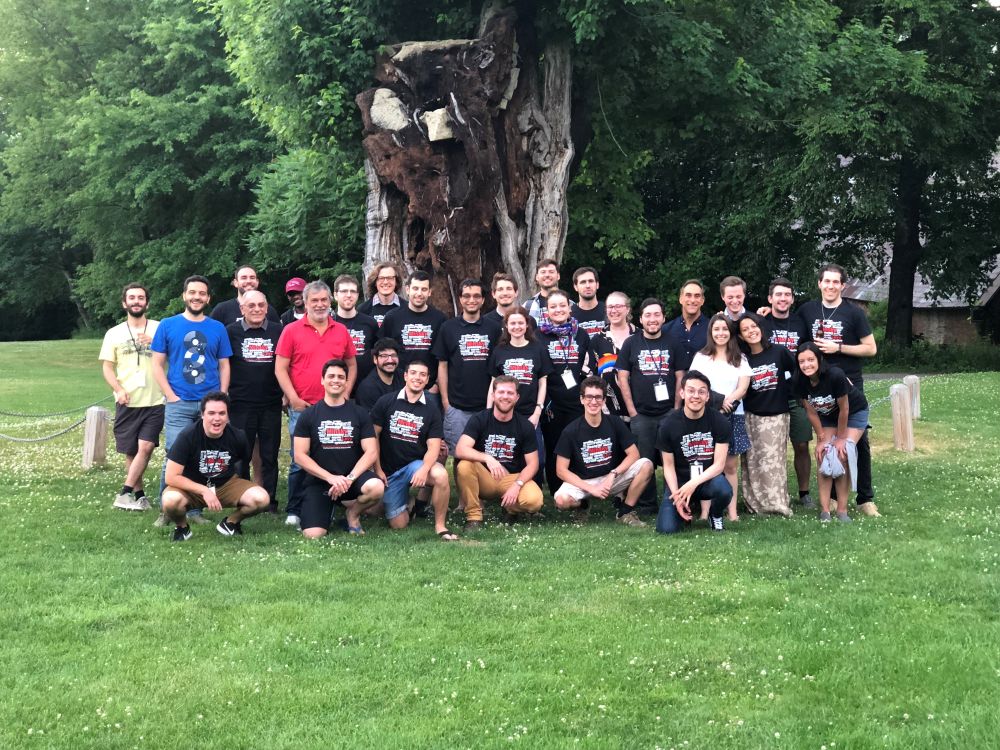
The Levy Economics Institute of Bard College hoste d the ninth Minsky Summer Seminar from June 17–23\, 2018. The Seminar provi des a rigorous discussion of both the theoretical and applied aspects of Mi nsky’s economics\, with an examination of meaningful prescriptive policies relevant to the current economic and financial outlook\, as well as an intr oduction to Wynne Godley’s stock-flow consistent modeling methods via hands -on workshops.
The Summer Seminar is of particular interest to gradua te students\, recent graduates\, and those at the beginning of their academ ic or professional careers. The teaching staff includes well-known economis ts working in the theory and policy tradition of Hyman Minsky and Wynne God ley.
The Summer Seminar program is organized by Jan Kregel\, Dimitri B. Papadimitriou\, and L. Randall Wray.
The 2018 Seminar schedule is available here.
Students who participated in t he 2018 Summer Seminar may log in to view PDFs of the seminar presentations by click ing here.
LOCATION:Blithewood Manor GEO:42.022548;-73.910724 ORGANIZER;CN="Levy Admin":MAILTO:phpdev@bard.edu URL;VALUE=URI:https://www.levyinstitute.org/events/event/the-hyman-p-minsky -summer-seminar-9/ END:VEVENT BEGIN:VEVENT UID:20240424T1306Z-1713963963.9542-EO-7288-1@::1 STATUS:CONFIRMED DTSTAMP:20260917T055412Z CREATED:19700101T000000Z LAST-MODIFIED:20260916T172653Z DTSTART;TZID=America/New_York:20190417T000000 DTEND;TZID=America/New_York:20190417T000000 SUMMARY: 28th Annual Hyman P. Minsky Conference DESCRIPTION: A conference organized by the Levy Economics Institute of Bard College Levy Economics Institute of Bard College Blithewood Annandale-on-H udson\, New York 12504 April 17\, 2019 As the US economy enters...more X-ALT-DESC;FMTTYPE=text/html:A conference organized by the Levy Economics Institute of Bard College
Levy Economics Institut
e of Bard College
Blithewood
Annandale-on-Hudson\, New York 12504
April 17\, 2019
As the US economy enters what appears to be a historically long postcrisis expansion\, there are increasing signs of dece leration against the backdrop of a looming global recession. Marking the 10 0-year anniversary of Hyman Minsky's birth\, the 28th Annual Minsky Confere nce highlighted the possibility of increasing financial instability and the challenge of developing policies to meet the rising risk of recession. Spe akers from government regulatory bodies\, the private sector\, and academia shed light on conditions in the US and Europe\, with special emphasis on t he impact of the Trump administration’s policies with regards to a possible repeat of the 2008 financial crisis. The highlights of the conference incl uded presentations by the President of the Federal Reserve Bank of St. Loui s and the First Vice President of the Federal Reserve Bank of Minneapolis\; European conditions were the focus of the former Governor of the Central B ank of Cyprus\, while private sector analysts from hedge funds and policy t hink-tanks assessed the potential for current economic policies to confront the challenge of prolonging the recovery. Particular emphasis was given to the analysis of the increasing stock of private corporate debt and rising house prices\, which in both the US and Europe have reached levels similar to or higher than those seen before the Great Recession.
Click here for video coverage of the individ ual speakers and panels.
LOCATION:Blithewood Manor GEO:42.022548;-73.910724 ORGANIZER;CN="Levy Admin":MAILTO:phpdev@bard.edu URL;VALUE=URI:https://www.levyinstitute.org/events/event/28th-annual-hyman- p-minsky-conference/ END:VEVENT BEGIN:VEVENT UID:20240424T1306Z-1713963963.9578-EO-7290-1@::1 STATUS:CONFIRMED DTSTAMP:20260917T055412Z CREATED:19700101T000000Z LAST-MODIFIED:20260715T183339Z DTSTART;TZID=America/New_York:20190507T000000 DTEND;TZID=America/New_York:20190507T000000 SUMMARY: Macroeconomic and Microeconomic Aspects of Policy Interventions to Reduce the Burden of Unpaid Activities DESCRIPTION: The Levy Institute\, with the generous support of the Hewlett Foundation\, is organizing a workshop titled “Macroeconomic and Microeconom ic Aspects of Policy Interventions to Reduce the Burden of Unpaid Activitie s.”...more X-ALT-DESC;FMTTYPE=text/html:The Levy Institute\, with the generous sup port of the Hewlett Foundation\, is organizing a workshop titled “Macroecon omic and Microeconomic Aspects of Policy Interventions to Reduce the Burden of Unpaid Activities.” The workshop will take place on Tuesday\, May 7\, 2 019\, at the Ministry of Finance in Accra. Ghana Statistical Service is col laborating with the Levy Institute in organizing the event\, which is to be cohosted by the United Nations Development Programme office in Ghana.
< p>The primary purpose of the workshop is to present the study undertaken by the Levy Institute with support from the Hewlett Foundation on the costs a nd benefits of expanding early childhood education and road improvements in Ghana and Tanzania. Our workshop aims to elicit responses to our study fro m experts as well as a select group of senior government officials\, academ ics\, and representatives of civil society. Additionally\, we are convening a session that explores the linkages between infrastructure deficits\, hou sehold economic well-being\, and gender disparities in both countries from a policy perspective. A panel discussion on emerging trends and problems of social and economic development in the two countries will be led by a dive rse group that represents views from the spheres of economics\, human and g ender rights\, and public action.*Attendance is by invitation only
For further information regarding the workshop\, please contact Ajit Z acharias via email at: zacharia@levy.org
Program
| 8:00−9:00 a.m.< /td> | Registration |
| 9:00−9:20 a.m. | WELCOME AND OPENING REMARKS |
| Ajit Zacharias\
, Levy Economics Institute Araba Forson\, | |
| 9:20–11:00 a.m. | SESSION 1: Improving Physical and Social Infrastructure: Rationale\, Costs \, |
| and Macroeconomic Impacts | |
| CHAIR: Ahmed Makbel\,
Prime Minister’s Office\, Government of Tanzania Ajit Zac harias\, Levy Economics Institute “Overview of Propo sed Policy Interventions and Their Impacts” Michalis Nikiforos \, Levy Economics Institute “Assessing the Macro economic Impacts of Expanding Physical and Social Infrastructure via a Stru cturalist Model” DISCUSSANTS: William Baah-Boateng\, University of Ghana Abel Kinyondo\, University of Dar es Salam | |
| Tea Break | |
| 11:20 a.m.−1:15 p.m. | SESSION 2: Impacts of the Policy Interventions on Time a nd Consumption |
| Poverty< /td> | |
| CHAIR: Radhika Lal\, UNDP Fernando Rios-Avilla\, Levy Economics Institut e “Direct Effects of Physical and Social Infrastructure Investmen ts on Time and Consumption Poverty: Some Estimates for Ghana and Tanzania”< br />Thomas Masterson\, Levy Economics Institute< br />“Microeconomic Modeling of the Total Impacts of Infrastructure In vestments on Time and Consumption Poverty” Discussants: Blandina Kilama\, REPOA Charles A ckah\, University of Ghana | |
| 1:15–2:15 p.m. | Lu nch |
| 2:15–3:20 p.m. | SESSION 3: Linkages between Infrastructure De ficits\, Household Economic |
| Well -Being\,and Gender Disparities: Policymakers’ Perspectives | |
| CHAIR: Abena Oduro\, University of
Ghana Bernice Ofosu-Baadu\, Ghana Statistica l Service “Ghana” Ahmed Makbel\, Prime Minister’s Office\, Government of Tanzania “Tanzania” Azumi Mesuna\, Action Aid\, Ghana< /em> | |
| 3:20–3:45 p.m. | Tea break |
| < td> | |
| 3:45–5:00 p.m. | PANEL DISCUSSION: Social and Economic Policies in Tanzania and Ghana: |
| Emerging Trends and Challenges | |
| CHAIR: William Baah-Boateng\, U
niversity of Ghana Hilary Gbedemah\, Committ ee on the Elimination of Discrimination against Women Joh n C. Anyanwu\, African Development Bank Abe na Oduro\, University of Ghana Radhika Lal\, UNDP Rebecca Nana Yaa Ayifah\, University of Cape Coast | |
| 5:00–5:10 p.m. | CLOSING REMARKS |
| Ajit Zacharias\, Levy Economic
s Institute Bernice Ofosu-Baadu\, Ghana Stat istical Service |
Participants
Charles Acka h is the director of the Centre for Social Policy Studies (CSPS) a nd a senior research fellow at the Institute of Statistical\, Social and Ec onomic Research (ISSER)\, both at the University of Ghana. He is a developm ent economist with research interests in the socioeconomic effects of trade and industrial policies\, firm dynamics\, employment and labor market issu es\, financial inclusion\, and gender and women’s studies. Dr. Ackah holds a bachelor degree in economics from the University of Ghana\, an MSc (econo mics) in public policy from the University of Hull\, UK\, and a Ph.D. in ec onomics from the University of Nottingham\, UK. Dr. Ackah is external resea rch fellow at the Centre for Research in Economic Development and Internati onal Trade (CREDIT) based at the School of Economics\, University of Nottin gham\, UK.
Samuel Kobina Annim assumed office as the government statistician at the Ghana Statistical Service on March 1\, 2019 . Annim is an associate professor of economics\, with a specific concentrat ion on micro development economics and applied microeconometrics at the Dep artment of Economics\, University of Cape Coast\, Ghana. He earned his Bach elor of Arts\, Master of Philosophy\, and Doctor of Philosophy degrees in e conomics at the University of Cape Coast (Ghana)\, University of Ghana (Gha na)\, and University of Manchester (United Kingdom)\, respectively. Followi ng the completion of his doctoral studies\, Annim was engaged at the Univer sity of Manchester and University of Lancashire\, both in the United Kingdo m\, in the respective capacities of research associate and post-doctoral re search fellow. He has approximately 20 years of teaching experience in univ ersities both in Ghana and abroad\, and has more than 40 peer-reviewed jour nal articles\, book chapters\, and technical reports to his credit. His pub lications are available in academic outlets such as World Development\, Journal of Development Studies\, Journal of Internationa l Development\, and the Oxford University Press. While at the Universi ty of Cape Coast\, he contributed to a number of interventions including in stitutionalization of microfinance programs and a conference\, the establis hment of a data repository center\, upgrading the status of the economics d epartment to a school\, and the development of a host of policies that prom otes scholarship and research administration. His passion for scholarly wor k extends to data quality for development. Annim passionately supports nati onal and global development agendas by providing professional service to th e National Development Planning Commission\, the National Statistical Syste m in Ghana\, and several international bodies.
John C. Anyanw u was\, until recently\, the lead research economist in the Macroe conomic Policy\, Forecasting & Research Department of the African Developme nt Bank (AfDB). Prior to joining the AfDB\, he was full professor of econom ics\, University of Benin\, Nigeria\; economic adviser to resident represen tative\, WHO\, Nigeria\; and consultant to the AfDB and the International H ealth Policy Program. Anyanwu holds a Ph.D and MSc in economics from the Un iversity of Ibadan\, Nigeria and a master’s degree in entrepreneurship and economic development from the University of Houston-Victoria\, USA. He has had training/executive education at the London School of Economics and Harv ard University\, and had been a visiting scholar at Cornell University. He was the editor of African Development Review\, a quarterly journal of the AfDB\, from 2007 to April 2019. He has presented papers at more tha n 130 conferences worldwide. Anyanwu has authored over 120 scholarly public ations in international journals and authored or coauthored more than 36 bo ok chapters and a number of books.
Rebecca Nana Yaa Ayifah is a lecturer at the Department of Applied Economics of the School o f Economics\, University of Cape Coast. She holds BA and MPhil degrees from the University of Ghana\, as well as a Ph.D. in economics from the Univers ity of Cape Town in South Africa. Her research is in the area of education\ , health\, applied microeconometrics\, and labor\, with a special focus on impact evaluation of social protection programs\, poverty and inequality\, and gender issues. Prior to joining the University of Cape Coast\, she work ed with several organizations and institutions such as the International La bour Organization (the Understanding Children’s Work Project)\, United Nati ons Development Programme (UNDP)\, International Food Policy Research Insti tute (IFPRI)\, and the University of Ghana.
William Baah-Boat eng is associate professor and head of the department of economics \, University of Ghana. He is also the director of International Institute for the Advanced Studies (IIAS) and editor of the Ghanaian Journal of E conomics. He was Ela Bhat Visiting Professor at the University of Kass el in Germany. He was the long-term advisor to the Ghana Labour Ministry be tween 2007 and 2015 and a member of the Presidential Committee on Emolument s of Article 71 Office Holders of the 6th Government of the 4th Republic. H e holds Ph.D. in economics and is alumnus of the University of Ghana and Ha rvard University in Massachusetts\, USA. His research focuses on economics of labor and labor market institutions\, labor migration\, poverty analysis \, economics of industry\, and development economics generally. He has over 60 publications in the form of books\, book chapters\, articles in referre d journals\, working papers\, and technical reports.
Araba M. M. Forson has worked at Ghana Statistical Service since 1987\, st arting as an assistant statistician and holding senior management positions at the Head Office of the Ghana Statistical Service (GSS) for 15 years. Sh e is currently a chief statistician and the acting deputy government statis tician for operations. Prior to this appointment\, she was director of the Regional Offices Directorate at Ghana Statistical Service. Over the past 28 years\, Forson has dealt extensively with the compilation\, analysis\, and dissemination of socioeconomic data on Ghana\, including economic statisti cs on industry\, private sector businesses\, construction\, transport and c ommunication\, energy and water industries\, external and distributive trad e\, agriculture\, population\, and housing. Her publications include Ch ildren and Adolescents in Sierra Leone (2017) and The Elderly in G hana (2013\; cowritten with Dr. Badasu).
Blandina Kilama has practical experience in research\, training\, and policy anal ysis. She is a senior researcher at REPOA\, a Tanzanian think tank based in Dar es Salaam and the chief executive officer of the Economic Society of T anzania. Her engagement in dialogues and publications locally and internati onally are derived from her work in economic transformation\, financial inc lusion\, sustainable development goals\, women’s empowerment\, and value ch ains in agriculture\, nutrition\, and poverty. Kilama is a joint program di rector of the five-year research program on “Tanzania as a future Petro Sta te\,” working on the component on data for policy making and public engagem ent. She is trained as an economist\, and holds a Ph.D. from Leiden Univers ity\, a Master’s (MPAID) from Harvard University\, and her first degree fro m the University of Dar es Salaam.
Hilary Gbedemah i s a lawyer\, training specialist\, human rights and gender-equality activis t\, and a gender consultant whose 44-year career in law has been in private legal practice\, lecturing\, legislative advocacy\, policy development\, e conomic empowerment\, curriculum development\, and mentoring. She is curren tly the chairperson of the UN Committee on the Convention for the Eliminati on of all Forms of Violence against Women (CEDAW)\; she has held multiple p ositions on the committee and has extensive experience in its thematic area s. She was chair of the Working Group on Inquiries under the Optional Proto col (which receives complaints on violations against states)\, and of the W orking Group on Education for the committee’s General Recommendation 36. Sh e was also the committee’s follow-up rapporteur. She is the rector of The L aw Institute\, Ghana’s premier vocational legal training facility\, which p rovides training in paralegal studies\, corporate governance\, entrepreneur ship\, and human rights law\, and offers capacity building for a wide range of organizations. She is also a senior adjunct fellow at Ghana’s Institute of Economic Affairs. Gbedemah holds an L.L.M. from Georgetown University\, Washington DC\; certifications in instructional techniques (Transport Cana da)\, management (Ghana Institute of Management and Public Administration)\ , and organizational development.
Abel Kinyondo is p rincipal research fellow at REPOA and senior lecturer at the University of Dar as Salaam (DUCE). Previously he worked as a director of strategic resea rch at REPOA and head of the Economics and Geography Department at the Univ ersity of Dar Es Salaam. He has also worked for the United Nations Developm ent Programme. He holds a Ph.D. from Monash University (Australia)\, a dist inction in Master of Art (economics) degree from the University of Botswana \, and a first-class economics degree from the University of Namibia. Dr. K inyondo has over 10 years of research experience\, having published in inte rnationally reputable journals such as in the Oxford Development Studie s\, Politics & Policy\, Extractive Industries and Society\, World Affairs\, African Development Review\, and Parliamentary Affairs. He h as also led several teams of experts in formulating various socioeconomic p olicies\, regulations\, and codes of ethics in Tanzania and beyond. Dr. Kin yondo currently investigates issues pertaining to tourism\, gender\, enterp rise development\, employment\, industrialization\, and natural resources m anagement as well as governance.
Radhika Lal current ly serves as economic advisor with UNDP for Ghana and the Gambia. Previousl y she served as the strategic planning advisor for the UN country team in S outh Africa\; co-coordinator of the Employment\, Social Protection and Deve lopment Innovation at the International Policy Centre for Inclusive Growth (IPC-IG) in Brazil\; and as senior policy advisor with UNDP’s Poverty Group in New York. She is a political economist by training\, and her experience covers both middle-income and developing countries. Her policy advisory wo rk and research encompasses: macro- and meso-level policies for inclusive a nd sustainable growth\, including a focus on public employment programs\; t he intersections of economic\, social\, and environmental dimensions of sus tainable development\; information and communication technologies for devel opment\; development innovation\; development planning and finance\; and da ta for development\, including a focus on policy issues related to national statistical systems (open data and interoperability).
Ahmed M. Makbel is a public servant currently working with the Prime Min ister’s Office-Labour Youth\, Employment and Persons with Disability since July 2015 in the area of labor market information. He has also worked with other government institutions such as Ministry of Community Development\, G ender and Children (1998–2004)\; Constitutional Review Commission (2012–14) \; President’s Office—Public Service Management (2014)\; and Ministry of Ea st African cooperation (2014–015). Makbel worked with the Tanzania National Bureau of Statistics for more than 26 years from 1988 to 2014. His main ar eas of work experience at the Bureau of Statistics include survey design\, data processing and analysis\, demography\, sampling\, household budget sur veys\, national panel surveys\, poverty measurement and analysis\, and time -use statistics. He has also experience in information and communication te chnology\, project planning and management\, result-based management\, moni toring and evaluation\, and gender analysis. Ahmed has contributed to stati stical reports and coauthored papers in journals. He has also facilitated a number of statistical services for local and international organizations\, especially in the area of time-use surveys. He holds a BSc in mathematics and statistics\, an MA in demography\, and an MA in development studies.
Thomas Masterson is director of applied micromodeling
and a research scholar in the Levy Economics Institute’s Distribution of In
come and Wealth program. He has worked extensively on the Levy Institute Me
asure of Well-being (LIMEW)\, an alternative\, household-based measure that
reflects the resources the household can command for facilitating current
consumption or acquiring physical or financial assets. With other Levy scho
lars\, Masterson was also involved in developing the Levy Institute Measure
of Time and Income Poverty (LIMTIP)\, and has contributed to estimating th
e LIMTIP for countries in Latin America\, Asia\, and Africa. He has also ta
ken a lead role in developing the Levy Institute Microsimulation Model\, wh
ich he is currently extending in order to assess the inequality impacts of
carbon regulation. Masterson’s specific research interests include the dist
ribution of land\, income\, and wealth. He has published articles in the
Azumi Mesuna works as a project manager for the Promoting Opportunities for Women Empowerment and Rights (POWER) Project at ActionAid Ghana. The p roject supports over 6\,000 women farmers in Ghana to reduce women’s unpaid care work burden and food insecurity. She has 10 years’ work experience on gender\, governance\, livelihoods\, sexual reproductive health rights\, an d advocacy. She is recognized for supporting women’s empowerment and holds an MA in governance and development from the University of Cape Coast.
< p>Michalis Nikiforos is a research scholar working in the State of the US and World Economies program. He works on the Institute’s st ock-flow consistent macroeconomic model for the US economy and contributed to the recent construction of a similar model for Greece. He has coauthored several policy reports on the prospects of the US and European economies. His research interests include macroeconomic theory and policy\, the distri bution of income\, the theory of economic fluctuations\, political economy\ , and the economics of monetary union. He has published papers in the C ambridge Journal of Economics\, the Journal of Post Keynesian Econ omics\, the Review of Radical Political Economics\, the R eview of Keynesian Economics\, and Metroeconomica\; various o ther papers have appeared in the Levy Economics Institute Working Paper Ser ies. Nikiforos holds a BA in economics and an M.Sc. in economic theory from the Athens University of Economics and Business\, and an M.Phil. and a Ph. D. in economics from the New School for Social Research.Aben a Oduro is an associate professor in the Department of Economics a nd director of the Merian Institute for Advanced Studies in Africa at the U niversity of Ghana\, Legon. Her current research is in the areas of gender and assets\, gender and enterprise development\, poverty\, inequality and v ulnerability analysis\, gender responsive budgeting\, and employment and la bor markets in low-income countries. She is an associate editor of Femi nist Economics and is one of the coeditors of the journal’s special is sue on engendering economic policy in Africa\, published in 2015.
Francesca Pobee-Hayford has a first and second degree from Kwame N krumah University of Science and Technology and University of Ghana\, respe ctively. She is currently working as a consultant women’s economic empowerm ent advisor in the Frannan Field Support Services office\, a Canada-funded project in Ghana. Previously she consulted for the Millennium Challenge Cor poration\, as a gender and social inclusion specialist. Prior to this\, Pob ee-Hayford worked within the Ministry of Gender Children and Social Protect ion as the acting director of the Department of Gender. She spearheaded and contributed to many initiatives\, such as gender responsive budgeting\, th e passage of a domestic violence law\, and setting up the secretariat. She has also worked for the Ministry of Health. Currently\, she is working on t he women’s economic empowerment landscape in Ghana to inform Canada’s progr aming in Ghana.
Fernando Rios-Avila is a research sc holar working on the Levy Institute Measure of Economic Well-Being under th e Distribution of Income and Wealth program. His research interests include labor economics\, applied microeconomics\, development economics\, and pov erty and inequality. As a doctoral candidate at Georgia State University\, Rios-Avila worked as a graduate research assistant to Felix Rioja\, and int erned in the research department at the Federal Reserve Bank of Atlanta\, w orking under the supervision of Julie L. Hotchkiss. He formerly served as a researcher at the Social and Economic Policy Unit (UDAPE)—a government adv isory unit and public policy think tank in La Paz\, Bolivia—on issues of de velopment\, impact evaluation\, and social expenditure\, with an emphasis o n children's welfare. His research has been published in The Review of Income and Wealth\, Industrial Relations\, Southern Economic Journ al\, Applied Economics Letters\, Stata Journal\, and Business and Economics Research. Rios-Avila holds a Licenciatura in economics from the Universidad Católica Boliviana\, La Paz\; an advanced studies program certificate in international economics and policy research from Kiel University\; and a Ph.D. in economics from the Andrew Young Scho ol of Policy Studies at Georgia State University.
Ajit Zachar ias is a senior scholar and director of the Institute’s Distributi on of Income and Wealth program. His research primarily focuses on the theo ry\, measurement\, and analysis of economic well-being and deprivation. Alo ng with other Levy scholars\, Zacharias has developed alternative measures of economic welfare and deprivation. The Levy Institute Measure of Economic Well-Being (LIMEW) offers a framework that accounts for how changes in lab or markets\, wealth accumulation\, government spending and taxes\, and hous ehold production shape the economic determinants of standard of living. Lev y scholars have utilized the LIMEW to track trends in economic inequality a nd well-being in the United States. The Levy Institute Measure of Time and Income Poverty is aimed at revealing the nexus between income poverty and u npaid work. This measure has been applied to the study of poverty in severa l Latin American countries\, Turkey\, South Korea\, Tanzania\, and Ghana. H is recent publications include “Time and Income Poverty in the City of Buen os Aires” (with R. Antonopoulos\, V. Esquivel\, and T. Masterson)\, in Rach el Connelly and Ebru Kongar\, eds.\, Gender and Time Use in a Global Co ntext: The Economics of Employment and Unpaid Labor (Palgrave Macmilla n\, 2017) and “The Measurement of Time and Income Poverty\,” in I. Hirway\, ed.\, Mainstreaming Unpaid Work: Time-use Data in Developing Policies< /em> (Oxford University Press\, 2017). Zacharias holds an MA from the Unive rsity of Bombay and a Ph.D. from The New School for Social Research.
LOCATION:Blithewood Manor GEO:42.022548;-73.910724 ORGANIZER;CN="Levy Admin":MAILTO:phpdev@bard.edu URL;VALUE=URI:https://www.levyinstitute.org/events/event/macroeconomic-and- microeconomic-aspects-of-policy-interventions-to-reduce-the-burden-of-unpai d-activities/ END:VEVENT BEGIN:VEVENT UID:20240424T1306Z-1713963963.9617-EO-7287-1@::1 STATUS:CONFIRMED DTSTAMP:20260917T055412Z CREATED:19700101T000000Z LAST-MODIFIED:20260715T183339Z DTSTART;TZID=America/New_York:20190616T000000 DTEND;TZID=America/New_York:20190622T000000 SUMMARY: The Hyman P. Minsky Summer Seminar DESCRIPTION: The Levy Economics Institute of Bard College hosted the tenth Minsky Summer Seminar from June 16–22\, 2019\, providing a rigorous discuss ion of both the theoretical and applied aspects of Minsky’s...more X-ALT-DESC;FMTTYPE=text/html:
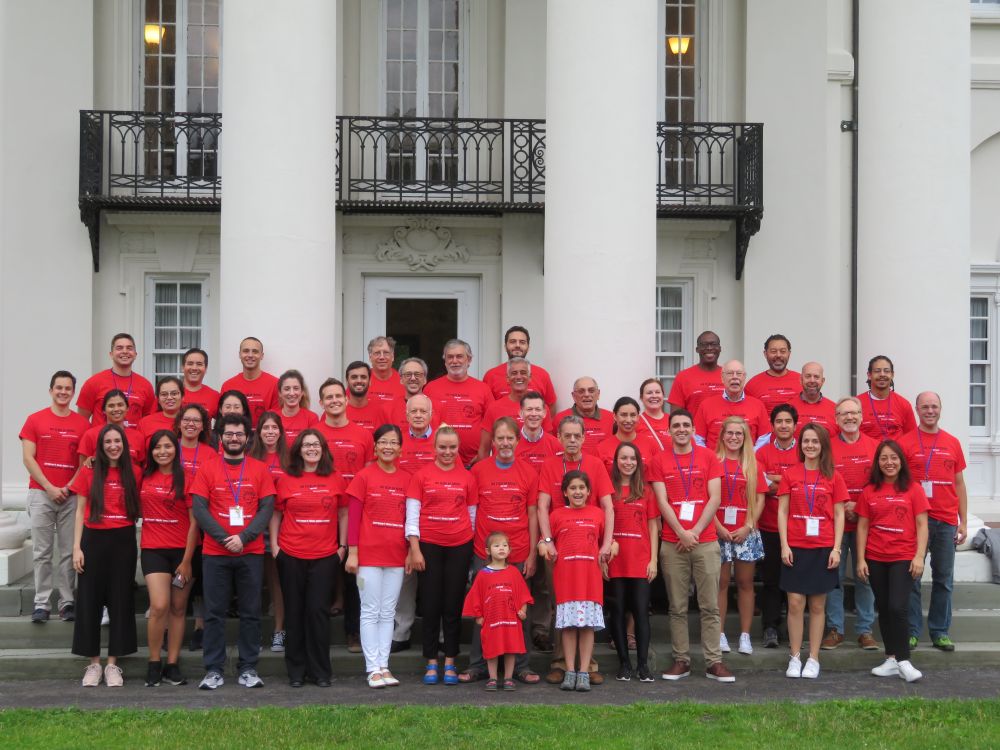
The Levy Economics Institute of Bard College hosted the tenth Minsky Summer Seminar from June 16–22\, 2 019\, providing a rigorous discussion of both the theoretical and applied a spects of Minsky’s economics\, with an examination of meaningful prescripti ve policies relevant to the current economic and financial outlook\, as wel l as an introduction to Wynne Godley’s stock-flow consistent modeling metho ds via hands-on workshops.
The Summer Seminar participants included g raduate students\, recent graduates\, and those at the beginning of their a cademic or professional careers. The event was organized by Jan Kregel\, Di mitri B. Papadimitriou\, and L. Randall Wray\, with teaching staff that inc lude well-known economists working in the theory and policy tradition of Hy man Minsky and Wynne Godley.
The 2019 Summer Seminar schedule is avai lable here.
Students can access the sche dule and presentations here.
LOCATION:Blithewood Manor GEO:42.022548;-73.910724 ORGANIZER;CN="Levy Admin":MAILTO:phpdev@bard.edu URL;VALUE=URI:https://www.levyinstitute.org/events/event/the-hyman-p-minsky -summer-seminar-10/ END:VEVENT BEGIN:VEVENT UID:20240424T1306Z-1713963963.9647-EO-7289-1@::1 STATUS:CONFIRMED DTSTAMP:20260917T055412Z CREATED:19700101T000000Z LAST-MODIFIED:20260715T183339Z DTSTART;TZID=America/New_York:20190926T000000 DTEND;TZID=America/New_York:20190927T000000 SUMMARY: Gender and Macroeconomics DESCRIPTION: New York City September 26–27\, 2019 A workshop organized by t he Levy Economics Institute of Bard College with the generous support of Th e William and Flora Hewlett Foundation The goal...more X-ALT-DESC;FMTTYPE=text/html:New York City
September 26–27
\, 2019
A workshop organized by the Levy Economics Institute of Bard College with the generous support of The William and Flora Hewlett Foundation
The goal of this workshop was to explore ways to advance the integration of gender and unpaid activities into macroeconomic analyses . Macroeconomic processes\, outcomes\, and policies involve multiple dimens ions of gender inequalities. The latter\, in turn\, are intertwined with ot her forms of social inequalities (e.g.\, class\, race\, and ethnicity). Con tributions to the worksop included those that address these interconnection s\, especially from angles that are relevant for public policies and public action to transform the existing inequalities.
The types of gender i nequalities analyzed encompassed inequalities in care and unpaid work\, lab or force participation\, employment composition (by sector and type of empl oyment\, such as formal or informal)\, education\, and access to and utiliz ation of social and financial services.
Theoretical contributions uti lized existing and novel macroeconomic modeling approaches as well as empir ical studies\, in particular\, those focusing on the dimensions of gender i nequalities relevant to the countries of Sub-Saharan Africa and other low-i ncome economies. Presenters provided a comprehensive picture of state of th e art\, identified gaps\, and indicated directions for future research\, an d included young scholars and scholars from the Global South.
The Lev y Economics Institute of Bard College organized the workshop with the gener ous support of The William and Flora Hewlett Foundation.
Participants can access the workshop program and presentations on the password-protected site.< /p> LOCATION:Blithewood Manor GEO:42.022548;-73.910724 ORGANIZER;CN="Levy Admin":MAILTO:phpdev@bard.edu URL;VALUE=URI:https://www.levyinstitute.org/events/event/gender-and-macroec onomics-3/ END:VEVENT BEGIN:VEVENT UID:20240424T1306Z-1713963963.9692-EO-7292-1@::1 STATUS:CONFIRMED DTSTAMP:20260917T055412Z CREATED:19700101T000000Z LAST-MODIFIED:20260715T183706Z DTSTART;TZID=America/New_York:20200416T000000 DTEND;TZID=America/New_York:20200416T000000 SUMMARY: 29th Annual Hyman P. Minsky Conference DESCRIPTION: After careful consideration and consultation\, this year’s Apr il 16th Minsky conference has been canceled in light of ongoing concerns ab out COVID-19 (coronavirus). April 16\, 2020 We apologize for any inconvenie nces...more X-ALT-DESC;FMTTYPE=text/html:
After careful consi deration and consultation\, this year’s April 16th Minsky conference has be en canceled in light of ongoing concerns about COVID-19 (coronavirus).
April 16\, 2020
We apologize for any inconveniences caused and tha nk you for your understanding.
LOCATION:Blithewood Manor GEO:42.022548;-73.910724 ORGANIZER;CN="Levy Admin":MAILTO:phpdev@bard.edu URL;VALUE=URI:https://www.levyinstitute.org/events/event/29th-annual-hyman- p-minsky-conference/ END:VEVENT BEGIN:VEVENT UID:20240424T1306Z-1713963963.9732-EO-7294-1@::1 STATUS:CONFIRMED DTSTAMP:20260917T055412Z CREATED:19700101T000000Z LAST-MODIFIED:20260916T174105Z DTSTART;TZID=America/New_York:20200513T000000 DTEND;TZID=America/New_York:20200513T000000 SUMMARY: The Legacy of Wynne Godley DESCRIPTION: He has been considered “the most insightful macroeconomic fore caster of his generation\,” gaining this reputation through his research on the British economy during his time as head of Cambridge’s Department...mo re X-ALT-DESC;FMTTYPE=text/html:He has been considered "the most insightfu l macroeconomic forecaster of his generation\," gaining this reputation thr ough his research on the British economy during his time as head of Cambrid ge’s Department of Applied Economics\, and later on for his work on the US and world economy when he moved to the Levy Economics Institute. He provide d a prescient alert to both the 2001 recession and the Great Recession of 2 007\, and gave warnings on the consequences of adopting the euro under the rules of the Maastricht Treaty.
His books with Francis Cripps (Macroe conomics\, OUP 1983) and Marc Lavoie (Monetary Economics\, Palgrave Macmill an 2007) laid the foundations for the "stock-flow consistent approach" to m acroeconomics\, which is being embraced by a growing number of scholars and practitioners to analyze the interactions of real and financial markets\, and is providing a robust alternative to the mainstream approach based on m icrofoundations and market clearing.
On the 10th anniversary of his d eparture\, we brought together some of the people who worked with him to of fer memories or provide insights based on his work.
This virtual conf erence took place on the Google Meet platform at Universita' degli Studi di Cassino e del Lazio Meridionale and was recorded. Individual videos are no w available.
LOCATION:Blithewood Manor GEO:42.022548;-73.910724 ORGANIZER;CN="Levy Admin":MAILTO:phpdev@bard.edu URL;VALUE=URI:https://www.levyinstitute.org/events/event/the-legacy-of-wynn e-godley/ END:VEVENT BEGIN:VEVENT UID:20240424T1306Z-1713963963.9777-EO-7291-1@::1 STATUS:CONFIRMED DTSTAMP:20260917T055412Z CREATED:19700101T000000Z LAST-MODIFIED:20260715T183338Z DTSTART;TZID=America/New_York:20200607T000000 DTEND;TZID=America/New_York:20200613T000000 SUMMARY: The Hyman P. Minsky Summer Seminar DESCRIPTION: Levy Economics Institute of Bard College Blithewood Annandale- on-Hudson\, N.Y. June 7–13\, 2020 After careful consideration and consultat ion\, the 11th Minsky Summer Seminar\, scheduled from June 7–13\, 2020\, ha s been canceled...more X-ALT-DESC;FMTTYPE=text/html:Levy Economics Institute of Bard C
ollege
Blithewood
Annandale-on-Hudson\, N.Y.
June 7–13\, 2020
After careful consideration and consultation\, the 11th M insky Summer Seminar\, scheduled from June 7–13\, 2020\, has been canceled in light of ongoing concerns about COVID-19 (coronavirus).
We apologi ze for any inconveniences caused and thank you for your understanding.
LOCATION:Blithewood Manor GEO:42.022548;-73.910724 ORGANIZER;CN="Levy Admin":MAILTO:phpdev@bard.edu URL;VALUE=URI:https://www.levyinstitute.org/events/event/the-hyman-p-minsky -summer-seminar-11/ END:VEVENT BEGIN:VEVENT UID:20240424T1306Z-1713963963.9807-EO-7293-1@::1 STATUS:CONFIRMED DTSTAMP:20260917T055412Z CREATED:19700101T000000Z LAST-MODIFIED:20260715T183335Z DTSTART;TZID=America/New_York:20200708T000000 DTEND;TZID=America/New_York:20200714T000000 SUMMARY: Intensive Course in Gender-Sensitive Macroeconomic Modeling for Po licy Analysis DESCRIPTION: July 8–14\, 2020 Blithewood Annandale-on-Hudson\, NY Update\, April 21\, 2020 We regret to inform the applicants that we have decided to postpone the course until July 2021. We are forced...more X-ALT-DESC;FMTTYPE=text/html:July 8–14\, 2020
BlithewoodAnnandale-on-Hudson\, NY
U
pdate\, April 21\, 2020
We regret to inform the applicants th
at we have decided to postpone the course until July 2021. We are forced to
take this decision because proper planning for the workshop has been made
difficult due to the uncertainty regarding the duration and extent of the o
ngoing coronavirus pandemic in the United States and the rest of the world.
We are grateful to each of the 160 applicants from 46 countries for your i
nterest in the course.
We will be making the announcement regarding t he July 2021 course later this year. Please do sign up for the electronic n ewsletters of the Levy Institute and Care Work and Economy Project at the American University to keep yourse lf informed about the workshop as well as other activities and research tha t may be of interest to you.
***
The purpose of this course is t
o engage with fellow economists to enhance capacity building in research an
d teaching of gender-sensitive economic analysis\, with a focus on care and
macroeconomic policy aspects. The course will be built on four pillars\, n
amely: a) understanding and measuring the care economy\; b) adapting social
accounting matrices to account for paid and unpaid care activities\; c) in
tegrating the information from time-use surveys on unpaid care activities w
ith other relevant sources of information\, such as national income account
s\, labor force surveys\, and household or special surveys\; and d) perform
ing policy-relevant economic analyses that take systematic account of the i
nterlinkages between care\, macroeconomic processes\, and distribution. Our
goal is to guide the participants toward the formulation of viable researc
h projects focused on addressing care needs in developing countries through
a better understanding of the care economy and the formulation of gender-s
ensitive macroeconomic policies. Hence\, the program will be comprised of l
ectures by experts\, hands-on training in analytics\, and mentoring.
We are especially interested in participants who either would like to be or are currently involved in research aimed at influencing policymaking in or der to address care needs in their countries. We particularly seek applicat ions from the following countries: Colombia\, Ghana\, Mexico\, Mongolia\, M orocco\, Senegal\, Ethiopia\, Tanzania\, Thailand\, Sri Lanka\, South Afric a\, Uruguay\, and Vietnam. Women\, minorities (ethnic\, racial\, and other) \, and teams of country researchers are encouraged to apply. We will cover the travel and accommodation costs of successful applicants.
We encou rage economists in academia\, research institutions\, government\, and civi l society organizations to apply. The applicants must have completed at lea st two years of study in a graduate economics program\, or have received a masters or PhD in economics. We also expect that participants have the abil ity to analyze data using Excel. We also consider the ability to analyze da ta with STATA or other similar statistical software (such as R) highly desi rable. These requirements may be waived under exceptional circumstances. Th e program will be conducted in English\; therefore\, applicants are expecte d to be fluent in written and spoken English.
The course has three co mponents. The self-study module of the course will require the students to complete a set of assigned readings before they arrive at the Levy Institute. These readings will help the students acquaint themselves with the conceptual and technical aspects of the material to be covered in the c ourse. The second component of the course is the set of lectures and hands- on training to be conducted at the Levy Institute. There will be some degre e of overlap between the readings for the self-study module and the reading s assigned for the lectures. The goal of the lectures is to deepen the part icipants’ understanding regarding the topics discussed in the self-study mo dule and introduce the participants to recent research in gender-aware econ omic analysis with a focus on policy issues. We will also provide hands-on training in developing participants’ the modeling skills\, including traini ng in analysis using packages such as STATA. Finally\, the mentoring compon ent of the course will enable the participant to make progress toward formu lating a research project along with other participants and mentors.
The application period is now closed. We will communicate the decision on p articipation before March 30\, 2020. If you require further information reg arding the course\, please contact the Care Work and the Economy program.
This course is organ ized by Maria Floro\, Professor\, Department of Economics\, American Univer sity and Care Work and the Economy (CWE-GAM) Principal Investigator\; Paula Herrera Idárraga\, Associate Professor and Chair\, Department of Economics \, Pontificia Universidad Javeriana\; Thomas Masterson\, Research Scholar a nd Director of Applied Micromodeling\, Levy Institute\; Ana Maria Tribin\, Senior Researcher\, Central Bank\, Colombia\; and Ajit Zacharias\, Senior S cholar and Program Director\, Distribution of Income and Wealth program\, L evy Institute.
The course is made possible by the generous support of the William and Flora Hewlett Foundation.
LOCATION:Blithewood Manor GEO:42.022548;-73.910724 ORGANIZER;CN="Levy Admin":MAILTO:phpdev@bard.edu URL;VALUE=URI:https://www.levyinstitute.org/events/event/intensive-course-i n-gender-sensitive-macroeconomic-modeling-for-policy-analysis/ END:VEVENT BEGIN:VEVENT UID:20240424T1306Z-1713963963.9855-EO-7296-1@::1 STATUS:CONFIRMED DTSTAMP:20260917T055412Z CREATED:19700101T000000Z LAST-MODIFIED:20260708T200757Z DTSTART;TZID=America/New_York:20210505T000000 DTEND;TZID=America/New_York:20210506T000000 SUMMARY: 29th Annual Hyman P. Minsky Conference on the State of the US and World Economies DESCRIPTION: A virtual conference organized by the Levy Economics Institute of Bard College May 5–6\, 2021 This year the Hyman P. Minsky Conference on the State of US and World Economies...more X-ALT-DESC;FMTTYPE=text/html:A virtual conference organized by
the Levy Economics Institute of Bard College
May 5–6\, 2021
This year the Hyman P. Minsky Conference on the State of US a nd World Economies was a two-day\, virtual event featuring speakers from go vernment\, academia\, financial institutions\, and the media\, as well as L evy Institute scholars.
Presenters included Robert Kaplan\, Federal Reserve Bank of Dallas\; Charles Evans\, F
ederal Reserve Bank of Chicago\; Patricia McCoy\, Boston C
ollege\; Kathryn Judge\, Columbia University School of Law
\; James Paulsen\, The Leuthold Group\; Bruce Gree
nwald\, Columbia Business School\; Charles Goodhart\, London School of Economics\; Jan Hatzius\, Goldman Sa
chs\; Jason Furman\, Harvard University\; Frank Ve
neroso\, Veneroso Associates\; Lakshman Achuthan\
, Economic Cycle Research Institute (ECRI)\; Robert Barbera\, Johns Hopkins University\; Paolo Savona\, CONSOB\;
Click here for video coverage of t he individual speakers and panels.
ORGANIZER;CN="Levy Admin":MAILTO:phpdev@bard.edu URL;VALUE=URI:https://www.levyinstitute.org/events/event/29th-annual-hyman- p-minsky-conference-on-the-state-of-the-us-and-world-economies/ END:VEVENT BEGIN:VEVENT UID:20240424T1306Z-1713963963.9898-EO-7295-1@::1 STATUS:CONFIRMED DTSTAMP:20260917T055412Z CREATED:19700101T000000Z LAST-MODIFIED:20260708T201027Z DTSTART;TZID=America/New_York:20210701T000000 DTEND;TZID=America/New_York:20210702T000000 SUMMARY: Intensive Course in Gender-Sensitive Macroeconomic Modeling for Po licy Analysis DESCRIPTION: An Intensive Virtual Course in Gender-Sensitive Macroeconomic Modeling for Policy Analysis June 28–July 16\, 2021 Organized by the Americ an University’s Care Work and the Economy Project and Levy Economics Instit ute of Bard...more X-ALT-DESC;FMTTYPE=text/html:An Intensive Virtual Course in Gender-Sensitive Macroecon omic Modeling for Policy Analysis June 28–July 16\, 2021 Organized by the American University’s Care Work and the Economy Project and Levy Economics Institute of Bard College The purpose of this course is to engage with fellow eco nomists to enhance capacity building in research and teaching of gender-sen sitive economic analysis\, with a focus on care and macroeconomic policy as pects. The course will be built on four pillars: a) understanding and measu ring the care economy\; b) adapting social accounting matrices to account f or paid and unpaid care activities\; c) integrating the information from ti me-use surveys on unpaid care activities with other relevant sources of inf ormation such as national income accounts\, labor force surveys\, and house hold or special surveys\; and d) performing policy-relevant economic analys es that take systematic account of the interlinkages between care\, macroec onomic processes\, and distribution. Our goal is to guide the participants toward the formulation of viable research projects focused on addressing ca re needs in developing countries through a better understanding of the care economy and the formulation of gender-sensitive macroeconomic policies. He nce\, the program will comprise lectures by experts and hands-on training i n analytics. We are especially interested in participants who either would like to or are currently involved in research aimed at influencing po licymaking to address care needs in their countries. We particularly seek a pplications from the following countries: Colombia\, Ghana\, Kenya\, Mexico \, Mongolia\, Senegal\, Morocco\, Ethiopia\, Tanzania\, Thailand\, Sri Lank a\, South Africa\, Costa Rica\, Uruguay\, and Vietnam. Women and minorities (ethnic\, racial\, and other) are encouraged to apply. The course ha s two components. The course’s self-study preparatory module will require the students to complete a set of assigned readings before the star t of the virtual intensive course. These readings will help the students ac quaint themselves with the conceptual and technical aspects of the material to be covered. The second component of the course is the set of lectur es and hands-on training to be conducted virtually. There will be some degree of overlap between the readings for the self-study module and the r equired readings assigned for the lectures. The goal of the online lectures and group exercises/discussions is to deepen the participant’s understandi ng of the topics discussed in the self-study module and introduce them to r ecent research in gender-aware economic analysis with a focus on policy iss ues. We will also provide hands-on training for developing participant’s mo deling skills\, including training in gender-sensitive analysis using packa ges such as STATA. The course will be conducted over three weeks. Fiv e days a week\, students are expected to do the required reading and then m eet virtually with instructors and fellow students. We estimate that the re quired reading will take at least an hour for most participants. Each meeti ng consists of an hour of lecture followed by an hour of group discussion o r exercises guided by instructors. Sessions will be held daily over three w eeks between 10 am and 12:15 pm (EDT\, GMT\, and ICT). Given the format and time requirements of the course\, applicants are expected to make this tim e commitment for the entire duration of the course. Accepted applicants wil l be provided a modest stipend to help meet such needs as childcare\, inter net\, and software purchases upon completion of the course. We are of fering the course in three time zones: Eastern Time (EDT: UTC–05:00)\, Gree nwich Mean Time (GMT: UTC+0)\, and Indochina Time (ICT: UTC+8:00). The curr iculum is uniform across time zones. Applications are now closed. If you require further information regarding the course\, please contact: the AU-Levy Intensive Course Administrator\, Thomas Masterson (masterso@levy.org)\, and cc: Care Work and the Econo my (CWE-GAM) Project Manager\, Shirin Arslan (sarslan@american.edu). This course is made possible by t he generous support of the William and Flora Hewlett Foundation. Acce pted students can access course materials here. |
LOCATION:Online GEO:0;0 ORGANIZER;CN="Levy Admin":MAILTO:phpdev@bard.edu URL;VALUE=URI:https://www.levyinstitute.org/events/event/intensive-course-i n-gender-sensitive-macroeconomic-modeling-for-policy-analysis-2/ END:VEVENT BEGIN:VEVENT UID:20240424T1306Z-1713963963.9945-EO-7297-1@::1 STATUS:CONFIRMED DTSTAMP:20260917T055412Z CREATED:19700101T000000Z LAST-MODIFIED:20260715T183335Z DTSTART;TZID=America/New_York:20211101T000000 DTEND;TZID=America/New_York:20211102T000000 SUMMARY: Women’s Economic Empowerment and Control over Time in Sub-Saharan Africa DESCRIPTION: Women’s Economic Empowerment and Control over Time in Sub-Saha ran Africa November 1–November 2\, 2021 The onset of the COVID-19 pandemic and the subsequent losses in lives and livelihoods are looming...more X-ALT-DESC;FMTTYPE=text/html:
Women’s Economic Empowerment and C ontrol over Time in Sub-Saharan Africa
November 1–No vember 2\, 2021
The onset of the COVID-19 pandemic and the s ubsequent losses in lives and livelihoods are looming over Sub-Saharan Afri ca. As in the rest of the world\, the pandemic has exposed the enduring ine qualities and injustices in stark terms\, including those based on gender a nd those intersecting with gender\, such as economic deprivation. There is a growing realization that collective action to overcome the long-term and ongoing challenges requires greater engagements between researchers\, civil society organizations\, and policymakers. Accordingly\, we are organizing a two-day virtual workshop that will feature research and policy discussion s that address economic aspects of gender inequalities in Sub-Saharan Afric a from various angles. Part of the research to be presented is work conduct ed by scholars at the Levy Economics Institute of Bard College in collabora tion with scholars from Sub-Saharan Africa with the generous support of the Hewlett Foundation. The workshop will also highlight recent research by le ading scholars in the region. The presentation of research will be accompan ied by a free-wheeling exchange of ideas between scholars and participants. A policy roundtable with a select group of prominent members of the academ ic\, policymaking\, and civil society communities will conclude the worksho p.
The workshop will be held between 13:00 and 15:30 (GMT) on Novembe r 1\, 2021 and between 13:00 and 16:00 (GMT) on November 2\, 2021.
Th is event is free and open to the public.
LOCATION:Blithewood Manor GEO:42.022548;-73.910724 ORGANIZER;CN="Levy Admin":MAILTO:phpdev@bard.edu URL;VALUE=URI:https://www.levyinstitute.org/events/event/womens-economic-em powerment-and-control-over-time-in-sub-saharan-africa/ END:VEVENT BEGIN:VEVENT UID:20240424T1306Z-1713963963.998-EO-7298-1@::1 STATUS:CONFIRMED DTSTAMP:20260917T055412Z CREATED:19700101T000000Z LAST-MODIFIED:20260715T183335Z DTSTART;TZID=America/New_York:20220611T000000 DTEND;TZID=America/New_York:20220618T000000 SUMMARY: 2022 Summer Seminar DESCRIPTION: Levy Economics Institute of Bard College Blithewood Annandale- on-Hudson\, N.Y. June 11–18\, 2022 The Levy Economics Institute of Bard Col lege held its summer seminar\, June 11–18\, 2022. Through lectures\, hands- on workshops\,...more X-ALT-DESC;FMTTYPE=text/html:Levy Economics Institute of Bard C
ollege
Blithewood
Annandale-on-Hudson\, N.Y.
June
11–18\, 2022
The Levy Economics Institute of Bard College held i ts summer seminar\, June 11–18\, 2022. Through lectures\, hands-on workshop s\, and breakout groups\, the seminar provided an opportunity to engage wit h the theory and policy of Modern Money Theory (MMT) and the work of Instit ute Distinguished Scholars Hyman Minsky and Wynne Godley.
Topics included the history and theory of money\, central bank and treasury operations\, inequality and austerity\, t he job guarantee\, MMT and developing economies\, current debates over infl ation\, the Green New Deal\, the stock-flow consistent approach to macroeco nomic analysis and modeling\, financial innovation and the financialization of the economy\, cryptocurrency and central bank digital currencies\, and more.
Faculty included: Rania Antonopoulos\, Eric Breon\, Leonardo Bu rlamaqui\, Raul Carrillo\, William Darity\, Simone Deos\, Christine Desan\, Dirk Ehnts\, Steven Fazzari\, Mathew Forstater\, James K. Galbraith\, Roha n Grey\, Farley Grubb\, Darrick Hamilton\, John Harvey\, John Haskell\, Geo ffrey Ingham\, Fadhel Kaboub\, Stephanie Kelton\, Matthew Klein\, Yan Liang \, Bill Mitchell\, Richard Murphy\, Yeva Nersisyan\, Michalis Nikiforos\, D imitri Papadimitriou\, Paul Sheard\, Ndongo Samba Sylla\, Pavlina Tcherneva \, Eric Tymoigne\, L. Randall Wray\, and Gennaro Zezza.
Students who attended the 2022 seminar can access the conference information and present ations here.
Videos of select conference s essions are available on the Institute's YouTube channel.
LOCATION:Blithewood Manor GEO:42.022548;-73.910724 ORGANIZER;CN="Levy Admin":MAILTO:phpdev@bard.edu URL;VALUE=URI:https://www.levyinstitute.org/events/event/2022-summer-semina r/ END:VEVENT BEGIN:VEVENT UID:20240424T1306Z-1713963964.0015-EO-7299-1@::1 STATUS:CONFIRMED DTSTAMP:20260917T055412Z CREATED:19700101T000000Z LAST-MODIFIED:20260715T183334Z DTSTART;TZID=America/New_York:20220921T000000 DTEND;TZID=America/New_York:20220923T000000 SUMMARY: Gender Inequalities and Economic Theory and Policies for a Post-Pa ndemic World DESCRIPTION: A workshop organized by the Levy Economics Institute of Bard C ollege with the generous support of The William and Flora Hewlett Foundatio n The goal of this workshop is to explore...more X-ALT-DESC;FMTTYPE=text/html:A workshop organized by the Levy Economics Institute of Bard College with t he generous support of The William and Flora Hewlett Foundation The g oal of this workshop is to explore ways to advance the integration of gende r and unpaid activities into economic analyses. Economic processes\, outcom es\, and policies involve multiple dimensions of gender inequalities that i ntersect with other forms of inequality such as social class or ethnicity. We are seeking contributions with strong theoretical\, modeling\, or empiri cal components to address these interconnections. These may include but are not limited to:
The types of gender inequalities to be analyzed may pot entially encompass inequalities in care and unpaid work\, labor force parti cipation\, employment composition (by sector and type of employment\, such as formal or informal)\, education\, and access to and utilization of socia l and financial services. We invite theoretical contributions that ut ilize existing and novel economic modeling approaches as well as empirical studies\, in particular\, those focusing on the dimensions of gender inequa lities relevant to the countries of Sub-Saharan Africa and other low-income economies. We are also interested in papers that provide a comprehensive p icture of state of the art\, identify gaps\, and indicate directions for fu ture research. We encourage submissions from young scholars and scholars fr om the Global South. The Levy Economics Institute of Bard College is organizing this event with the generous support of The William and Flora He wlett Foundation. The organizers will cover accommodation and travel-relate d expenses. Applications are now closed. For questions\, please contact Emi ly Ungvary at eungvary@levy.org. Participants can access additional information on the |
A workshop organized by the Levy E conomics Institute of Bard College and Department of Economics\, University of Ghana
Venue: Cedi Conference Centre\, University of Ghan a\, Accra
Date: October 10\, 2022
The main purpose of the works hop is to present the findings from the research project “Women’s economic empowerment and c ontrol over time: a meso-\, and micro-level study of the determinants of wo men’s control over their time in sub-Saharan Africa” conducted by Levy Inst itute scholars in collaboration with scholars based in sub-Saharan Africa. The project builds on previous research on the Levy Institute Measure of Ti me and Income Poverty (LIMTIP). We used a m ulti-country (Ethiopia\, Ghana\, Mali\, South Africa\, and Tanzania) study design to examine women’s economic empowerment through the lens of their co ntrol over time spent on income-generating activities\, household productio n activities\, and personal care.
Feminist scholarship has pointed to patriarchal structures\, institutions\, and values as key determinants of the division of productive and reproductive activities between men and wome n. We focus on community-level (meso-level) indicators of patriarchy becaus e they matter for individuals’ decision-making and actions in addition to a ttitudes or practices within the household. Further\, we limit our attentio n to two aspects of patriarchy that pertain\, respectively\, to household s tructure and ideology. We examine the relationship between women’s decision -making power in a variety of domains (e.g.\, making large purchases for th e household) and the time they devote to household production and income-ge nerating activities\, as mediated by patriarchal structures and ideology. T hese relationships are analyzed at both the individual and regional level w ithin the countries in our study.
Additionally\, the workshop will fe ature presentations by the scholars in the region that contributed to the r esearch project and a select group of economists from Ghana on themes relat ed to the project. We will also gather a group of policymakers and represen tatives of advocacy groups and civil society organizations to broaden and d eepen the conversation. A select subgroup of these policymakers and represe ntatives will also lead a critical discussion in the concluding policy roun dtable on national policies regarding women’s empowerment.
We are gra teful to the William and Flora Hewlett Foundation for their generous financ ial support for this workshop.
Participation by invitation only. Plea se contact Professor Abena D. Oduro (aoduro@ug.edu.gh) for further informat ion.
The complete schedule is available here. LOCATION:Cedi Conference Centre University of Ghana Accra GEO:0;0 ORGANIZER;CN="Levy Admin":MAILTO:phpdev@bard.edu URL;VALUE=URI:https://www.levyinstitute.org/events/event/patriarchy-and-wom ens-economic-empowerment/ END:VEVENT BEGIN:VEVENT UID:20240424T1306Z-1713963964.011-EO-7301-1@::1 STATUS:CONFIRMED DTSTAMP:20260917T055412Z CREATED:19700101T000000Z LAST-MODIFIED:20260714T160327Z DTSTART;TZID=America/New_York:20230504T000000 DTEND;TZID=America/New_York:20230504T000000 SUMMARY: 30th Annual Levy Economics Institute Conference DESCRIPTION: The 30th Annual Levy Economics Institute Conference was a one- day\, virtual event organized around the topics of climate change and fisca l/monetary policy\, inflation\, unemployment and job creation\, and the US macroeconomic...more X-ALT-DESC;FMTTYPE=text/html:
The 30th Annual Levy Economics Institute Conference was a one-day\, virtual event organized around the topics of climate change and fiscal/monetary policy\, inflation \, unemployment and job creation\, and the US macroeconomic outlook.
You can now view the video recordings here.
P resenters Included
Daniel Alpert\, Westwood Capital
and Cornell Law School\; Skanda Amarnath\, Employ America
\; Yannis Dafermos\, SOAS University of London\; J
ames K. Galbraith\, LBJ School of Public Affairs\; Bruce K
asman\, JPMorgan Chase\; Yeva Nersisyan\, Frankli
n and Marshall College and Levy Institute\; Michalis Torsten Slok\, Apollo Global Management\, Inc.\; Pav
lina Tcherneva\, Levy Institute and Bard College/OSUN Economic Dem
ocracy Initiative\; Isabella M. Weber\, University of Mass
achusetts Amherst\; L. Randall Wray\, Levy Institute.
Join us for our first session with Aniruddha Mitra\, Associate Professor of Economics\, Bard College \, on Wednesday\, October 11\, from 5pm to 6pm in the Levy Conference Room\ , or on Zoom. Professor Mitra’s presentation will be followed by an open Q& A session with audience members – both those in person and on Zoom are welc ome to ask questions.
Light refreshments will be served. Register to attend via Zoom here.
Pro fessor Mitra will discuss how household access to migration and resultant r emittance income in the Punjab province of Pakistan has helped to mitigate economic constraints that prevent children receiving necessary vaccination against Polio and Measles\, Mumps\, and Rubella (MMR). Based on a Multiple Indicators Cluster Survey conducted in 2014\, we find that access to remitt ance income\, be it from within Pakistan or abroad\, robustly increases the likelihood of children under five receiving the necessary vaccination. How ever\, a more disaggregated analysis paints a far less optimistic picture: while remittances significantly improve the immunization likelihood of boys under five\, they have virtually no impact on the corresponding likelihood for girl children. As such\, access to remittances may not be sufficient t o overcome the stark gender differentials in child immunization that have b een documented across South Asia.
Aniruddha Mitra is an Associate Professor of Economics at Bard College\, where he also di rects the Global and International Studies program. He completed his disser tation at the University of Illinois Urbana-Champaign and taught at Middleb ury College prior to joining Bard in 2012. His research pursues three inter secting lines of inquiry\, namely\, the impact of transnational migration a nd associated transfers\; the amelioration and consequences of gender inequ ality\; and the incidence and impact of political violence.
To r eceive updates on this speaker series\, please fill out this form\, or visit the Speaker Series page which will be updated as new events in the series are scheduled.
.jpg)
The Gender Equality and the Economy Progra m of the Levy Economics Institute hosts a speaker series with practitioners and scholars across disciplines from around the globe to address the ever- relevant topic of “Gender Equality and the Economy.” Speakers will present their research and discuss differing approaches to economic analyses throug h a gender lens. The series highlights the importance of taking an interdis ciplinary approach to understanding the implications of how gender and econ omic inequalities intersect in history\, policy\, and the everyday.
T o receive updates on this speaker series\, please fill out this form or return to this page!
PREV IOUS EVENTS IN THE SERIES:
- Remittances\, Immunization\, and Gender: Polio and Girl C hildren in the Punjab
“Working the Program”: Employment and Poverty Governance in Criminal Ju stice Treatment for Women - What is a Feminist Quantitative Method? Opportunities for Feminist Econometrics
- Queering Economics: Diversity and Inclusion in th e Dismal Science
- Critiquing from the Margins: Examining the Power of Black G irls’ Critiques of Class-Based Disparities in Schools
- Free to Choose? The Gendered Impacts of Flexible Working Hour s in Brazil
- Racial\, Gender\, and Regional Inequalities in Brazil's Care Provision and the Evolving Role of the State
- Discussing Labors of Love: Gender\, Capitalism\, and Democracy in Modern A rab Thought
- Towards a European Job Guarantee
- Macroeconomic Policies and Care: Exploring Intersections
The Hindu Home Kitchen and the Interne t of Landlords
[CANCEL ED] Racial\, Ethnic\, and Sex/Gender Disparities in Alzheimer’s Disease and Related Deme ntias
LOCATION:Blithewood Manor GEO:42.022548;-73.910724 ORGANIZER;CN="Levy Admin":MAILTO:phpdev@bard.edu URL;VALUE=URI:https://www.levyinstitute.org/events/event/gender-equality-an d-the-economy-interdisciplinary-approaches/ END:VEVENT BEGIN:VEVENT UID:20240424T1306Z-1713963964.0252-EO-7304-1@::1 STATUS:CONFIRMED DTSTAMP:20260917T055412Z CREATED:19700101T000000Z LAST-MODIFIED:20260715T183334Z DTSTART;TZID=America/New_York:20231103T000000 DTEND;TZID=America/New_York:20231104T000000 SUMMARY: New Directions in Money\, Finance\, and Public Policy DESCRIPTION: After 2008\, traditions emphasizing the political economy of m oney attracted significant attention for their insights into the unfolding crisis and the impact of stabilization policy. COVID presented another such opportunity....more X-ALT-DESC;FMTTYPE=text/html:After 2008\, traditions emphasizing the po litical economy of money attracted significant attention for their insights into the unfolding crisis and the impact of stabilization policy. COVID pr esented another such opportunity. The extraordinary “big monetary” and “big fiscal” policy responses during these episodes offered real-world illustra tions of monetary-fiscal operations\, technical aspects of public finance\, continued financial fragility\, and a range of de-risking strategies that could only be pursued by public financing institutions. They also raised on ce more key questions about the nature of stabilization policy\, this time including interest rate increases\, industrial strategies\, and policies fo r economic security and the green transition.
The goal of this worksh op is to 1) push the boundaries of our current understanding of money and f inance further\; 2) to reconsider various public policies for intersecting crises\; 3) clarify synergies among different research traditions\; and 4) identify new/unanswered research questions.
Contact us for more informatio n
LOCATION:Blithewood Manor GEO:42.022548;-73.910724 ORGANIZER;CN="Levy Admin":MAILTO:phpdev@bard.edu URL;VALUE=URI:https://www.levyinstitute.org/events/event/new-directions-in- money-finance-and-public-policy/ END:VEVENT BEGIN:VEVENT UID:20240424T1306Z-1713963964.0289-EO-7305-1@::1 STATUS:CONFIRMED DTSTAMP:20260917T055412Z CREATED:19700101T000000Z LAST-MODIFIED:20260715T183333Z DTSTART;TZID=America/New_York:20231115T000000 DTEND;TZID=America/New_York:20231115T000000 SUMMARY: Well-being Costs of Unpaid Care: Gendered Evidence from a Contextu alized Time-use Survey in India DESCRIPTION: UPDATE: Postponed to Spring 2024 Sign up for updates Join us for our second session with Aashima Sinha\, Research Scholar\, Levy Institu te\, Bard College\, on Wednesday\, November 15\, from 5pm to...more X-ALT-DESC;FMTTYPE=text/html:UPDATE: Postponed to Spring 2024 < /strong>
Join us for our second session with Aashima Sinha\, Research Scholar\, Levy Institute\, Bard College\, on Wednesday\, November 15\, from 5pm to 6p m in the Levy Conference Room\, or on Zoom. Dr. Sinha's presentation will b e followed by an open Q&A session with audience members—both those in perso n and on Zoom are welcome to ask questions.
Light refreshments will b e served. Register to attend via Zoom here.
Using a contextualized primary time-use survey (TUS) data\, Dr. Sinha ex amines the gendered effects of unpaid care work on care providers’ well-bei ng outcomes– labor supply\, time allocation\, life satisfaction\, happiness \, and health in India. A reduced form weighted composite score of health c onditions and assistance need within the household\, and presence of care c enters in the community is used as an instrument for caregiving. Using two- stage least squared instrumental variables estimation\, we find greater adv erse effects of caregiving on women compared to men. An additional hour of caregiving reduces women’s: i) probability of labor market participation by 20 percentage points (pp) and their employment hours by over one hour per day\; ii) self-care and socializing time\; and iii) probability of life sat isfaction and happiness\; with either no significant or smaller negative ef fects for men. To our knowledge\, this is the first attempt to implement a contextualized TUS\, comprising rich data on households’ care needs\, priva te and public care provisioning\, households’ access to technology and cons umer durables\, gender norms\, and women’s empowerment. Moreover\, the firs t study in the context of India to provide gender-differentiated effects of unpaid care on well-being. The study draws policy implications focusing on interventions directed towards mitigating restrictive gender norms\, acces s to durable goods and reducing the burden of domestic chores.
Aashima Sinha is a research scholar in the Levy Institute's
Gender Equality and the Economy program. She holds a PhD in Economics from
the University of Utah. Her research interests span the fields of feminist\
, development\, and labor economics. Other areas of her research include vi
olence against women\, the human development costs of public space harassme
nt\, and international measures of gender inequality. She augments her rese
arch with policy evaluation and provides region-specific policy recommendat
ions.
To receive updates on this speaker series\, please fill ou t this form\, or visit the Speaker Series page which will be updated as new events in the series are scheduled.
LOCATION:Blithewood Manor GEO:42.022548;-73.910724 ORGANIZER;CN="Levy Admin":MAILTO:phpdev@bard.edu URL;VALUE=URI:https://www.levyinstitute.org/events/event/well-being-costs-o f-unpaid-care-gendered-evidence-from-a-contextualized-time-use-survey-in-in dia/ END:VEVENT BEGIN:VEVENT UID:20240424T1306Z-1713963964.0323-EO-7307-1@::1 STATUS:CONFIRMED DTSTAMP:20260917T055412Z CREATED:19700101T000000Z LAST-MODIFIED:20260715T183617Z DTSTART;TZID=America/New_York:20231206T000000 DTEND;TZID=America/New_York:20231206T000000 SUMMARY: Working the Program: Employment and Poverty Governance in Criminal Justice Treatment for Women DESCRIPTION: Join us for our second session with Allison McKim\, Associate Professor of Sociology at Bard College\, on Wednesday\, December 6\, from 5 pm to 6pm in the Levy Conference Room\, or on...more X-ALT-DESC;FMTTYPE=text/html:Join us for our second session with Allison McKim\, Associate Professor of Sociology at Bard College \, on Wednesday\, December 6\, from 5pm to 6pm in the Levy Conference Room\ , or on Zoom. Dr. McKim presentation will be followed by an open Q&A sessio n with audience members—both those in person and on Zoom are welcome to ask questions.
Light refreshments will be served. Register to attend via Zoom here.
Addiction treatment is centra l to criminal justice reform and increasingly important to policies aimed a t poverty\, child welfare\, and social marginalization. Women are a particu lar focus of such policies. A larger portion of criminalized women face dru g charges compared to men\, and women are more likely to be investigated by child protection authorities and receive means-tested welfare benefits. Th is talk draws on ethnographic research in treatment programs specifically d esigned for women to examine how the rehabs understand and regulate women’s relationship to work\, including both paid employment and unpaid care work in the family. I leverage a comparison between one rehab in the criminal j ustice system and one in the healthcare system to examine how race\, class\ , and institutional context shape the gendered logics underlying their appr oaches to work. My research revealed that the carceral rehab de-emphasized the importance of paid work\, even though both it and criminal justice auth orities had work requirements. Moreover\, it also discouraged gendered care work like mothering. Instead\, the penal rehab demanded that women “work” on their selves. This was not the case at the healthcare rehab\, which rema ined more supportive of and beholden to women’s ties with employers and fam ilies. The carceral rehab’s focus on changing selves rested on the idea tha t women’s disordered selves are the cause of their poverty\, crime\, drug u se\, and victimization. This resembles many other facets of social and pena l policy that assume poor and racially marginalized groups need behavior mo dification rather than employment\, education\, or economic support.
Allison McKim is an Associate Professor of Sociology a t Bard College where she specializes in gender\, punishment and social cont rol\, criminology\, deviance\, drug policy\, the welfare state\, and ethnog raphic research methods. Her new book\, Addicted to Rehab: Race\, Gender\, and Drugs in the Era of Mass Incarceration (Rutgers University Press)\, is an ethnographic comparison of two drug treatment programs for women\, one i n the criminal justice system and one outside of the penal state in the hea lth care system. In them she found very different ways of defining and trea ting addiction. Professor McKim's book reveals that addiction treatment rei nforces the race\, gender\, and class politics of mass incarceration. Her w ork has also appeared in the journals Gender & Society and Signs. At Bard s ince 2010.
To receive updates on this speaker series\, please fi ll out this form\, or visit the Speaker Series page which will be updated as new events in the series are scheduled.
LOCATION:Blithewood Manor GEO:42.022548;-73.910724 ORGANIZER;CN="Levy Admin":MAILTO:phpdev@bard.edu URL;VALUE=URI:https://www.levyinstitute.org/events/event/working-the-progra m-employment-and-poverty-governance-in-criminal-justice-treatment-for-women / END:VEVENT BEGIN:VEVENT UID:20240424T1306Z-1713963964.0358-EO-7309-1@::1 STATUS:CONFIRMED DTSTAMP:20260917T055412Z CREATED:19700101T000000Z LAST-MODIFIED:20260715T183616Z DTSTART;TZID=America/New_York:20240304T000000 DTEND;TZID=America/New_York:20240304T000000 SUMMARY: What is a Feminist Quantitative Method? Opportunities for Feminist Econometrics DESCRIPTION: Join us for our third session with Sarah Small\, Assistant Pro fessor of Economics at the University of Utah\, on Monday\, March 4\, from 5pm to 6pm in the Levy Conference Room\, or...more X-ALT-DESC;FMTTYPE=text/html:Join us for our third session with Sarah Small\, Assistant Professor of Economics at the University of Utah\, on Monday\, March 4\, from 5pm to 6pm in the Levy Conference Room \, or on Zoom. Dr. Small's presentation will be followed by an open Q&A ses sion with audience members—both those in person and on Zoom are welcome to ask questions.
Light refreshments will be served.
REGISTER TO ATTEND THE EVENT VIA ZOOM HERE< /p>
This event is co-sponsored by the Levy Economics Institut e\, the Economic Development Initiative\, and Bard's Economics Program.
Though feminist economics encourages methodological plural ity\, quantitative methods and econometrics have overtaken the discipline i n recent years. Many feminist economists have demonstrated reasons to be co ncerned about the increasing foothold of quantitative methods\, and others have provided thoughtful criticisms of specific quantitative measurements. However\, few have made distinctions between mainstream econometrics and fe minist econometrics\, and a succinct set of resources for those trying to d o feminist quantitative research is difficult to find. Drawing upon insight s from feminist economics\, queer methods\, and intersectional approaches\, this paper sets forth practical guidelines for feminists using econometric methods. Namely\, it considers issues of data cleaning\, replicability\, s urvey weighting\, comparison groups\, non-binary measures of gender\, inter sectionality\, causality claims\, identification problems\, atheoretical in dex composition\, and measuring “difference.” It raises questions for conte mporary feminist economists to consider as we grapple with the methodologic al identity of our field.
Sarah F. Small\, PhD i s an assistant professor in the department of economics at the University o f Utah and the book review editor for Feminist Economics. Her research focu ses on intrahousehold bargaining\, unpaid care work\, history of feminist e conomic thought\, and feminist research methodology. Sarah earned her PhD i n economics from Colorado State University and formerly held research posit ions at Rutgers and Duke universities.
To receive updates on th is speaker series\, please fill out this form or visit the Speaker Series page which will be updated as new events in the series are scheduled.
LOCATION:Blithewood Manor GEO:42.022548;-73.910724 ORGANIZER;CN="Levy Admin":MAILTO:phpdev@bard.edu URL;VALUE=URI:https://www.levyinstitute.org/events/event/what-is-a-feminist -quantitative-method-opportunities-for-feminist-econometrics/ END:VEVENT BEGIN:VEVENT UID:20240424T1306Z-1713963964.0426-EO-7310-1@::1 STATUS:CONFIRMED DTSTAMP:20260917T055412Z CREATED:19700101T000000Z LAST-MODIFIED:20260715T183616Z DTSTART;TZID=America/New_York:20240328T000000 DTEND;TZID=America/New_York:20240328T000000 SUMMARY: Critiquing from the Margins: Examining the Power of Black Girls™ C ritiques of Class-Based Disparities in Schools DESCRIPTION: Join us for our fourth session with Jomaira Salas Pujols\, Ass istant Professor of Sociology at Bard College\, on Thursday\, March 28\, fr om 5pm to 6pm in the Levy Conference Room\, or on...more X-ALT-DESC;FMTTYPE=text/html:Join us for our fourth session with
Light refreshments will be served.
REGISTER TO ATTEND THE EVENT VIA ZOOM HERE
Soci al scientists have long attended to how Black and other marginalized groups articulate critiques of class exploitation and socioeconomic disparities. This research sheds light into the mechanisms through which Black individua ls come to identify economic oppression and how they leverage these insight s to engage in community and political organizing. Too often missing from t his narrative\, however\, are the voices of Black youth\, who not only face chronic unemployment but are also impacted by decades of urban and school divestment. In this talk\, I turn to the voices and experiences of high sch ool-aged Black girls to examine how they articulate the motivations and imp act of educational funding inequities. I argue that Black girls display a k een awareness of the relationship between anti-Blackness and the chronic un derfunding of public education\, and document how their insights can offer us frameworks for moving from critical consciousness into action.
Jomaira Salas Pujols\, PhD is Assistant Professor of Soci ology at Bard College. Her research sits at the intersection of race\, plac e\, gender\, and education. Her current book project\, Black Gir ls Journeying\, examines how Black girls draw on their movemen t through place to identify and challenge educational injustice—a concept s he theorizes as journeying. Her research has been published in the Youth & Society journal and has been supported by the National Science Foundation a nd Ford Foundation. Professor Salas Pujols’s other research interests inclu de the study of Afro-Latina girlhood\, Black girls’ perceptions of school d ress codes\, and the racialized legacies of punishment in school.
To receive updates on this speaker series\, please fill out this form or visit the Speaker Series page which will be updated as new events in the s eries are scheduled.
LOCATION:Blithewood Manor GEO:42.022548;-73.910724 ORGANIZER;CN="Levy Admin":MAILTO:phpdev@bard.edu URL;VALUE=URI:https://www.levyinstitute.org/events/event/critiquing-from-th e-margins-examining-the-power-of-black-girls-critiques-of-class-based-dispa rities-in-schools/ END:VEVENT BEGIN:VEVENT UID:20240424T1306Z-1713963964.0466-EO-7312-1@::1 STATUS:CONFIRMED DTSTAMP:20260917T055412Z CREATED:19700101T000000Z LAST-MODIFIED:20260715T183616Z DTSTART;TZID=America/New_York:20240416T000000 DTEND;TZID=America/New_York:20240416T000000 SUMMARY: Queering Economics: Diversity and Inclusion in the Dismal Science DESCRIPTION: Join us for our fifth session with Michael Martell\, Associate Professor of Economics at Bard College\, on Tuesday\, April 16th\, from 5p m to 6pm in the Levy Conference Room\, or on...more X-ALT-DESC;FMTTYPE=text/html:Join us for our fifth session with Michael Martell\, Associate Professor of Economics at Bard College\, on Tuesday\, April 16th\, from 5pm to 6pm in the Levy Conference Room\, or on Zoom. Dr. Martell's presentation will be followed by an open Q&A ses sion with audience members—both those in person and on Zoom are welcome to ask questions.
Light refreshments will be served.
REGISTER TO ATTEND THE EVENT VIA ZOOM HERE
Mainstre am economic theory has narrowed over the last several decades. Despite effo rts to diversify who are economists\, the field remains the least diverse o f all the social sciences. We examine the link between economic theory and the identity of economists. Our analysis is based on qualitative interviews with a diverse group of LGBTQ+ economists at different stages of their car eers. We bring together the work and ideas of feminist and stratification e conomists to understand the status and experience of LGBTQ+ individuals in the profession. We marshal an intersectional call to action for the discipl ine to recruit and retain a more diverse group of economists. The strategie s we propose are based on the perspectives of our interviewees. Their persp ectives contribute to a fuller understanding of how the toxicity of the cul ture in academic economics affects how LGBTQ+ individuals navigate the prof ession and the world.
Michael Martell is an Asso ciate Professor of Economics at Bard College. His teaching and research int erests include labor\, applied microeconomics\, economics of inequality\, f eminist economics\, and economic development. He has served as an economist in the Office of the Assistant Secretary of Labor for Safety and Health\, US Department of Labor\; at the Office of Regulatory Analysis\, US Occupati onal Safety and Health Administration\; and at the Office of Safety and Hea lth Statistics\, US Bureau of Labor Statistics. He has been at Bard since 2 016.
To receive updates on this speaker series\, please fill out this form or visit the Speaker Series page which will be updated as new eve nts in the series are scheduled.
LOCATION:Blithewood Manor GEO:42.022548;-73.910724 ORGANIZER;CN="Levy Admin":MAILTO:phpdev@bard.edu URL;VALUE=URI:https://www.levyinstitute.org/events/event/queering-economics -diversity-and-inclusion-in-the-dismal-science/ END:VEVENT BEGIN:VEVENT UID:20240424T1306Z-1713963964.0541-EO-7308-1@::1 STATUS:CONFIRMED DTSTAMP:20260917T055412Z CREATED:20240101T000000Z LAST-MODIFIED:20250527T184154Z DTSTART;TZID=America/New_York:20240502T090000 DTEND;TZID=America/New_York:20240502T170000 SUMMARY: 31st Annual Levy Economics Institute Conference DESCRIPTION: The 31st Annual Levy Economics Institute Conference was a one- day\, virtual event organized around the topics of Economic Prospects for t he US Economy\, The Revival of Industrial Policy\, Causes and Measurement o f Inequality\, and Aging and Public Policy: Debunking Myths\, Providing Sol utions. X-ALT-DESC;FMTTYPE=text/html:The 31st Annual Levy Economics Institute Conference was a one-day\, virtual event organized around the topics of Economic Prospects for the US Economy\, The Revival o f Industrial Policy\, Causes and Measurement of Inequality\, and Aging and Public Policy: Debunking Myths\, Providing Solutions.
Video recordings of the event can now be found on our YouTube Channel.
The program is available here.
Moderators included:< /p>
Peter Coy\, The New York Times\; Ma tthew Klein\, The Overshoot\; Pavlina Tcherneva\, Levy Institute and Bard College/OSUN Economic Democracy Initiative\ ; Harriet Torry\, The Wall Street Journal
P
resenters included:
Reda Cherif\, International Monet
ary Fund (IMF)\; James K. Galbraith\, LBJ School of Public Aff
airs & Levy Economics Institute of Bard College\; Teresa Ghilarducc
i\, The New School for Social Research\; Fuad Hasanov\, International Monetary Fund (IMF) & Georgetown University\;
Jan Hatzius\, Goldman Sachs\; Michelle Holder\, J
ohn Jay College of Criminal Justice\; Ed Lane\, Lane Asset
Management\; Tom Masterson\, Levy Economics Institute of Bard
College\; Dimitri B. Papadimitriou\, Levy Economics Inst
itute of Bard College\; R.C. Whalen\, Whalen Global Adviso
rs LLC\; L. Randall Wray\, Levy Institute\; Ajit Zacharias\, Levy Economics Institute of Bard College\; Gennaro Zezza\, University of Cassino\, Italy & Levy Economics Institute of Bard Coll
ege\; and more to be announced.
Thursday\, May 2\, 2024
10:00–10:15 a.m.<
/strong> | Welcome & Introduction Dimitri Papadimitriou | Levy Institute |
10:15–11:45 p.m .
| Session I: Economic Prospects for the U.S. Economy MODERATOR: Harriet Torry | Wall Street Jou
rnal |
| 11:45 a.m.–12:00 p.m. | Break |
12:00–1:30 p.m.
| Session II: The Revival of Industrial Poli cy MODERATOR: Matthew Klein | The Overshoot |
| 1:30–1:45 p.m. | Break |
1:45–3:15 p.m. < /td> | Session III: Causes and Measurement of Inequality MODERATOR: Peter Coy | The New York Times |
| 3:15–3:30 p.m. | B reak |
3:30–5:00 p.m.
| Session IV: Aging and Public Policy: Debunking Myths\, Pr oviding Solutions MODERATOR: Pavlina Tcherneva | Levy Instit
ute & Bard College Economic Democracy Initiative |
LOCATION:Online GEO:0;0 ORGANIZER;CN="Levy Admin":MAILTO:phpdev@bard.edu URL;VALUE=URI:https://www.levyinstitute.org/events/event/31st-annual-levy-e conomics-institute-conference/ END:VEVENT BEGIN:VEVENT UID:20250318T0513Z-1742274791.5739-EO-15547-1@192.246.229.205 STATUS:CONFIRMED DTSTAMP:20260917T055412Z CREATED:20240801T135947Z LAST-MODIFIED:20260715T183615Z DTSTART;TZID=America/New_York:20240909T170000 DTEND;TZID=America/New_York:20240909T180000 SUMMARY: Racial\, Gender\, and Regional Inequalities in Brazil’s Care Provi sion and the Evolving Role of the State DESCRIPTION: Join us for our first session of the 2024 Fall Semester\, with Luiza Nassif Pires\, Assistant Professor at the Institute of Economics at Unicamp and the Director of the Research...more X-ALT-DESC;FMTTYPE=text/html:
Join us for our first session of the 2024 Fall Semester\, with Luiza Nassif Pires\, Assistant Profes sor at the Institute of Economics at Unicamp and the Director of the Resear ch Center on Macroeconomics of Inequalities (MADE) at FEA/USP\, on Monday\, September 9th\, from 5pm to 6pm in the Levy Conference Room at Bli thewood\, or on Zoom. Dr. Nassif Pires' presentat ion will be followed by an open Q&A session with audience members—both thos e in person and on Zoom are welcome to ask questions.
Light refreshme nts will be served.
This presentation explores the multifaceted chall enges and implications of care work in Brazil\, drawing from several compre hensive studies conducted as part of the Made Research Center on Macroecono mics of Inequalities. I will introduce the Social Infrastructure Care Indic ator (IISC)\, developed to assess the availability and inequality of paid c are services across Brazil using data from the Continuous National Househol d Sample Survey (PNADc) for the 4th quarter of 2023. The findings reveal si gnificant regional disparities\, and a contrast between the dominance of th e private sector in care provision and the public's reliance on state servi ces. Additionally\, I will examine results and insights from a study on the "cost of motherhood\," and other studies on care in Brazil\, which shed li ght on the complex interplay of gender\, race\, and socioeconomic status in shaping care dynamics. Collectively\, these studies underscore the urgent need for policies that redistribute care responsibilities\, enhance public care infrastructure\, and support women’s economic participation. I aim to provide a comprehensive understanding of care work in Brazil and its broade r social implications\, advocating for systemic changes to address these en trenched inequalities.
Luiza Nassif Pires is Ass istant Professor at the Institute of Economics at Unicamp and the Director of the Research Center on Macroeconomics of Inequalities (MADE) at FEA/USP. She holds a PhD in Economics from The New School for Social Research. She was a research scholar in the Gender Equality and the Economy program at th e Levy Economics Institute at Bard College\, where she lectured in the grad uate programs in Economic Theory and Public Policy. Her main research topic s are feminist economics\, intersectional political economy\, care economic s\, and social reproduction theory and the main research methods are microe conometrics\, game theory\, and input-output methods.
To receive updates on this speaker series\, please fill out this form or visit the Speaker Series page which will be updated as new events in the series are sche duled.
LOCATION:Blithewood Manor GEO:42.022548;-73.910724 ORGANIZER;CN="Lindsey Carter":MAILTO:lcarter@levy.org URL;VALUE=URI:https://www.levyinstitute.org/events/event/racial-gender-and- regional-inequalities-in-brazils-care-provision-and-the-evolving-role-of-th e-state/ END:VEVENT BEGIN:VEVENT UID:20240424T1306Z-1713963964.0506-EO-7311-1@::1 STATUS:CONFIRMED DTSTAMP:20260917T055412Z CREATED:19700101T000000Z LAST-MODIFIED:20250318T163404Z DTSTART;TZID=America/New_York:20240911T000000 DTEND;TZID=America/New_York:20240911T000000 SUMMARY: Free to Choose? The Gendered Impacts of Flexible Working Hours in Brazil DESCRIPTION: Join us for our sixth session with Lygia Sabbag Fares\, Econom ics Professor at John Jay College (City University of New York - CUNY)\, on Monday\, April 29\, from 5pm to 6pm in the Levy Conference Room\, or on Zo om. X-ALT-DESC;FMTTYPE=text/html:Join us for our sixth session with Lygia Sabbag Fares\, Economics Professor at John Jay Coll ege (City University of New York - CUNY)\, on Monday\, April 29\, from 5pm to 6pm in the Levy Conference Room\, or on Zoom. Dr. Fares's prese ntation will be followed by an open Q&A session with audience members—both those in person and on Zoom are welcome to ask questions.
Light refre shments will be served.
This event is cosponsored by The Glob al and International Studies Program (GISP).
This art icle examines the effects of the flexibilization of working time in terms o f gender segmentation in the labor market. It proposes and analyzes eight c ategories of women’s participation in the labor market and the effects of f lexibilization on each of them. By using household survey data and case stu dies\, the research shows that some forms of flexibilization reinforce the sexual division of labor\, for example\, low pay for precarious\, part-time homebased work\, and low social status that perpetuate caregiving roles fo r women in the private realm. Concurrently\, forms of flexibilization assoc iated with better pay do not consider the existing sexual division of labor \, in that they demand women’s total availability for work\, thus impacting their careers and lives negatively.
Lygia Sabbag Fares is an Economics Professor at John Jay College (City University of N ew York - CUNY). She is a member of the Core Faculty at the Brooklyn Instit ute for Social Research specializing in Political Economy and Economics. Sh e has her PhD in Development Economics: Social and Labor Economics\, UNICAM P\, and was previously a visiting scholar at York University\, Toronto\, Ca nada. Her research focuses on capitalism and its particularities in underde veloped countries\, and labor and gender. She held positions as Director of the Department of Alternative Income at the Municipal Secretary’s Office f or Policies for Women for the City of São Paulo and Administrative Coordina tor for the International Master’s Program of the Global Labour University at the University of Campinas\, Brazil (UNICAMP).
To receive upd ates on this speaker series\, please fil l out this form or visit the Speaker Ser ies page which will be updated as new events in the series are schedule d.
LOCATION:Online GEO:0;0 ORGANIZER;CN="Levy Admin":MAILTO:phpdev@bard.edu URL;VALUE=URI:https://www.levyinstitute.org/events/event/free-to-choose-the -gendered-impacts-of-flexible-working-hours-in-brazil/ END:VEVENT BEGIN:VEVENT UID:20250318T0513Z-1742274791.5844-EO-15548-1@192.246.229.205 STATUS:CONFIRMED DTSTAMP:20260917T055412Z CREATED:20250317T140741Z LAST-MODIFIED:20260715T183705Z DTSTART;VALUE=DATE:20240911 DTEND;VALUE=DATE:20240914 SUMMARY: A Path to Inclusive Development: Unpacking Gender Inequalities in Economic Theory and Policies DESCRIPTION: A workshop organized by the Levy E conomics Institute of Bard College with the generous support of...more X-ALT-DESC;FMTTYPE=text/html:
A workshop organ ized by the Levy Economics Institute of Bard College with the generous supp ort of The William and Flora Hewlett Foundation.
The wor kshop is organized in loving memory of Professor Nilüfer Çağatay (1955-2022). P rofessor Çağatay was a distinguished Professor of Economics at the Universi ty of Utah and a Research Associate with the Levy Economics Institute. She was a pioneer in gender-aware macroeconomics and co-founded GEM-IWG\, an in ternational network dedicated to knowledge sharing and capacity building am ong feminist macroeconomists. Inspired by her outstanding contributions to the field of gender and economics\, we dedicate this gender workshop to her .
REGISTER NOW TO VIEW THE LIVESTREAM ON ZOOM
September 11th–13th\, 2024
Blithewood\, Annan
dale-on-Hudson\, NY
The goal of this workshop is to explore ways to advance the integration of gender into economic analyses in order t o promote inclusive development and policymaking. This workshop will provid e a forum for scholars\, academics\, and policymakers to debate\, discuss\, and integrate the role of gender inequality in evaluating labor market dyn amics\, macroeconomic outcomes\, and economic policies\, with an overarchin g objective of discussing the methodological pluralism of feminist economic s. There are multiple dimensions of gender inequality that intersect with o ther forms of inequality—such as social class\, ethnicity\, race\, and nati onality—to affect economic processes\, outcomes\, and policies. We are seek ing contributions with strong theoretical\, modeling\, and/or empirical com ponents to address these interconnections and we welcome research that appl ies a feminist lens to a broad range of topics in micro- and macroeconomics \, cutting across local and global geographies. We invite research papers e ngaging but not limited to the following topics:
- Care work\, soc ial reproduction\, and macroeconomics
- Investigation into aspects of gender inequalities and time allocation: integrating time-use analysis in assessing overall economic wellbeing
- Expansion and improvement of d ata for empirical\, evidence-based gender analysis
- Examination of t he bi-directional channels of influence between macroeconomic policies and gender inequalities
- Fiscal policy\, taxation\, and gender budgeting in low- and middle-income countries: challenges and the way forward
- Investigation into the gend er-differentiated impacts of monetary policy
- Explorations into the mechanisms whereby gender inequalities influence macroeconomic outcomes\, s uch as aggregate output and employment and their sectoral composition\, inf lation\, budget deficits\, and the current account balance
- Inquiry into climate change\, environmental issues\, and sustainability through a g endered lens
- Assessment of intra-household power dynamics\, gender norms\, and patriarchy in understanding economic outcomes including women’s unpaid work\, labor market engagement\, earnings\, and the gender wage gap
- Development of new indicators of societal norms and perceptions (e .g.\, patriarchy\, gender bias\, etc.)
This workshop will bring together diverse visions of how and why gender and intersectional inequali ties need to be integrated in assessing economic wellbeing and formulating development policy agendas. The workshop will facilitate deliberations on a lternative theoretical frameworks and empirical evidence regarding strategi es explored by feminist economists.
We invite theoretical contributio ns that utilize existing and novel economic modeling approaches\, as well a s empirical studies\, in particular\, those focusing on the dimensions of g ender inequalities relevant to low- and middle-income countries. We encoura ge interdisciplinary research\, submissions from young scholars and scholar s from the global south. We are also interested in papers that provide a co mprehensive picture of state of the art\, identify gaps\, and indicate dire ctions for future research. The Levy Economics Institute of Bard College is organizing this event with the generous support of The William and Flora H ewlett Foundation. The organizers will cover accommodation and travel expen ses.
For questions\, please contact Aashima Sinha at asinha@levy.org.
SCHEDU LE
| Wednesd ay\, September 11 | |
| 9:00–9:10 a.m. | Welcome |
| Pavlina R. Tcherneva\, President\, Levy Economics Institute | |
| 9:10–9:20 a.m. | Dedication: Nilüfer Çağatay |
| Rania Antonopoulos\, Levy Economics Institute (remote) | < /tr>|
| 9:20–10:50 a.m. | SESSION 1: Gender and Macroeconomics: Mode ling and Macro-Micro Linkages |
| Chair: Marcella Corsi\, Sapienza Univ ersity of Rome | |
| Presenters:< /td> | |
| Ajit Zacharias (presente
r)\, Levy Economics Institute\; Gennaro Zezza\, <
/strong>Levy Economics Institute\; and Thomas Masters on\, Levy Economics Institute
| <
/tr>|
Mark Setterfield\, <
em>New School for Social Research
| |
| Discussants: Mark Setterfield\, New School For Social Research Valeria Esquive l\, International Labour Organization | |
| 10:50–11:15 a.m | Coffee/Tea Break |
| 11:15 a.m.–12:45 p.m. | SESSION 2: Income and Time Povert y: Gender- and Care-Sensitive Metrics/Assessment |
| Chair: Ipek Ilkkaracan\, Ist anbul Technical University (ITU) | |
| Presenters: | |
| Thomas
Masterson (presenter)\, Levy Economics Institute\; | |
| Aashima Sinha (present
er)\, Levy Economics Institute\; Thomas Masterson
\, Levy Economics Institute\; Ajit Zacharias \, Levy Economics Institute\; Fernando Rios-Avila \, Levy Economics Institute
| |
| Claudia Liceth Fajardo Hoyos (p
resenter)\, Universidad del Cauca\, Colombia and
Jhon James Mora Rodríguez\, Universidad I CESI\, Col ombia
| |
| Discussants: Claudia Liceth Fajardo Hoyos\, Un iversidad del Cauca Oriel Sullivan\, University College London (UCL) Fernando Rios-Avila\, Levy Economics Institute | |
| 12:45–2:00 p.m. | Lunch |
| < strong>2:00–3:30 p.m. | SESSION 3: Gender (In)sensitive Data and Theory |
| Chair: Aashima Sinha\, Levy Economics Institute | |
| Presenters: | |
Indira Hi
rway\, Centre for Development Alternatives\, Ahmedaba
d\, India
| |
| Oriel Sullivan (presenter)\, University College Lo
ndon (UCL)\; Jonathan Gershuny\, University College London (UCL) and Juana Lamote de Grignon Perez\, University College London (UCL)
example of child care" | |
Marlene Kim\, University of Massachusetts Boston
| |
| Discussants:<
br />Luiza Nassif Pires\, Universidade estadual de Cam
pinas (Unicamp) Indira Hirway\, Centre for D evelopment Alternatives\, Ahmedabad\, India Ipek Ilkkara can\, Istanbul Technical University (ITU) | |
| 3:30–4:00 p.m. | Coffee/Tea Break |
| 4:00 p.m.–5:30 p.m. | SESSION 4: Policy and Gender: Fi scal\, Monetary\, and Education |
| Chair: Ajit Zacharias\, Levy Economics Instit ute | |
| Presenters: | Thi Minh Tam Bui\, Sri
nakharinwirot University\, Thailand
of formal/informal employment and sectoral heterogeneity through a gende r lens" |
Ruth Badru\, University of Bristol\, UK
| |
| Di
scussants: Pavlina Tcherneva\, Levy Economics Ins titute Thi Minh Tam Bui\, Srinakharinwirot U niversity\, Thailand Emily Ikhide\, National Institute for Legislative and Democratic Studies | |
| Thursday\, September 12 | |
| SESSION 5: Policy Simulations: Input-Output and Computable Gener al Equilibrium models | |
| C hair: Thomas Masterson\, Levy Economics Institute | |
| Presenters: | |
Asiya Maskaeva\, The Universi
ty of Dodoma (Tanzania) (remote)
empowerment in Tanzania" | |
Luiza Nassif Pires\, Universidade estadual de Campi
nas (Unicamp)
| |
Oluwasola Emmanuel Omoju\, Nation
al Institute for Legislative and Democratic Studies and Emily<
br />Ikhide (presenter)\, National Institute for Legislative a
nd Democratic Studies
mac ro‐micro modeling of the ‘sugar’ tax in Nigeria" | |
| Discussants: Emel Memis\, Ankara University Mina Baliamoune-Lutz\, Universit y of North Florida Asiya Maskaeva\, The Univ ersity of Dodoma (Tanzania) (remote) | |
| 10:30–11:00 a.m. | Coffee/Tea Break |
| 11:00 a .m.–12:30 p.m. | | Chair: Luiza Nassif Pire
s\, Universidade estadual de Campinas (Unicamp) | Presenters: | Abou Kane (presenter)\, University Cheik
h Anta Diop of Dakar and Mamaye Thiongane\, Unive
rsity | Cheikh Anta Diop of Dakar
A. Haroon Akram-Lodhi<
/strong>\, Trent University |
reproduction in Malawi" Mina Baliamoune-Lutz\, University of North Flo
rida |
do to reduce the gender gap in the labor market?" Discussants: | Jacqueline Strenio\, Norwich University Thomas Masterson\, Levy Economics Institute Nthabiseng Moleko\, Stellenbosch University 12:30–2:00 p.m. | Lunch | 2:00–3:30 p.m. | SESSION 7: Care Policies\, Child Develo
pment and Well-being | Ch
air: Nthabiseng Moleko\, Stellenbosch University<
/td> | Presenters: | Myagmarsuren Boldbaatar\, Natio
nal University of Mongolia\; Otgontugs Banzragch (presenter)\, | National University of Mongoli\; Khishigt D andarchuluun\, National University of Mongolia
| Ebru Kongar (presenter)\,
Dickinson College\, and Günseli Berik\,
University of Utah |
Emel Memis (presenter)\, Ankara University a
nd Ozge Izdes\, Istanbul University |
Discussants: | Abou Kane\, University Cheikh Anta Diop of Dakar Ana Maria Tribin\, The World Bank 3:30–4:00 p.m. | Coffee/Tea break | <
/tr>4:00–5:30 p.m. | SESSION 8: Patriarchy\, Socia
l Norms\, and Gender Inequality | Chair: Nurgul Ukueva\, Bard College | Presenters: | Erica Aloè\, Sapienza University of Rome\; Marcella Corsi (presenter)\, Sapienza University of Ro
me and | Giulia Zacchia\, Sapienza University of Rome
Amit Basole\, Azim Premji Universi
ty\, Bengaluruand\; MK Shravan\, Azim Premji Univ
ersity\, Bengaluruand\; | and Vijayamba. R. (presenter)\, National Law School of India
Sarah F. Small (
presenter)\, Department of Economics\, University of Utah and Bhavya Sinha\, Colorado | State University
Discussants: | A. Haroon Akram-Lodhi\, T rent University Vedavati Patwardhan\, Univer sity of California\, San Diego Vijayamba. R\, Friday\, September 13 | 9:45
–11:15 a.m. | Policy Round Table | C
hair: Anuradha Seth\, (former) UN Women | Presenters: | Panelists: |
11:15–11:45 a.m. | C
offee break | 11:45
a.m.–12:30 p.m. | 12:30–2:00 p.m.<
/strong> | Lunch | <
/td> | 2:00–3:30 p.m.<
/td> | SESSION 9: Gendered D
isparities in Employment Security and Old-age Security & Intersection | of Gender\, work status and Political Ideology Chair: Emel Memis\, Ankara Uni
versity | Presenters: | Beth Almeida\, Ce
nter for American Progress and Christian Weller (presenter)\, University of | <
/tr>Massachusetts Boston
Abena Odura\, Un
iversity of Ghana\; Nthabiseng Moleko (presenter)\, <
em>Stellenbosch University\; and Aashima Sinha\,
Levy Economics Institute |
Ipek Ilkkaracan (presenter)\, Istanbul Technical University (ITU) and Izaskun Zuazu\, University of | Duisberg-Essen
Discussants: | Giulia Zacchia\, Sapienza University of Rome Ruth Badru\, University of Bristol\ , UK Sarah F. Small\, Department of Economic s\, University of Utah 3:30
–4:00 p.m. | Coffee/Tea Break |
4:00–5:30 p.m. | SESSION 10: Sustainability\, Climate Change\, and Gender | <
/td> | Chair: Sarah F. Small
\, Department of Economics\, University of Utah | Presenters: | Jheelum Sarkar\, American University |
Hossein Azadi (pr
esenter)\, University of Liège\, Belgium and Ima
neh Goli\, University of Liège\, Belgium |
Sop
hia Huyer\, Accelerating Impacts of CGIAR Climate Research for
Africa (remote) |
Discussants: | Sophia Huyer\, Accelerating I mpacts of CGIAR Climate Research for Africa (remote)< br />Jheelum Sarkar\, American University |
LOCATION:Blithewood Manor GEO:42.022548;-73.910724 ORGANIZER;CN="Lindsey Carter":MAILTO:lcarter@levy.org URL;VALUE=URI:https://www.levyinstitute.org/events/event/a-path-to-inclusiv e-development-unpacking-gender-inequalities-in-economic-theory-and-policies -2/ END:VEVENT BEGIN:VEVENT UID:20250318T0513Z-1742274791.6266-EO-15552-1@192.246.229.205 STATUS:CONFIRMED DTSTAMP:20260917T055412Z CREATED:20250317T143613Z LAST-MODIFIED:20260715T183705Z DTSTART;TZID=America/New_York:20241119T170000 DTEND;TZID=America/New_York:20241119T180000 SUMMARY: The Machine Age and the Human Condition: Possible Futures DESCRIPTION: The Economics Democracy Initiative presents its Fall ’24 keyno te\, co-sponsored by the Levy Economics institute. Lord Robert Skidelsky is giving a talk centered on his new book\, The Machine Age:...more X-ALT-DESC;FMTTYPE=text/html:
The Economics Democracy Initia tive presents its Fall '24 keynote\, co-sponsored by the Levy Economics ins titute.
Lord Robert Skidelsky is givin g a talk centered on his new book\, The Machine Age: An Idea\, a History\, a Warning on November 19\, 5 P M EST.
Nearly a century ago\, in the essay “Economic Possib ilities for Our Grandchildren” (1930)\, John Maynard Keynes predicted that his grandchildren’s generation would only need to be laboring a mere three hours a day\, given the projected pace of technological change.
Skide lsky\, Keynes’s biographer\, explores why that has not come to pass. This l eads him to a broader examination of how\, with the intrusion of machines i nto our lives\, “every increase in our own freedom to choose our circumstan ces seems to increase the power of technology to control those circumstance s.”
The Machine Age is an ambitious survey of the impact of machines on humanity in its various aspects\, peaceful and warlike\, democr atic and Orwellian\, yesterday\, today\, and tomorrow.
[UPDATE: EVENT HAS BEEN CANCELED]< /strong>
CO-SPONSORED BY THE BARD COLLEGE PSYCHOLOGY PROGRAM
Join us for the next session of the Gender Equality and the Economy Speaker Series\, with A . Zarina Kraal\, Taub Institute for Research on Alzheimer's Diseas e and the Aging Brain & Columbia University Irving Medical Center\, Despart ment of Neurology\, on Tuesday\, November 19th\, from 5pm to 6pm in the Levy Conference Room at Blithewood\, or on Zoom. Dr. Kraal's presentation will be followed by an open Q&A session with audience members—both those in person and on Zoom are welcome to ask questi ons.
Approximately one in nine U.S. adults age 65 and older (nearly s even million) has Alzheimer’s disease. Health and long-term care costs for people living with Alzheimer’s are projected to reach $360 billion in 2024 and nearly $1 trillion in 2050. Racial\, ethnic\, and sex/gender disparitie s in Alzheimer’s and related dementias (ADRD) are notable: almost two-third s of Americans with Alzheimer’s are women. Black and Latinx adults are almo st twice as likely than non-Latinx White adults to develop ADRD.
Desp ite these stark disparities\, most prior research on risk and resilience fa ctors associated with ADRD has been conducted in non-Latinx white adults. T his presentation will discuss empirical findings on cardiometabolic and psy chosocial factors that heighten risk for and confer resilience against ADRD \, emphasizing racial\, ethnic\, and sex/gender disparities in observed ass ociations. This presentation will draw on findings from two U.S.-based long itudinal cohorts of middle-aged and older adults\, the Health and Retiremen t Study and the Offspring Study of Racial and Ethnic Disparities in AD.
Dr. A. Zarina Kraal is a postdoctoral research scie ntist at the Taub Institute for Research on Alzheimer's Disease and the Agi ng Brain and the Department of Neurology at Columbia University Irving Medi cal Center. She obtained her PhD in clinical psychology\, specializing in n europsychology\, from the University of Michigan. Her research focuses on i dentifying biopsychosocial factors across the life course that drive the im pact of cardiometabolic diseases on accelerated cognitive and brain aging a nd Alzheimer’s disease and related dementias in racially and ethnically div erse groups.
To receive updates on this speaker series\, please fill out this form or visit the Speaker Series page which will be updated as new events in the series are scheduled.
LOCATION:Blithewood Manor GEO:42.022548;-73.910724 ORGANIZER;CN="Lindsey Carter":MAILTO:lcarter@levy.org URL;VALUE=URI:https://www.levyinstitute.org/events/event/canceled-racial-et hnic-and-sex-gender-disparities-in-alzheimers-disease-and-related-dementias / END:VEVENT BEGIN:VEVENT UID:20250319T2307Z-1742425620.8851-EO-15605-1@192.246.229.205 STATUS:CONFIRMED DTSTAMP:20260917T055412Z CREATED:20250118T162848Z LAST-MODIFIED:20260715T183615Z DTSTART;TZID=America/New_York:20250203T170000 DTEND;TZID=America/New_York:20250203T180000 SUMMARY: Discussing Labors of Love: Gender\, Capitalism\, and Democracy in Modern Arab Thought DESCRIPTION: An installment in the Levy Institute Gender Equality and the E conomy Speaker Series. Monday\, February 3rd\, 5pm Blithewood Conference Room or on Zoom Join us for our first session...more X-ALT-DESC;FMTTYPE=text/html:
Monday\, February 3rd\, 5pm< br />Blithewood Conference Room or on Zoom
Join us for our first session of the 2025 Spring Semester\, with Susanna Fergus on\, Assistant Professor of Middle East Studies at Smith College\, on Monday\, February 3rd\, from 5pm to 6pm in the Levy Conference Room at Blithewood\, or on Zoom. Dr. Ferguson's presentation will be followed by an open Q&A session with audience members—both those in person and on Zoom ar e welcome to ask questions. This event is co-sponsored by Levy and the Glob al and International Studies (GIS) Program.
Light refreshments will b e served.
REGISTER TO ATTEND ON ZOOM< /strong>
Join the Levy Institute's Program on Gender Equality and the Economy and Bard's Global and Inter national (GIS) Program as we host Susanna Ferguson to discuss her recent bo ok\, Labors of Love: Gender\, Capitalism\, and Democracy in Modern Arab Thought\, which traces the political power of motherhood and childrea ring in Arabic thought. Ferguson will sit down with Levy's Belle Cheves and Bard's Middle Eastern Studies' Ziad Dallal to discuss her work. In Lab ors of Love\, Ferguson reveals how debates around raising children bec ame foundational to feminist\, Islamist\, and nationalist politics alike—op ening up conversations about civilization\, society\, freedom\, temporality \, labor\, and democracy. While these debates led to expansions in girls' e ducation and women writers' authority\, they also attached the fate of nati ons to women's unwaged labor in the home. Ferguson thus reveals why women a nd the family have been stumbling blocks for representative regimes around the world. She shows how Arab women's writing speaks to global questions—th e devaluation of social reproduction under capitalism\, the stubborn malene ss of the liberal subject\, and why the naturalization of embodied\, binary gender difference has proven so difficult to overcome.
S usanna Ferguson is a historian of women\, gender\, and intellectua l life in the Eastern Mediterranean at Smith College. Her research focuses on how questions about gender\, sex\, and science shaped political imaginar ies in the 19th- and 20-century Arab world. Ferguson's first book\, Labors of Love: Gender\, Capitalism\, and Democracy in Modern Arab Thought was pub lished by Stanford University Press in September 2024.
LOCATION:Blithewood Manor GEO:42.022548;-73.910724 ORGANIZER;CN="Lindsey Carter":MAILTO:lcarter@levy.org URL;VALUE=URI:https://www.levyinstitute.org/events/event/discussing-labors- of-love-gender-capitalism-and-democracy-in-modern-arab-thought/ END:VEVENT BEGIN:VEVENT UID:20250319T2307Z-1742425620.894-EO-15604-1@192.246.229.205 STATUS:CONFIRMED DTSTAMP:20260917T055412Z CREATED:20250210T162452Z LAST-MODIFIED:20260715T183614Z DTSTART;TZID=America/New_York:20250219T170000 DTEND;TZID=America/New_York:20250219T180000 SUMMARY: Towards a European Job Guarantee DESCRIPTION: An installment in the Levy Institute Gender Equality and the E conomy Speaker Series. Join us for this session of the 2025 Spring Semest er\, with Rania Antonopoulos\, Senior Scholar and...more X-ALT-DESC;FMTTYPE=text/html:
Join us for this session of the 2025 Spring Semester\, wit h Rania Antonopoulos\, Senior Scholar and Program Director at the Levy Economics Institute of Bard College\, on Wednesday\, February 19\ , 5-6pm in the Levy Conference Room at Blithewood\, or on Zoom. Dr. Antonop oulos' presentation will be followed by an open Q&A session with audience m embers—both those in person and on Zoom are welcome to ask questions. This event is moderated by Levy Institute President Pavlina R. Tcherneva and co- sponsored by the Economic Democracy Initiative.
Long-term unemploymen t affects not only those seeking but unable to find jobs\, but their househ olds and communities\, as well\, and\, if widespread\, it also has negative impacts on the growth and stability prospects of an economy. This is recog nized by policy makers as a stubborn challenge\, confronting many countries around the world\, including the Member States of the European Union. In t he search for remedial action\, the idea of an EU-wide Job Guarantee (EU-JG ) has gained currency in recent times among a wide range of European consti tuencies as an important policy innovation\, including the European Trade U nion Confederation.
In this presentation\, Dr. Antonopoulos will firs t explore\, through facts and statistical evidence\, the state of play with regard to long-term unemployment in the EU context. Subsequently\, she wil l discuss what a job guarantee policy is\; the EU's experience with job gua rantee initiatives and other direct job creation programs that are currentl y being implemented\; the principles that ought to be observed should a JG be adopted at the EU level\; and how an EU-JG might be financed. In the fin al section of her talk\, Antonopoulos will highlight several dimensions of JG which are particularly important from a gender perspective.
The pr esentation is based on a recently published report (January 2025) by the Eu ropean Trade Union Institute (ETUI) so as to provide further support in del iberations and debate about the efficacy\, if not the imperative\, of a Eur opean-wide Job Guarantee (see https://www.etui.org/publications/towards-eur opean-job-guarantee)\; and on previously undertaken work for the United Nations\, “Employment Guarantee Policies: A Gender Per spective”\, Poverty Reduction and Gender Equality series\, Pol icy Brief #2\, UNDP Series\, April 2010 as well as on the findings of a res earch project “The Impact of Public Employment Guarantee Strategies on Gend er Equality and pro-poor economic development: South Africa\, Scaling up the Expanded Public Works Pro gramme- A Social Sector Intervention Proposal\,” collaborative ly by the United Nations Development Program (UNDP) and the Levy Economics Institute\, 2008.
Beginning in 2015\, Senior Scholar Rania Anton opoulos served as alternate minister of labour in Greece\, mem ber of parliament\, and\, more recently\, ambassador for Greece at the Orga nisation for Economic Co-operation and Development (OECD). Her professional experience includes appointments at the UN-Women’s headquarters as a macro economic policy advisor\; expert advisor to various United Nations organiza tions\; senior scholar and director of the Institute’s Gender Equality and the Economy program\; and professor of economics at New York University amo ngst other academic appointments. Her policy-oriented research and advocacy has focused on the macroeconomic results of job guarantee policies and the ir implications for economic recovery\, gender equality\, and poverty reduc tion\, and on the construction of a new poverty indicator that highlights t he importance of time-use in estimates of poverty and inequality. She has p ublished extensively on these topics.
LOCATION:Blithewood Manor GEO:42.022548;-73.910724 ORGANIZER;CN="Lindsey Carter":MAILTO:lcarter@levy.org URL;VALUE=URI:https://www.levyinstitute.org/events/event/towards-a-european -job-guarantee/ END:VEVENT BEGIN:VEVENT UID:20250319T2307Z-1742425620.8979-EO-15603-1@192.246.229.205 STATUS:CONFIRMED DTSTAMP:20260917T055412Z CREATED:20250218T162237Z LAST-MODIFIED:20260715T183513Z DTSTART;TZID=America/New_York:20250304T170000 DTEND;TZID=America/New_York:20250304T180000 SUMMARY: Macroeconomic Policies and Care: Exploring Intersections DESCRIPTION: Join us for our third session of the 2025 Spring Semester\, wi th Raquel Coello Cremades\, UN Women Policy Advisor on Macroeconomics and G lobal Care Economy Officer\, on Tuesday\, March 4th\, from 5pm to 6pm in th e Levy Conference Room at Blithewood\, or on Zoom. Dr. Coello-Cremades' pre sentation will be followed by an open Q&A session with audience members—bot h those in person and on Zoom are welcome to ask questions. X-ALT-DESC;FMTTYPE=text/html:Tuesday\, March 4\, 5pm
Blithewood
Conference Room or on Zoom
Join us for our third session of the 2025 Spring Semester\, with Raquel Coello Cremades\, U N Women Policy Advisor on Macroeconomics and Global Care Economy Officer\, on Tuesday\, March 4th\, from 5pm to 6pm in the Levy Conference Roo m at Blithewood\, or on Zoom. Dr. Coello-Cremades' presentation wi ll be followed by an open Q&A session with audience members—both those in p erson and on Zoom are welcome to ask questions.
Care work requires a new conceptualization of the economic system to appropriately integrate its scope and quality. Qualitatively\, given its fundamental functions\, care work remains central to the social reproduction of the population. It inter acts with public services and the production of market goods and services e ssential for the population’s subsistence (Picchio\, 2001). This inadequate conceptualization extends to the design of macroeconomic policies\, which fail to account for or reflect the contributions of care work to the macroe conomy. These contributions include the reproduction and maintenance of the workforce\, the expansion of monetary income\, the enhancement of living s tandards\, and the strengthening of fiscal policy through the promotion of inclusive growth\, the reduction of inequality\, and the improvement of spe nding and investment efficiency in other social protection pillars. This re lationship with fiscal policy is reciprocal\, as the strengthening and expa nsion of fiscal space are crucial for adequately financing policies and sys tems.
Raquel Coello Cremades\, UN Women Policy A dvisor on Macroeconomics and Global Care Economy Officer\, has a PhD in Int ernational Economy and Development and a Master’s Degree in Gender and Deve lopment. Between August 2017 and April 2024 she worked as Regional Policy S pecialist on Economic Empowerment at the UN Women Regional office for the A mericas and the Caribbean. Previously she worked for the organization as re gional coordinator of the UN Women/Unifem ‘s Latin-American Gender Responsi ve Budgeting Programme and programme specialist on economic and social righ ts. She has over 23 years of experience working as an advisor\, researcher and trainer in the area of women's economic empowerment and gender responsi ve economic policies and budgets in more than 20 countries of Latin America \, Africa\, Arab States\, and Europe. In the academic filed\, she coordinat ed the Specialized Course in Fiscal Policy and Gender Responsive Budgeting of the PRIGEPP for FLACSO-Argentina and teaches regularly in several Postgr aduate courses. She is also part of the International Working Group of Gend er\, Macroeconomics and Internacional Economy (GEM-IWG).
LOCATION:Blithewood Manor GEO:42.022548;-73.910724 ORGANIZER;CN="Lindsey Carter":MAILTO:lcarter@levy.org URL;VALUE=URI:https://www.levyinstitute.org/events/event/macroeconomic-poli cies-and-care-exploring-intersections/ END:VEVENT BEGIN:VEVENT UID:20250319T2307Z-1742425620.9008-EO-15607-1@192.246.229.205 STATUS:CONFIRMED DTSTAMP:20260917T055412Z CREATED:20250318T165406Z LAST-MODIFIED:20260715T182339Z DTSTART;TZID=America/New_York:20250404T120000 DTEND;TZID=America/New_York:20250404T130000 SUMMARY: Info Session: Levy Graduate Programs in Economic Theory and Policy DESCRIPTION: This special information session and application workshop prov ides an overview of the Levy academic programs\, student life\, admission r equirements\, enrollment steps\, financial aid procedures\, and immigration requirements for international students. Applicants who attend a virtual i nformation session will have their application fees waived. X-ALT-DESC;FMTTYPE=text/html:Our final spring 2025 session - Ap ril 4th at 12pm EST (UTC-4)
With Thomas Masterson\, Director of t he Levy MS and MA in Economic Theo ry and Policy\, and Tyler Emerson\, Recruitment and Outreach Liaison.
This special information session and application workshop provides an overview of the Levy academic programs\, student life\, admission requireme nts\, enrollment steps\, financial aid procedures\, and immigration require ments for international students. Applicants who attend a virtual informati on session will have their application fees waived.
Contact us for mo re information at 845-758-7776 or levygr ad@bard.edu.
LOCATION:Online GEO:0;0 ORGANIZER;CN="Lindsey Carter":MAILTO:lcarter@levy.org URL;VALUE=URI:https://www.levyinstitute.org/events/event/graduate-programs- info-session/ END:VEVENT BEGIN:VEVENT UID:20250318T0513Z-1742274791.6352-EO-15583-1@192.246.229.205 STATUS:CONFIRMED DTSTAMP:20260917T055412Z CREATED:20250317T191515Z LAST-MODIFIED:20260715T183614Z DTSTART;TZID=America/New_York:20250408T170000 DTEND;TZID=America/New_York:20250408T180000 SUMMARY: The Hindu Home Kitchen and the Internet of Landlords DESCRIPTION: An installment in the Levy Institute Gender Equality and the E conomy: Interdisciplinary Approaches Speaker Series. Tuesday\, April 8\, 5p m Blithewood Conference Room or on Zoom Join us for the fourth session...mo re X-ALT-DESC;FMTTYPE=text/html:Tuesday\, April 8
\, 5pm
Blithewood Conference Room or on Zoom
Join us fo r the fourth session of the 2025 Spring Semester\, with Sucharita Kanjilal\ , Assistant Professor of Anthropology\, Bard\, on Tuesday\, April 8th\, fro m 5pm to 6pm in the Levy Conference Room at Blithewood\, or on Zoom. Kanjil al's presentation will be followed by an open Q&A session with audience mem bers—both those in person and on Zoom are welcome to ask questions.
T he emergence of the “creator economy”\, the $100-billion global industry of monetized online content creation\, raises critical questions about how pl atform economies articulate with social life. Some Marxist scholars argue t hat platforms act as rent-seeking landlords\, inserting themselves as indis pensable digital intermediaries between producers and consumers of services . Bringing a feminist\, ethnographic lens to ‘the Internet of Landlords’\, this paper follows Indian creators who make food content on YouTube and Ins tagram in order to theorize creator labor as household industry\, re-fashio ned as the ‘household start-up’. It describes how creators perform home-bas ed piecework\, while their household infrastructures subsidize platforms’ p roduction costs. How are situated relations of reproduction transmuted into the means of global content production? Why is the Hindu home kitchen\, on ce a stubbornly guarded space of heterosexual caste-making\, now open for b usiness? I posit\, consequently\, that reproductive relations of gender\, c aste and race are constitutive of the material relations of production with in platforms’ rentier arrangements.
Sucharita Kanjilal is an Assistant Professor of Anthropology at Bard College. Her resea rch focuses on feminist theories of global capitalism\, shifting regimes of social reproduction\, critical food studies\, and contemporary caste-class relations in South Asia. She draws connections between feminist economic a nthropology\, anthropology of media\, gender studies\, the anthropology of food\, and anti-caste epistemologies. Her current book manuscript\, titled Home Chefs: Indian Households Produce for the Global Creator Economy\, is a n ethnographic study of Indian food media producers engaged in global platf orm-based industries of online content creation.
LOCATION:Blithewood Manor GEO:42.022548;-73.910724 ORGANIZER;CN="Levy Admin":MAILTO:phpdev@bard.edu URL;VALUE=URI:https://www.levyinstitute.org/events/event/the-hindu-home-kit chen-and-the-internet-of-landlords/ END:VEVENT BEGIN:VEVENT UID:20250425T0145Z-1745545554.3997-EO-16082-1@192.246.229.205 STATUS:CONFIRMED DTSTAMP:20260917T055412Z CREATED:20250424T193354Z LAST-MODIFIED:20260715T183442Z DTSTART;TZID=America/New_York:20250430T100000 DTEND;TZID=America/New_York:20250430T113000 SUMMARY: Side Event at UN Women 2025 ECOSOC Forum on Financing for Developm ent & FfD4 Conference DESCRIPTION: The Levy Economics Institute is proud to co-sponsor the side e vent\, “Engendering Fiscal Space: The Role of Macro-Level Economic Policies \, External Debt\, Concessional Finance\, Special Drawing Rights\, and Econ omic Modelling\,”...more X-ALT-DESC;FMTTYPE=text/html:The Levy Economics Institute is proud to c o-sponsor the side event\, "Engendering Fiscal Space: The Role of M acro-Level Economic Policies\, External Debt\, Concessional Finance\, Speci al Drawing Rights\, and Economic Modelling\," during the 2 025 ECOSOC Forum on Financing for Development & 4th PrepCom for the Fourth Financing for Development Conference).
Join April 30–May 1\, 2025\, at the United Nations Headquarters\, New York. The event will launc h a toolkit and research papers—including closing remarks from Levy Preside nt Pavl ina R. Tcherneva and work by Levy Scholars Ajit Zacharias\, Thomas Masterson\, and Gennaro Zezza—on engendering fiscal space. Levy Scholar Luiza Nass if Pires will also be leading an interactive dialogue that follows the panel.
Registration is required for in-person or online viewing. Even t takes place Wednesday 30th April 2025\, 10:00-11:30 AM.< /p>
Register for in-person attendance.
Register for online (Zoom Live) attendance.
Organized by UN Women with the support of the German Federal Ministry for Economic Cooperation a nd Development and the Levy Economics Institute of Bard College
Background:
Five years removed from the onset of t he outbreak of the COVID-19 pandemic\, countries around the world continue to grapple with the economic fallout. As the crises unfolded\, many governm ents in advanced and emerging economies around the world rightfully respond ed by implementing expansionary monetary and fiscal policies. After a stron g initial rebound from deep recessions\, the pace of recovery of the global economy has slowed significantly.
Today\, the reversal of early pand emic fiscal expansion and monetary tightening by central banks around the w orld to combat inflation are putting enormous strains on economies\, and la bour markets. According to recent forecast Global growth is projected at 3. 3 percent both in 2025 and 2026\, below the historical (2000–19) average of 3.7 percent. High interest rates and quantitative tightening in advanced e conomies continue to pose a massive challenge for developing countries\, th reatening to push a growing number of them into debt default. As a result\, in many developing countries\, growth prospects have deteriorated amid ris ing external borrowing costs. In Sub-Saharan Africa and Latin America and t he Caribbean\, per capita GDP is expected to increase marginally in 2025 (1 .56 per cent and 1.75 per cent respectively)\, reinforcing a longer-term tr end of stagnating economic performance. Emerging market and developing econ omies are projected to grow by 4.21 per cent in 2025 and 4.35 per cent in 2 026\, significantly below the 7 per cent growth target set under the 2030 A genda to achieve the SDGs.
Against this backdrop\, no meaningful prog ress on gender equality can be achieved without adequate financing to enabl e Member States to fulfil their commitments to human rights and the empower ment of women and girls. This would mean expanding fiscal space under chall enging debt constraints for many low- and middle-income countries and using counter-cyclical fiscal and monetary policies to accelerate economic recov ery.
Yet\, recent evidence shows that 3.3 billion people live in coun tries that spend more on interest payments on debt than on either education or health\, and more than half of developing countries allocate at least 8 per cent of government revenues to interest payments\, a figure that has d oubled over the past decade.
Furthermore\, declining global commitmen ts to international aid continue to hamper progress on gender equality and the empowerment of women and girls. For the first time in a decade\, the sh are of official development assistance (ODA) with gender equality objective s has declined\, dropping from 45% in 2019-20 to 42% in 2021-22\, while dev elopment finance often lacks a gender perspective limiting its effectivenes s.
Despite significant progress in the past few decades\, gender disp arities persist in many areas\, including access to education\, healthcare\ , economic opportunities\, and political participation. Financing gender eq uality is crucial to address these disparities and achieve the Sustainable Development Goals (SDGs)\, particularly SDG 5: Gender Equality.
Again st this backdrop\, the Fourth International Conference on Financing for Dev elopment (FfD4) presents a pivotal moment to address the critical intersect ion of gender equality\, macroeconomics\, and public finance. While progres s has been made in recognizing the importance of gender equality\, signific ant gaps remain in translating commitments into concrete financing actions. Current financing models often fail to adequately address the specific nee ds and priorities of women and girls\, perpetuating existing inequalities a nd hindering progress towards achieving the Sustainable Development Goals ( SDGs).
Objectives:
This side event aims to p rovide a platform for gender equality advocates to put financing for gender equality at the forefront of the discussions during FfD4. The event will h elp shape the broader discourse on public finance and the importance of pri oritizing gender equality as a goal in itself. Ultimately\, we aim to explo re how to leverage alternative financing mechanisms to promote gender equal ity. Specifically\, we’ll explore what it will take to expand fiscal space for greater investment to promote gender equality and expand women’s econom ic and social rights.
Importantly\, the event aims to highlight the u rgent need for gender-responsive financing strategies within the broader Ff D4 framework. It will provide a platform for dialogue and knowledge sharing \, showcasing innovative approaches and best practices for mobilizing and a llocating resources to advance gender equality and women’s empowerment. By emphasizing the economic and social benefits of investing in women\, this e vent will advocate for a fundamental shift in financing paradigms to ensure sustainable and inclusive development for all. The discussion will focus o n the following key areas:
- What role could debt\, SDRs\, and oth er instruments play in expanding fiscal space? Could innovative financing o ptions (gender/green bonds\, debt swaps\, other innovative financing mechan isms/instruments) be part of the solution?
- What role could fiscal/m onetary/macroprudential policy be leveraged to enable increased investment to promote gender equality and women’s empowerment?
- Is there a role for economic modeling in assessing alternative financing options and their gendered impacts?
- How to build a unified framework to bring togeth er these alternative mechanisms to finance gender equality?
- How cou ld we leverage the momentum of the Fourth International Conference on Finan cing for Development (FfD4) to translate commitments into concrete financia l actions for sustained investment on gender equality and the empowerment o f women and girls?
Expected Outcome- Increased awareness of the urgent need for financing gender equa
lity initiatives in a context of a global pushback against gender equality
and the empowerment of women and girls.
- Identification of concrete
financing mechanisms\, strategies\, best practices and partnerships for sca
ling up investments in gender equality.
- Enhanced collaboration amon
g stakeholders to advance the agenda on financing for gender equality.
- A set of concrete recommendations for policymakers and international st
akeholders on addressing gaps in financing for gender equality.
- Inc
reased visibility of the importance of gender equality within the FfD4 proc
ess.
Target Audience
- Government o
fficials from ministries of economy and/or finance\, Ministries of Foreign
affairs and Development Cooperations\, Ministries of gender equality\, soci
al development.
- Representatives from multilateral development banks
and international financial institutions.
- Philanthropic Institutio
ns working on gender and economic justice
- Civil society organizatio
ns working on gender equality and fiscal justice.
- UN Agencies worki
ng on public/development finance\, gender\, social/economic policies.
<
li>Academics and researchers focused on development finance and gender equa
lity.
Format:
The event will include p resentations by several feminist economists\, followed by an interactive se ssion to facilitate dialogue and exchanges. Participants will have the oppo rtunity to engage with experts\, share their experiences\, and contribute t o the development of actionable recommendations.
Provisional Agenda:
| 10h00-10h15 | Opening remarks • Jemimah Njuki\, Chief of Economic Empowerment Section\, UN Women |
| 10h15-10h45 | Pa nel - Engendering Fiscal Space: The Role of Macro-Level Economic Policies\ , External Debt\, Concessional Finance\, Special Drawing Rights\, and Econ omic Modelling: A set of policy tools • Anuradha Seth\, International consultant and former Senior Policy Advisor on Macroeconomics at UN Women. • Stephanie Seguino\, Professor of Economics\, University of Vermont • Ilene Grabel\, Distinguished University Professor at the University of Den ver and co-director of the graduate program in Global Economic Affairs (GE A) at the Korbel School. • < /span>Ajit Zacharias\, se nior scholar and director of the Institute's Distribution of Income and We alth program\, Levy Institute Moderated by Bobo Diallo\, Economics Specialist\, Economic Empowerment Section\, UN Women< /span> |
| 10h45-11h25 | In teractive dialogue (Panelists to be confirmed) • Ms. Luiza Nassif\, Made - Research Center on Macroeconomics of Inequa lities\, FEA/USP • Moderated by Raquel Coello Cremades\, Policy advisor macroeconomics and global lead on care\ , UN Women |
| 11h25-11h30 |
|
LOCATION:United Nations Headquarters GEO:40.750534;-73.967647 ORGANIZER;CN="Lindsey Carter":MAILTO:lcarter@levy.org URL;VALUE=URI:https://www.levyinstitute.org/events/event/side-event-at-un-w omen-2025-ecosoc-forum-on-financing-for-development-ffd4-conference/ END:VEVENT BEGIN:VEVENT UID:20250318T0513Z-1742274791.6423-EO-15579-1@192.246.229.205 STATUS:CONFIRMED DTSTAMP:20260917T055412Z CREATED:20250317T185423Z LAST-MODIFIED:20260715T183705Z DTSTART;VALUE=DATE:20250616 DTEND;VALUE=DATE:20250621 SUMMARY: Levy Institute Summer Seminar on Money\, Finance\, and Public Poli cy DESCRIPTION: 2025 Summer Seminar on Money\, Finance\, and Public Policy\, c o-sponsored by the Levy Economics Institute and Economic Democracy Initiati ve of Bard College. June 16-20\, 2025 Bard College\, Annandale-on-Hudson\, NY The...more X-ALT-DESC;FMTTYPE=text/html:
2025 Summer Seminar on Money\, Finance\, a nd Public Policy\, co-sponsored by the Levy Economics Institute and Economi c Democracy Initiative of Bard College.
June 16-20\, 2025
Bard College\, Annandale-on-Hudson\, NY
The 2025 Levy Institute Summer Seminar is geared toward graduate students and those at the beginning of their academic or professional careers.* Through lectur es\, hands-on workshops\, and breakout groups\, the seminar\, organized by Pavlina R. Tcherneva and L. Randall Wray\, is designed to give participants an opportunity to engage with the theory and methods of the Levy Economics Institute—particularly the work of Institute Distinguished Scholars Hyman Minsky and Wynne Godley\, alongside new developments and research direction s in Modern Money Theory (MMT)—and to apply them to critical emerging polic y questions.
This year\, seminar participants will have an opportunit y to workshop their research during breakout sessions with fellow participa nts and seminar faculty. (Those wishing to present a paper related to any o f the seminar themes are invited to submit an abstract for consideration. A pplicants are not required to submit abstracts or present papers t o attend the seminar.) Participants will also attend the 32nd Annual Levy Economics Institute Conference\, whic h is taking place June 16th (Day 1 of the seminar).
A preliminary lis t of seminar faculty includes: James K. Galbraith\, L. Randall Wray\, Rogerio Studart\, Pavlina R. T cherneva\, Scott Fullwiler\, Yan Liang\, Ndongo Samba Sylla\, Yeva Nersisyan\, Fadhel Kaboub\, Éric Tymoigne\, Gennaro Zezza\, Giuliano Toshiro Yajima\, Rohan Grey\, and Raúl Carrillo.
Seminar the mes include: Minskyan analyses of financial instability and financializatio n\; endogenous credit and state theories of money\; climate finance\; monet ary sovereignty in the global south\; fiscal policy and monetary operations \; balance of payments constraints\; industrial policy and development\; th e job guarantee and economic security\; stock-flow consistent analysis\; fi ntech. (A full seminar program is forthcoming.)
The following is an outline of the seminar schedule:
June 15th: arrival day
Day 1 (June 16th): day-long 32nd Annual Levy Economics I nstitute Conference
Days 2-4: (June 17th-19th) seminar lectures and s tudent breakout panels/research presentations
Day 5 (June 20th): semi nar lectures and Franklin D. Roosevelt Presidential Library & Museum trip/t our
June 21st: departure day
For all accepted app licants\, meals\, dormitory accommodations\, and a shuttle from JFK Airport are covered by a $500 seminar fee. Fee waiver scholarship s are available (if you are applying for a fee waiver\, please ind icate this in your statement of interest). Any other travel-related cos ts are the responsibility of the participant\, including but not limited to : airfare\; visa fees\; ground transportation to/from your departing/return ing airport\; ground transportation from the airport if you miss the free s huttle bus to campus.
The application period for the Jun e 2025 Summer Seminar has closed.
*A limited number of highl y motivated undergraduate students interested in public policy may be admit ted.
LOCATION:Blithewood Manor GEO:42.022548;-73.910724 ORGANIZER;CN="Levy Admin":MAILTO:phpdev@bard.edu URL;VALUE=URI:https://www.levyinstitute.org/events/event/levy-institute-sum mer-seminar-on-money-finance-and-public-policy/ END:VEVENT BEGIN:VEVENT UID:20250318T0513Z-1742274791.639-EO-15535-1@192.246.229.205 STATUS:CONFIRMED DTSTAMP:20260917T055412Z CREATED:20250116T212549Z LAST-MODIFIED:20260715T183614Z DTSTART;TZID=America/New_York:20250616T081500 DTEND;TZID=America/New_York:20250616T174500 SUMMARY: Money\, Finance\, and Economic Strategies in Fractured Times | 32n d Annual Conference DESCRIPTION: We are excited to announce that the 32nd Annual Levy Economics Institute Conference\, Money\, Finance\, and Economic Strategies in Fractu red Times\, will be returning as an in-person event on Monday\, June...more X-ALT-DESC;FMTTYPE=text/html:
This year’s annua l conference will feature panels on Minskyan analyses of current sources of financial fragility\; new directions in public finance\; visions for the n ext progressive policy agenda\; climate finance\, balance of payments const raints\, and the global economy\; and more.
Keynote Speaker:< /strong> US House Representative Ro Khanna (CA-17)
< strong>THE FULL CONFER ENCE PROGRAM CAN BE FOUND HERE
LOCATION:Blithewood Manor GEO:42.022548;-73.910724 ORGANIZER;CN="Levy Admin":MAILTO:phpdev@bard.edu URL;VALUE=URI:https://www.levyinstitute.org/events/event/32nd-annual-levy-e conomics-institute-conference/ END:VEVENT BEGIN:VEVENT UID:20250724T1708Z-1753376903.8799-EO-16415-1@192.246.229.205 STATUS:CONFIRMED DTSTAMP:20260917T055412Z CREATED:20250724T153735Z LAST-MODIFIED:20260715T182330Z DTSTART;TZID=America/New_York:20250806T120000 DTEND;TZID=America/New_York:20250806T130000 SUMMARY: Levy Graduate Programs Information Session August 6th DESCRIPTION: Thinking about graduate school in economics? The Levy Institut e programs in economic theory and policy may be just the transformative exp erience you’re looking for. Learn more\, August 6th at our...more X-ALT-DESC;FMTTYPE=text/html:
Thinking about graduate school in economic s? The Levy Institute programs in economic theory and policy may be just th e transformative experience you're looking for.
Learn more\, August 6 th at our first information session of the 2025 application cycle.
Fi nd out more about our graduate pro grams at our website\, or register to attend the session virtually at t he link below.
LOCATION:Online GEO:0;0 ORGANIZER;CN="Lindsey Carter":MAILTO:lcarter@levy.org URL;VALUE=URI:https://www.levyinstitute.org/events/event/levy-graduate-prog rams-information-session-august-6th/ END:VEVENT BEGIN:VEVENT UID:20250814T1557Z-1755187078.2655-EO-16477-1@192.246.229.205 STATUS:CONFIRMED DTSTAMP:20260917T055412Z CREATED:20250814T153407Z LAST-MODIFIED:20260715T182320Z DTSTART;TZID=America/New_York:20250822T120000 DTEND;TZID=America/New_York:20250822T130000 SUMMARY: Levy Graduate Programs Information Session August 22nd DESCRIPTION: Thinking about graduate school in economics? The Levy Institut e programs in economic theory and policy may be just the transformative exp erience you’re looking for. Our info sessions provide an overview...more X-ALT-DESC;FMTTYPE=text/html:Thinking about graduate school in economic s? The Levy Institute programs in economic theory and policy may be just th e transformative experience you're looking for.
Our info sessions pro vide an overview of the Levy academic programs\, student life\, admission r equirements\, enrollment steps\, financial aid procedures\, and immigration requirements for international students. Learn more\, August 22nd at 12 PM EST.
Find out more about ou r graduate programs at our website\, or register to attend the session virtually at the link below.
LOCATION:Online GEO:0;0 ORGANIZER;CN="Lindsey Carter":MAILTO:lcarter@levy.org URL;VALUE=URI:https://www.levyinstitute.org/events/event/levy-graduate-prog rams-information-session-august-22nd/ END:VEVENT BEGIN:VEVENT UID:20250919T0938Z-1758274691.0108-EO-16501-1@192.246.229.205 STATUS:CONFIRMED DTSTAMP:20260917T055412Z CREATED:20250825T172148Z LAST-MODIFIED:20251024T094600Z DTSTART;TZID=America/New_York:20250829T110000 DTEND;TZID=America/New_York:20250829T123000 SUMMARY: Welcome to Levy Economics: What It Is and Why It Matters | James K . Galbraith DESCRIPTION: In this virtual discussion\, Senior Scholar James K. Galbraith (University of Texas at Austin & Levy Economics Institute) will explore a powerful idea: how the tools of economics shape the economic world itself.. ..more X-ALT-DESC;FMTTYPE=text/html:In this virtual discussion\, Senior Schola r James K . Galbraith (University of Texas at Austin & Levy Economics Institute) will explore a powerful idea: how the tools of economics shape the economic world itself. He will introduce the Institute’s distinctive approach to pr oviding and shaping a critical alternative to the mainstream. Drawing on de cades of work with the Institute\, Galbraith will explore why mainstream ec onomics has reached a dead end\, how the Institute has provided a home for transformative ideas—from Minsky and Godley to Modern Money Theory—and why its approach matters for understanding and addressing inequality\, instabil ity\, and the economic policy of tomorrow.
Open to the public via liv estream\, this event kicks off the Levy Institute's Fall Seminar Series and offers a glimpse into what makes it a singular place to study and practice economics.
Register to save your spot.
LOCATION:Online GEO:0;0 ORGANIZER;CN="Lindsey Carter":MAILTO:lcarter@levy.org URL;VALUE=URI:https://www.levyinstitute.org/events/event/welcome-to-levy-ec onomics-james-k-galbraith/ END:VEVENT BEGIN:VEVENT UID:20250814T1557Z-1755187078.2702-EO-16480-1@192.246.229.205 STATUS:CONFIRMED DTSTAMP:20260917T055412Z CREATED:20250814T155321Z LAST-MODIFIED:20251024T094536Z DTSTART;TZID=America/New_York:20250916T170000 DTEND;TZID=America/New_York:20250916T183000 SUMMARY: The Importance of Official Data in Assessing Economic Conditions | Erika McEntarfer DESCRIPTION: Following the events of August 1\, 2025\, when the world saw P resident Trump question the integrity of one of the most widely used govern ment data sources\, the Levy Institute was...more X-ALT-DESC;FMTTYPE=text/html:Following the events of August 1\, 2025\, when the world saw President Trump question the integrity of one of the mos t widely used government data sources\, the Levy Institute was pleased to w elcome the recently removed BLS Commissioner Erika McEntarfer (and Bard Col lege alumna ’95)\, to a conversation about why data—and measurement in part icular—matter for policy\, markets\, and our daily lives. McEntarfer spoke to an audience of Bard students\, faculty\, staff\, and community members\, recounting the day of her abrupt dismissal following the release of the Ju ly jobs report\, and discussed the ways that nonpartisan statisticians affe ct our everyday lives as Americans.
Many of the Institute's scholars rely on BLS data daily. Their frequency and methods are indispensable for o ur work. The Levy Economics Institute itself has contributed to BLS-commi ssioned research on measurement.
While the public may have learne d of Dr. McEntarfer from the recent BLS shakeup\, among economists she is k nown for her wide ranging expertise and contributions as a professional eco nomist who has worked particularly on issues related to economic measuremen t\, data methodology\, and workforce analytics. She has had a distinguished career\, having worked under both Republican and Democratic administration s\, from the Census Bureau and the Department of the Treasury to the Counci l of Economic Advisers and the Bureau of Labor Statistics.
Thinking about graduate school in economic s? The Levy Institute programs in economic theory and policy may be just th e transformative experience you’re looking for.
Our info sessions pro vide an overview of the Levy academic programs\, student life\, admission r equirements\, enrollment steps\, financial aid procedures\, and immigration requirements for international students. Learn more\, October 10th at 9 AM EST.
Find out more about ou r graduate programs at our website\, or register to attend the session virtually at the link below.
Application fee wi ll be waived for all attendees.
LOCATION:Online GEO:0;0 ORGANIZER;CN="Lindsey Carter":MAILTO:lcarter@levy.org URL;VALUE=URI:https://www.levyinstitute.org/events/event/levy-graduate-prog rams-information-session-october-10/ END:VEVENT BEGIN:VEVENT UID:20251015T1408Z-1760537287.0132-EO-16615-1@192.246.229.205 STATUS:CONFIRMED DTSTAMP:20260917T055412Z CREATED:20251015T133551Z LAST-MODIFIED:20260715T182256Z DTSTART;TZID=America/New_York:20251114T120000 DTEND;TZID=America/New_York:20251114T130000 SUMMARY: Levy Graduate Programs Information Session November 14 DESCRIPTION: Thinking about graduate school in economics? The Levy Institut e programs in economic theory and policy may be just the transformative exp erience you’re looking for. Our info sessions provide an overview...more X-ALT-DESC;FMTTYPE=text/html:Thinking about graduate school in economic s? The Levy Institute programs in economic theory and policy may be just th e transformative experience you’re looking for.
Our info sessions pro vide an overview of the Levy academic programs\, student life\, admission r equirements\, enrollment steps\, financial aid procedures\, and immigration requirements for international students. Learn more\, November 14th at 12 PM EST.
Find out more about our graduate programs at our website\, or register to attend the sessio n virtually at the link below.
Application fee will be waived for all attendees.
LOCATION:Online GEO:0;0 ORGANIZER;CN="Lindsey Carter":MAILTO:lcarter@levy.org URL;VALUE=URI:https://www.levyinstitute.org/events/event/levy-graduate-prog rams-information-session-november-14/ END:VEVENT BEGIN:VEVENT UID:20251006T2002Z-1759780959.0603-EO-16574-1@192.246.229.205 STATUS:CONFIRMED DTSTAMP:20260917T055412Z CREATED:20251006T165759Z LAST-MODIFIED:20251223T201712Z DTSTART;TZID=America/New_York:20251119T133000 DTEND;TZID=America/New_York:20251119T153000 SUMMARY: Rethinking the Federal Reserve’s Policy Framework and Independence DESCRIPTION: Part of the Levy Economics Institute Capitol Hill Series The L evy Economics Institute is proud to launch our Capitol Hill Series. In this series of talks\, we will be hosting...more X-ALT-DESC;FMTTYPE=text/html:Part of the Levy Ec onomics Institute Capitol Hill Series
The Levy Economics Institute i s proud to launch our Capitol Hill Series. In this series of talks\, we wil l be hosting financial experts\, academics\, and policymakers in Washington \, DC to discuss the most pressing issues facing our economy. Registration is free to attend in person at the Rayburn House Office Building. R efreshments and catering will be available after the discussions.
Moderated by Claire Jones\, Financial Times
Speakers include:
- Introduction | Pavlina R. Tcherneva\, Levy Economics Institute
- "Why Fed Independe nce Matters" | Claudia Sahm\, New Century Advisors
- "Congress and the Federal Reserve" | James K. Galbraith\, University of Texas at Austin
- "The Fed Is Still Flyi ng Blind" | < strong>L. Randall Wray\, Levy Economics Institute
- "When Does 'Independence' Become Tyranny?" | William Bergman\, Former Federal Reserve Bank of Chicago
Find related publications here .
SPEAKER BIOGRAPHIES
William Bergman is a semi-retired independent scholar with four decades of financia l market and related educational experience\, in private and public sector roles. From 1990 to 2004\, he served as an economist and financial markets policy analyst at the Federal Reserve Bank of Chicago. He earned an MBA (Fi nance) and an MA (Public Policy) from the University of Chicago in 1990. He is married\, with three grown and successful kids.
Senior Scholar
Claudia Sahm is t he chief economist at New Century Advisors. She is a highly regarded expert on monetary and fiscal policy with many years of experience advising key d ecision-makers at the Federal Reserve\, White House\, and Congress. She dev eloped the Sahm rule\, a closely followed indicator of recessions. Sahm hol ds a Ph.D. in Economics from the University of Michigan (2007)\, and a bach elor’s degree in economics\, political science\, and German from Denison Un iversity (1998).
Institute President Pavlina R. Tcherneva is a professor of economics at Bard College and founding dir ector of the Bard Economic Democracy Initiative. She specializes in modern money and public policy. Tcherneva’s book The Case for a Job Guarantee (Pol ity 2020) is a timely guide to the benefits of one of the most transformati ve public policies being discussed today\, recognized by the Financial Time s in 2020 and published in nine languages. Her early work assessed Argentin a’s adoption of a similar large-scale job creation proposal she had develop ed with colleagues in the United States. Tcherneva has collaborated with ex perts from the United Nations Human Rights Council\, the International Labo r Organization\, members of the European Parliament\, as well as policy mak ers from the United States and abroad on designing and evaluating employmen t programs. She also worked with the Sanders 2016 Presidential campaign aft er her research on inequality had garnered national attention. In 2020\, sh e was invited to serve on the Biden-Harris economic policy volunteer commit tee\, during their Presidential run.Her areas of research include monetary and fiscal policy coordination\, the Bernanke doctrine\, and policy respons es during the 2008 and 2020 COVID-induced economic crises. She is the coedi tor of Full Employment and Price Stability: The Macroeconomic Vision of Wil liam S. Vickrey (Edward Elgar 2004)\, a rare collection of writings on empl oyment and inflation by the Nobel Prize–winning economist\, adapted for the modern day. In 2006\, she was a visiting scholar at the University of Cam bridge\, U.K.\, where she immersed herself in J.M. Keynes’s collected writi ngs. She developed an interpretation of Keynes’s policy approach to full em ployment for which she was recognized by the Association for Social Economi cs with the Helen Potter Prize (2012).
Senior Scholar L. Randall Wray is a Professor of Economics at the Levy Economic s Institute of Bard College and Emeritus Professor at University of Missour i-Kansas City. He is one of the developers of Modern Money Theory and his n ewest book on the topic is Understanding Modern Money Theory: Money and Cre dit in Capitalist Economies (Elgar).Recent books include: A Great Leap Forw ard: Heterodox Economic Policy for the 21st Century\; Academic Press\; 2020 \; Making Money Work for Us (Polity\, November 2022)\, a companion illustra ted guide\, Money For Beginners (Polity\, May 2023\, with Levy Institute gr aduate Heske Van Doornen)\, and the third edition of Modern Money Theory: A Primer on Macroeconomics for Sovereign Monetary Systems (Springer\, 2024). He is also the author of Why Minsky Matters (Princeton\, 2015). He is the editor (or co-editor) of many books\, including most recently: Modern Monet ary Theory: Key Insights\, Leading Thinkers\, edited by L. R. Wray\, P. Arm strong\, S. Holland\, C. Jackson-Prior\, P. Plumridge\, N. Wilson\, Edward Elgar\, 2023\; and Handbook of Economic Stagnation (with F. Dantas)\, Acade mic Press\, Elsevier\, 2022.Forthcoming books include The Vision of Hyman M insky\, Princeton University Press (forthcoming 2026)\; Why Democrats Lose and How a Progressive Vision Can Win\, with Pavlina R. Tcherneva (in progre ss). He is the 2022 Veblen-Commons Award winner for lifetime contributions to Institutionalist Thought. He has been a Fulbright Scholar to Italy (twic e) and to Estonia\, and a visiting professor at the Universities of Paris\, Bologna\, Bergamo\, Rome\, UNAM in Mexico City\, UNICAMP in Brazil\, Talli nn University in Estonia\, Nankai University\, China\, and a visiting profe ssor on a continuing basis at Masaryk University\, Czech Republic. He was t he Distinguished Visiting Professor\, Willamette University\, Oregon 2022-2 3.
LOCATION:Rayburn House Office Building\, Rm 2045 GEO:38.887107;-77.010523 ORGANIZER;CN="Lindsey Carter":MAILTO:lcarter@levy.org URL;VALUE=URI:https://www.levyinstitute.org/events/event/rethinking-the-fed eral-reserves-policy-framework-and-independence/ END:VEVENT BEGIN:VEVENT UID:20251107T2129Z-1762550991.9374-EO-16665-1@192.246.229.205 STATUS:CONFIRMED DTSTAMP:20260917T055412Z CREATED:20251107T211803Z LAST-MODIFIED:20251223T201529Z DTSTART;TZID=America/New_York:20251121T100000 DTEND;TZID=America/New_York:20251121T113000 SUMMARY: Advancing the Landscape of Research\, Methodology\, and Data on th e Care Economy – A Feminist Economics Lens DESCRIPTION: We are pleased to announce that the Online Events Committee of the International Association for Feminist Economics (IAFFE) is co-hosting an event with the Levy Economics Institute on Friday\, November...more X-ALT-DESC;FMTTYPE=text/html:We are pleased to announce that the Online Events Committee of the International Association for Feminist Economics ( IAFFE) is co-hosting an event with the Levy Economics Institute on Friday\, November 21\, 2025.
This 90-minute\, moderated panel will explore th e evolving global research and data landscape on care work from a feminist economics perspective\, with a goal of highlighting resources for researche rs and advocates. Though care work has advanced markedly in research\, nati onal policymaking\, and multilateral agendas\, the feminist economic theore tical and methodological roots of this work continue to be essential for en suring technical rigor to support the greatest impact. This event will aim to advance the dialogue on where there has been progress in terms of resear ch\, methodology\, and data\, from a feminist economic perspective\, as wel l as discuss where our collective efforts could be best utilized moving for ward. The panel will be structured around two key themes:
Research and methodological progress – highlighting notable adva ncements in research on public investment in the care economy and the assoc iated methodologies. - Data infrastructure and surveys – assessing developments in time-use data and broader care data systems/ dashboards over the past two decades.
The panel features leadin g experts whose research and contributions are advancing the fields of gend er\, care\, and macroeconomics.
Panelists:
- <
li> Research and Methodology
- Ajit Zacharias – Lev y Economics Institute
- Thomas Masterson – Levy Economics Institute
- Özlem Onaran – University of Greenwich
- Data and Survey
- Nancy Folbre – University of Massachusett s Amherst
- Misty Heggeness – Kansas University
- Maria S. Flor o – American University
We are excited to have you join us. S tay tuned for the next related session on Care Policy Tools and Initiatives .
LOCATION:Online GEO:0;0 ORGANIZER;CN="Lindsey Carter":MAILTO:lcarter@levy.org URL;VALUE=URI:https://www.levyinstitute.org/events/event/advancing-the-land scape-care-economy/ END:VEVENT BEGIN:VEVENT UID:20251031T2058Z-1761944291.6931-EO-16654-1@192.246.229.205 STATUS:CONFIRMED DTSTAMP:20260917T055412Z CREATED:20251031T201454Z LAST-MODIFIED:20251218T154122Z DTSTART;TZID=America/New_York:20251121T120000 DTEND;TZID=America/New_York:20251121T130000 SUMMARY: Money & Payments: Evolution or Revolution? DESCRIPTION: On Friday\, November 21 at 12 PM\, Professor and Chair of Econ omics at Skidmore College Joerg Bibow will be presenting his recent Levy Wo rking Paper\, “Banking on Payments?” Professor Joerg...more X-ALT-DESC;FMTTYPE=text/html:On Friday\, November 21 at 12 PM\, Professor and Chair of Economics at Skidmore College Joerg Bibow will be presenting his recent Levy Working Paper\, "Banking on Payments ?"
Professor Joerg Bibow grew up in Hamburg\ , northern Germany\, and has studied and worked in six countries\, includin g South Africa\, Italy\, Switzerland\, and the United Kingdom. Before and d uring his studies of economics at three different universities he gathered a number of years of work experience in the financial services industry (in surance\, pension fund\, and banking). He has also worked\, as researcher a nd consultant\, with the United Nations Conference on Trade and Development (UNCTAD)\, Geneva\, Switzerland\, is a research associate at the Levy Econ omics Institute of Bard College\, Annandale-on-Hudson\, NY\, and is a fello w at the Forum for Macroeconomics and Macroeconomic Policies (FMM).
ABSTRACT
For the past hundred years or more\, payments have been p
rimarily associated with banking\, and banking as we know it today—being th
e result of many centuries of evolution—features a bundling of (at least) t
hree main lines of business: lending\, deposit-taking\, and payment service
s. In the past 15 years or so\, banks have come under severe competition as
providers of payment services. Will “banking on payments” become outmoded
and payments untethered from banking\, or will payments still have a place
in the future of banking?
Join us Thursday\, December 4 at 5 PM for a discussion at Blithewood with Professor Aina Puig.
This discussion explores a paper estimating the causal effects of monetary policy shocks on household consumption\, with additional analysis of labor market and incom e responses\, disaggregated by gender and race. Puig finds that contraction ary monetary policy reduces consumption more for black than white household s\, with the largest declines among households headed by black women. These gaps persist after accounting for differences in household education\, deb t\, and income\, but are partly explained by differences in marital status and spousal insurance against shocks. These shocks also lead households to shift expenditures from non-essential and durable goods toward essential no n-durable goods and services. The analysis provides estimates of marginal p ropensities to consume across groups and shows that contractionary\, rather than expansionary\, shocks drive aggregate consumption responses. These fi ndings highlight the importance of accounting for intersectional demographi c heterogeneity in evaluating the distributional effects of monetary policy .
Aina Puig is a Clinical Assistant Professor of Economics at Pace University. She is an applied macroeconomist\, researchi ng monetary economics\, consumer finance\, and inequality topics. She has w orked on projects studying the distributional effects of monetary policy wh ile visiting Federal Reserve Banks and the International Monetary Fund. She received her PhD in Economics from American University and her BS in Econo mics from the University of Maryland\, College Park.
LOCATION:Levy Conference Room GEO:0;0 ORGANIZER;CN="Lindsey Carter":MAILTO:lcarter@levy.org URL;VALUE=URI:https://www.levyinstitute.org/events/event/monetary-policy-tr ansmission-to-consumption/ END:VEVENT BEGIN:VEVENT UID:20251124T1713Z-1764004397.1334-EO-16753-1@192.246.229.205 STATUS:CONFIRMED DTSTAMP:20260917T055412Z CREATED:20251124T161730Z LAST-MODIFIED:20260715T182237Z DTSTART;TZID=America/New_York:20251205T120000 DTEND;TZID=America/New_York:20251205T130000 SUMMARY: Levy Graduate Programs Information Session December 5 DESCRIPTION: Thinking about graduate school in economics? The Levy Institut e programs in economic theory and policy may be just the transformative exp erience you’re looking for. Our info sessions provide an overview...more X-ALT-DESC;FMTTYPE=text/html:Thinking about graduate school in economic s? The Levy Institute programs in economic theory and policy may be just th e transformative experience you’re looking for.
Our info sessions pro vide an overview of the Levy academic programs\, student life\, admission r equirements\, enrollment steps\, financial aid procedures\, and immigration requirements for international students. Learn more\, December 5th at 12 PM EST.
Find out more about our graduate programs at our website\, or register to a ttend the session virtually at the link below.
Application fee will be waived for all attendees.
LOCATION:Online GEO:0;0 ORGANIZER;CN="Lindsey Carter":MAILTO:lcarter@levy.org URL;VALUE=URI:https://www.levyinstitute.org/events/event/levy-graduate-prog rams-information-session-december-5/ END:VEVENT BEGIN:VEVENT UID:20251223T2049Z-1766522988.9573-EO-16829-1@192.246.229.205 STATUS:CONFIRMED DTSTAMP:20260917T055412Z CREATED:20251223T202915Z LAST-MODIFIED:20260715T182245Z DTSTART;TZID=America/New_York:20260112T120000 DTEND;TZID=America/New_York:20260112T130000 SUMMARY: Levy Graduate Programs Application Workshop DESCRIPTION: This workshop and information session provides an overview of the Levy academic programs\, student life\, admission requirements\, enroll ment steps\, financial aid procedures\, and immigration requirements for in ternational students. Bring your...more X-ALT-DESC;FMTTYPE=text/html:This workshop and information session prov ides an overview of the Levy academic programs\, student life\, admission r equirements\, enrollment steps\, financial aid procedures\, and immigration requirements for international students. Bring your last minute questions about our required application materials and submit your application by January 15th for priority scholarship consideration!
Applicants who attend a virtual information session will have their application fees waived.
ORGANIZER;CN="Lindsey Carter":MAILTO:lcarter@levy.org URL;VALUE=URI:https://www.levyinstitute.org/events/event/levy-graduate-prog rams-application-workshop/ END:VEVENT BEGIN:VEVENT UID:20260128T1627Z-1769617671.3261-EO-16860-1@192.246.229.205 STATUS:CONFIRMED DTSTAMP:20260917T055412Z CREATED:20260128T145251Z LAST-MODIFIED:20260715T182224Z DTSTART;TZID=America/New_York:20260206T120000 DTEND;TZID=America/New_York:20260206T130000 SUMMARY: Levy Graduate Programs Information Session February 6 DESCRIPTION: Thinking about graduate school in economics? The Levy Institut e programs in economic theory and policy may be just the transformative exp erience you’re looking for. Our info sessions provide an overview...more X-ALT-DESC;FMTTYPE=text/html:Thinking about graduate school in economic s? The Levy Institute programs in economic theory and policy may be just th e transformative experience you’re looking for.
Our info sessions pro vide an overview of the Levy academic programs\, student life\, admission r equirements\, enrollment steps\, financial aid procedures\, and immigration requirements for international students. Learn more\, February 6th at 12 PM EST.
Find out more about our graduate programs at our website\, or register to a ttend the session virtually at the link below.
Application fee will be waived for all attendees.
LOCATION:Online GEO:0;0 ORGANIZER;CN="Lindsey Carter":MAILTO:lcarter@levy.org URL;VALUE=URI:https://www.levyinstitute.org/events/event/levy-graduate-prog rams-information-session-february-6/ END:VEVENT BEGIN:VEVENT UID:20260202T2005Z-1770062701.003-EO-16869-1@192.246.229.205 STATUS:CONFIRMED DTSTAMP:20260917T055412Z CREATED:20260202T191410Z LAST-MODIFIED:20260202T191410Z DTSTART;TZID=America/New_York:20260225T130000 DTEND;TZID=America/New_York:20260225T140000 SUMMARY: Private Sectoral Balances\, Financial Markets and Business Cycles in the US Economy DESCRIPTION: Join us on February 25 for a presentation of research with Sch olar Giuliano Toshiro Yajima. The presentation will be streamed live on Zoo m. ABSTRACT This paper studies the dynamic...more X-ALT-DESC;FMTTYPE=text/html:Join us on February 25 for a presentation of research with Scholar Giuliano Toshiro Yajima. The presentation will be streamed live on Zoom.
ABSTRACT
This paper studies the dynamic interaction between private-sector financial bala nces\, financial conditions\, and the business cycle in the United States\, with a focus on the distinct roles played by households and non-financial corporations. Motivated by balance-sheet and Minskyan perspectives on macro -financial instability\, we analyze how demand and financial shocks propaga te through the economy and how their effects depend on cyclical conditions\ , financial stress\, and balance-sheet positions.
We adopt a two-step empirical strategy. First\, we identify economically interpretable structu ral shocks using a structural VAR that jointly models output\, asset prices \, credit spreads\, interest rates\, and private-sector net lending positio ns. Second\, we trace the dynamic effects of these shocks using local proje ctions\, which allow us to relax the dynamic restrictions of VAR models and to explore nonlinear and heterogeneous propagation mechanisms. In addition to baseline linear impulse responses\, we examine state dependence across business-cycle phases\, financial conditions measured by credit spreads\, a nd private-sector balance-sheet regimes\, as well as distributional respons es using quantile local projections.
Our results show that private-se ctor financial balances respond strongly to financial shocks\, but in syste matically different ways across sectors and states of the economy. Corporat e balances are particularly sensitive to credit conditions and act as leadi ng indicators of cyclical dynamics\, while household balances react more st rongly to income\, wealth\, and interest-rate movements. Shock propagation is markedly asymmetric: financial disturbances are amplified during periods of tight credit conditions and when the private sector enters shocks in a net deficit position. Distributional evidence further indicates that shocks disproportionately affect the tails of the balance-sheet distribution\, es pecially for non-financial corporations.
Overall\, the findings highl ight the central role of private-sector balance sheets in shaping macro-fin ancial dynamics and underscore the importance of distinguishing between hou sehold and corporate balances when assessing cyclical risks and financial v ulnerability.
LOCATION:Online GEO:0;0 ORGANIZER;CN="Lindsey Carter":MAILTO:lcarter@levy.org URL;VALUE=URI:https://www.levyinstitute.org/events/event/private-sectoral-b alances-financial-markets-and-business-cycles-in-the-us-economy/ END:VEVENT BEGIN:VEVENT UID:20260224T1332Z-1771939977.3842-EO-16893-1@192.246.229.205 STATUS:CONFIRMED DTSTAMP:20260917T055412Z CREATED:20260224T132850Z LAST-MODIFIED:20260715T182144Z DTSTART;TZID=America/New_York:20260306T120000 DTEND;TZID=America/New_York:20260306T130000 SUMMARY: Levy Graduate Programs Information Session March 6 DESCRIPTION: Thinking about graduate school in economics? The Levy Institut e programs in economic theory and policy may be just the transformative exp erience you’re looking for. Our info sessions provide an overview...more X-ALT-DESC;FMTTYPE=text/html:Thinking about graduate school in economic s? The Levy Institute programs in economic theory and policy may be just th e transformative experience you’re looking for.
Our info sessions pro vide an overview of the Levy academic programs\, student life\, admission r equirements\, enrollment steps\, financial aid procedures\, and immigration requirements for international students. Learn more\, March 6th at 12 PM EST.
Find out more about our graduate programs at our website\, or register to atte nd the session virtually at the link below.
App lication fee will be waived for all attendees.
LOCATION:Online GEO:0;0 ORGANIZER;CN="Lindsey Carter":MAILTO:lcarter@levy.org URL;VALUE=URI:https://www.levyinstitute.org/events/event/levy-graduate-prog rams-information-session-march-6/ END:VEVENT BEGIN:VEVENT UID:20260303T1845Z-1772563514.8422-EO-16900-1@192.246.229.205 STATUS:CONFIRMED DTSTAMP:20260917T055412Z CREATED:20260303T181650Z LAST-MODIFIED:20260429T170611Z DTSTART;TZID=America/New_York:20260311T113000 DTEND;TZID=America/New_York:20260311T125000 SUMMARY: Insights from a 25-Year Monetary Policy Experiment DESCRIPTION: Free and open to the public. The year 2026 marks the 40th anni versary of the Levy Institute’s founding\, and this event inaugurates a bro ader series of programs commemorating this significant...more X-ALT-DESC;FMTTYPE=text/html:Free and open to th e public.
The year 2026 marks the 40th anniversary of the Levy Institute’s founding \, and this event inaugurates a broader series of programs commemoratin g this significant milestone.
Veteran central bank watcher\, Paul Sheard\, will share his insights about Quantitative Easing as March marks a quar ter of a century since the Bank of Japan launched this new form of monetary policy easing. Initially\, a curiosity emanating from deflation-ridden Jap an\, QE was embraced big time by the Federal Reserve and other major centra l banks during the Global Financial Crisis and then again\, on an even bigg er scale\, during the pandemic. Sheard will explain what QE is and how it w orks\, and cast light on the confusions and controversies that surround it. He will explain why QT (Quantitative Tightening) gets less attention than QE\, and why QE\, together with an obscure legal change (the Fed and other central banks being able to pay interest on reserves)\, has changed monetar y policy-making forever.
Dr. Paul Sheard\, a noted Australian American economist and policy-watcher based in New York \, is the author of the Wall Street Journal bestselling business book\, The Power of Money: How Governments and Banks Create Money and Help Us All Pro sper (Matt Holt Books)\, which has been published in Chinese\, Japanese\, K orean and Portuguese. Known for his ability to see the forest and the trees \, Sheard speaks frequently on economic and policy issues at events around the world and in the media.
Sheard cut his teeth as a market s economist in Tokyo covering Japan’s “lost decades” and\, as Lehman Brothe rs’ chief economist in New York\, had a front-row seat at the global financ ial crisis. Most recently Research Fellow and Senior Fellow at Harvard Kenn edy School and before that Vice Chairman of S&P Global\, Sheard was global chief economist at S&P Global\, at Standard & Poor’s Rating Services and at Nomura Securities\, and was Japan Strategist and Head of Japan Equity Inve stments at Baring Asset Management. Earlier\, he was Associate Professor of Economics at Osaka University\, Lecturer in Economics at the Australian Na tional University (ANU)\, Visiting Assistant Professor of Economics at Stan ford University\, and Visting Foreign Scholar at the Bank of Japan.
Sheard has been a member of several World Economic Forum expert cou ncils. He was appointed by two prime ministers to serve on advisory committ ees of the Japanese Government and was a member of the oversight board of t he Japanese Government's Research Institute of Economy\, Trade and Industry . He was a non-executive director of ORIX Corporation\, and serves as Execu tive Advisor to the Group CEO of Sompo Holdings\, Inc. Sheard sits on the b oard of the Foreign Policy Association and on the board of advisors of the Levy Economics Institute of Bard College\; he is a member of the Bretton Wo ods Committee\, the Council on Foreign Relations\, the Economic Club of New York\, the Harvard Club of New York City\, and the National Committee on U .S.-China Relations\,
Sheard’s 1997 book in Japanese\, The C risis of Main Bank Capitalism\, won the prestigious Suntory-Gakugei Prize\, and was followed in 2000 by another book in Japanese\, Mega Corporate Rest ructuring. Sheard has a Master of Economics and PhD from the ANU\, and an h onorary Doctor of Laws from his alma mater\, Monash University. Married wit h two daughters and two grandchildren\, he and his wife have lived in New Y ork City since 2006.
LOCATION:Levy Conference Room GEO:0;0 ORGANIZER;CN="Lindsey Carter":MAILTO:lcarter@levy.org URL;VALUE=URI:https://www.levyinstitute.org/events/event/insights-from-a-25 -year-monetary-policy-experiment/ END:VEVENT BEGIN:VEVENT UID:20260325T1515Z-1774451737.0539-EO-16932-1@192.246.229.205 STATUS:CONFIRMED DTSTAMP:20260917T055412Z CREATED:20260325T143713Z LAST-MODIFIED:20260325T174039Z DTSTART;TZID=America/New_York:20260401T120000 DTEND;TZID=America/New_York:20260401T130000 SUMMARY: Levy Master’s Alumni Panel + Q&A DESCRIPTION: Join Thomas Masterson\, Director of Levy’s Graduate Programs\, and Tyler Emerson\, Levy’s Recruiter\, in conversation with Levy Alumni ab out their careers in academia\, public policy\, and the private sector. We. ..more X-ALT-DESC;FMTTYPE=text/html:
Join Thomas Masterson\, Director of Levy's Graduate Programs\, and Tyler Emerson\, Levy's Recruiter\, in conversation with Levy Alumni about their careers in academia\, public policy\, and the private sector. We will discuss the career paths they have pursued and how Levy's Master's programs prepared them to make change. Join us and ask que stions during the Q&A portion of the panel.
Oscar Valdes '17 - Americans for Financial Reform | Private Equity and Capital Markets Policy Analyst
Marokey Sawo '20 - Urban Institute | Research Associate\, Office of Race and Equity Research
Angelica Huerta Ojeda '22 - PhD Candidate | Uni Andes & Research Co ordinator | Transforma Economia
Jacob Meglio '24 - Director of Special Proje cts | Bard College Office of the Senior Vice President & CFO
LOCATION:Online GEO:0;0 ORGANIZER;CN="Lindsey Carter":MAILTO:lcarter@levy.org URL;VALUE=URI:https://www.levyinstitute.org/events/event/levy-masters-alumn i-panel-qa/ END:VEVENT BEGIN:VEVENT UID:20260414T2018Z-1776197916.2976-EO-16968-1@192.246.229.205 STATUS:CONFIRMED DTSTAMP:20260917T055412Z CREATED:20260414T182823Z LAST-MODIFIED:20260430T201445Z DTSTART;TZID=America/New_York:20260420T113000 DTEND;TZID=America/New_York:20260420T123000 SUMMARY: The Role of Production Networks in Price Stability DESCRIPTION: Part of the Levy at 40 Event Series The pandemic inflation\, t he war in Ukraine\, and now a potential energy crisis from the war in Iran\ , have all sparked interest...more X-ALT-DESC;FMTTYPE=text/html:Part of the Levy at 40 Event Series
The pandemic inflation\, the war in Ukraine\, and now a potential ener gy crisis from the war in Iran\, have all sparked interest in the relations hip between inflation and sector-specific price shocks. In a now foundation al work\, Weber et. al (2024a) put forward a “production networks perspecti ve” that uses input-output models to simulate how these sector-specific pri ce shocks can drive increases in the general price level. Their results ide ntified 8 sectors with systemically significant prices that disproportionat ely drive inflation in the U.S economy. This paper extends that analysis by disaggregating the results of price shocks to systemically significant sec tors and demonstrates how their inflationary outcomes are themselves compos ed of shifting relative prices. By extension\, consumer price indexes are a rgued to be a poor metric for assessing inflation that results from sectora l shocks. This extension is motivated by a conceptualization of inflation n ot as a movement in the price level but instead a shift in the price system encompassing all stages of the production process that create the cost str ucture for consumer prices. The results suggest that analyzing inflation as a disaggregated process has two main benefits: (1) it allows for the ident ification of the specific transmission mechanisms for price shocks and show s which pathways through production networks are the most inflationary\, an d (2) identifying these pathways refines the classification of systemically significant prices by showing which sectors are more likely to originate p rice shocks while other amplify them. I conclude by arguing that price stab ility can be best achieved by building structural resilience in these produ ction networks through policies that implement strategic commodity buffer s tocks and facilitate the transition away from fossil fuels.
LOCATION:Levy Conference Room GEO:0;0 ORGANIZER;CN="Lindsey Carter":MAILTO:lcarter@levy.org URL;VALUE=URI:https://www.levyinstitute.org/events/event/the-role-of-produc tion-networks-in-price-stability/ END:VEVENT BEGIN:VEVENT UID:20260414T2018Z-1776197916.3074-EO-16966-1@192.246.229.205 STATUS:CONFIRMED DTSTAMP:20260917T055412Z CREATED:20260414T190519Z LAST-MODIFIED:20260430T201321Z DTSTART;TZID=America/New_York:20260421T170000 DTEND;TZID=America/New_York:20260421T180000 SUMMARY: Speculation or Fundamentals? European Natural Gas Price Swings Pos t 2020 DESCRIPTION: The study by Emanuele Citera and Veronika Dolar explores the d ynamics of the European natural gas market during one of its most turbulent periods\, 2020–24. Amid extreme price volatility triggered...more X-ALT-DESC;FMTTYPE=text/html:The study by Emanuele Citera and Veronika Dolar explores the d ynamics of the European natural gas market during one of its most turbulent periods\, 2020–24. Amid extreme price volatility triggered by the energy c risis following Russia’s invasion of Ukraine\, our analysis attempts to dis entangle the impact for speculation from fundamental forces across four dis tinct phases of the crisis.
The findings reveal that speculation cont ributed only modestly to price movements\, while market fundamentals—especi ally supply disruptions and policy-driven storage dynamics—remained the dom inant drivers throughout. Even during periods of heightened volatility\, wh at might appear as speculative pressure often reflected genuine scarcity or regulatory-driven inventory behavior rather than pure speculation.
Emanuele Citera is an Assistant Professor of Economics at Bard College. He received a Ph.D. and M.Phil. in Economics from the New School for Social Research\, a M.A. in Economics and Complexi ty from Collegio Carlo Alberto\, and a M.Sc. and B.Sc. in Business Economic s from the University of Bologna.
His primary field of resea rch is Financial Economics\, with a focus on the stochastic structure of eq uity markets and speculation in natural gas markets. Other areas of interes t include Monetary Economics\, Complexity Economics\, and the History of Ec onomics.
He recently co-edited the book Central Banking\, Mo netary Policy\, and the European Central Bank\, published by Edward Elgar. His work has been published in various academic journals\, including Annals of Operations Research\, Structural Change and Economic Dynamics\, the Rev iew of Political Economy\, and the Annals of the Fondazione Luigi Einaudi.< /em>
LOCATION:Levy Conference Room GEO:0;0 ORGANIZER;CN="Lindsey Carter":MAILTO:lcarter@levy.org URL;VALUE=URI:https://www.levyinstitute.org/events/event/speculation-or-fun damentals-european-natural-gas-price-swings-post-2020/ END:VEVENT BEGIN:VEVENT UID:20260130T1943Z-1769802186.3512-EO-16866-1@192.246.229.205 STATUS:CONFIRMED DTSTAMP:20260917T055412Z CREATED:20260130T191533Z LAST-MODIFIED:20260715T183704Z DTSTART;TZID=America/New_York:20260508T083000 DTEND;TZID=America/New_York:20260508T173000 SUMMARY: Levy Economics Institute Anniversary Conference DESCRIPTION: If you are registered to attend this event\, you can find the logistics to plan your visit here. On May 8\, 2026\, the Levy Economics Ins titute convenes its annual conference on...more X-ALT-DESC;FMTTYPE=text/html:If you are register ed to attend this event\, you can find the logistics to pl an your visit here.
On May 8\, 2026\, the Levy Economics Institu te convenes its annual conference on the 40th anniversary of the Institute’s founding.
T his year’s conference will be held in person on the Bard College campus\, f eaturing panel discussions exploring current sources of financial instabili ty\, surveying the macro picture for the US economy\, and engaging with eco nomic policy challenges in areas such as artificial intelligence\, jobs\, c aregiving\, energy\, and development finance.
Presenters include:
Sheila Bair\, James K. Galbraith\, Darrick Hamilton\, William H. Janeway \, Tom Keene\, Chris Kennedy\, Yan Liang\, Pavlina R. Tcherneva\, Isabella Weber\, L. Randall Wray\, and Gennaro Zezza
Att endance for this event is currently at capacity. Please register to be adde d to the waitlist.
CONFERENCE PROGRAM
< p> LOCATION:Blithewood Manor GEO:42.022548;-73.910724 ORGANIZER;CN="Lindsey Carter":MAILTO:lcarter@levy.org URL;VALUE=URI:https://www.levyinstitute.org/events/event/levy-economics-ins titute-anniversary-conference/ END:VEVENT BEGIN:VEVENT UID:20260507T1435Z-1778164522.5221-EO-17049-1@192.246.229.205 STATUS:CONFIRMED DTSTAMP:20260917T055412Z CREATED:20260507T141154Z LAST-MODIFIED:20260507T141154Z DTSTART;TZID=America/New_York:20260512T140000 DTEND;TZID=America/New_York:20260512T150000 SUMMARY: Breaking the Tragedy of the Horizon? Characterizing the Green Turn of Monetary Regimes DESCRIPTION: Although remaining controversial and in its infancy\, the “gre ening” of monetary policy and financial regulation is spreading. Such an en vironmental turn appears as a key channel to reform capitalism\, through... more X-ALT-DESC;FMTTYPE=text/html:Although remaining controversial and in it s infancy\, the “greening” of monetary policy and financial regulation is s preading. Such an environmental turn appears as a key channel to reform cap italism\, through redirecting finance towards so-called “green” capital. Th is environmental turn may mean more than merely a set of technical adjustme nts to central banks operations and risk management by financial institutio ns. In recent history\, significant changes in the forms taken by money\, i n the modalities of its issuance\, of its circulation and in the basis of i ts valuation heralded\, and responded to\, equally substantial mutations in the broader political economy. In post-World War II capitalism\, changes i n monetary regimes turned out to be early signs of structural changes in th e patterns of growth and capital accumulation. We take stock of the green t urn in monetary regimes throughout the world\, keeping in mind that such ch anges do not occur in an institutional vacuum and instead co-evolve with th e other institutional forms governing the society. We assemble a comprehens ive database of policies integrating environmental criteria into monetary p olicy and financial regulation to date and characterize the main varieties of green monetary regimes. We identify three broad types of green monetary regimes. Yet\, many countries do not fall into any of the green monetary re gime types: the institutionalization of ecological issues in monetary polic y and financial regulation appears as a diverse and\, to some extent\, idio syncratic\, vulnerable and contested process. Based on these results\, we d iscuss consequences for the consistency of capital accumulation regimes.
Louison Cahen-Fourot is an associate profess or of Economics at Roskilde University in Denmark\, and a visiting scholar at Harvard's Minda de Gunzburg Center for European Studies for the spring o f 2026. His research explores the interdependencies between economic\, fina ncial\, and ecological dynamics that shape long-term transformations of con temporary capitalism\, in the fields of ecological macroeconomics and the p olitical economy of social-ecological transformation. Among other topics\, Cahen-Fourot has written on the climate-finance nexus\, green monetary poli cy and central banking\, the economic and financial conditions and impacts of the low-carbon transition\, the social relation to the environment in th e diversity of capitalism\, the relation between socio-metabolic regimes an d accumulation regimes\, and post-growth economics. Before moving to Denmar k\, he was a postdoctoral researcher for four years at WU Vienna University of Economics and Business's Institute for Ecological Economics in Austria. He holds a PhD in Economics from Sorbonne Paris-Nord University\, master's degrees in international economics from Sorbonne Paris-Nord and in sustain able development from Clermont-Auvergne University\, and a bachelor in econ omic and social administration from the University of Bordeaux.
LOCATION:Levy Conference Room GEO:0;0 ORGANIZER;CN="Lindsey Carter":MAILTO:lcarter@levy.org URL;VALUE=URI:https://www.levyinstitute.org/events/event/breaking-the-trage dy-of-the-horizon/ END:VEVENT BEGIN:VEVENT UID:20260916T2012Z-1789589547.8755-EO-17425-1@192.246.229.205 STATUS:CONFIRMED DTSTAMP:20260917T055412Z CREATED:20260916T192212Z LAST-MODIFIED:20260916T192212Z DTSTART;TZID=America/New_York:20261014T150000 DTEND;TZID=America/New_York:20261014T170000 SUMMARY: The AI Bubble: From Boom to Financial Bust DESCRIPTION: SAVE THE DATE. In the next installment of its Capitol Hill Ser ies\, the Levy Economics Institute of Bard College is partnering with Ameri cans for Financial Reform to convene a discussion...more X-ALT-DESC;FMTTYPE=text/html:SAVE THE DATE.
In the next installme nt of its Capitol Hill Series\, the Levy Economics Institute of Bard Colleg e is partnering with Americans for Financial Reform to convene a discussion in Washington\, DC addressing a question increasingly on the minds of inve stors and regulators: is the extraordinary run-up in AI-related valuations sustainable\, or is it the latest chapter in a familiar boom-bust pattern? In examining the financial plumbing behind the AI buildout\, the forum aims to identify and illuminate potential sources of financial fragility—and wh at to do about them.
Speaker details to come.
LOCATION:South Congressional Meeting Rm\, CVC 217 GEO:40.712728;-74.006015 ORGANIZER;CN="kgarfield":MAILTO:kgarfield@levy.org URL;VALUE=URI:https://www.levyinstitute.org/events/event/the-ai-bubble-from -boom-to-financial-bust/ END:VEVENT BEGIN:VTIMEZONE TZID:America/New_York BEGIN:DAYLIGHT TZOFFSETFROM:-0500 TZOFFSETTO:-0400 DTSTART:20050403T070000 TZNAME:EDT END:DAYLIGHT BEGIN:STANDARD TZOFFSETFROM:-0400 TZOFFSETTO:-0500 DTSTART:20051030T060000 TZNAME:EST END:STANDARD BEGIN:DAYLIGHT TZOFFSETFROM:-0500 TZOFFSETTO:-0400 DTSTART:20060402T070000 TZNAME:EDT END:DAYLIGHT BEGIN:STANDARD TZOFFSETFROM:-0400 TZOFFSETTO:-0500 DTSTART:20061029T060000 TZNAME:EST END:STANDARD BEGIN:DAYLIGHT TZOFFSETFROM:-0500 TZOFFSETTO:-0400 DTSTART:20070311T070000 TZNAME:EDT END:DAYLIGHT BEGIN:STANDARD TZOFFSETFROM:-0400 TZOFFSETTO:-0500 DTSTART:20071104T060000 TZNAME:EST END:STANDARD BEGIN:DAYLIGHT TZOFFSETFROM:-0500 TZOFFSETTO:-0400 DTSTART:20080309T070000 TZNAME:EDT END:DAYLIGHT BEGIN:STANDARD TZOFFSETFROM:-0400 TZOFFSETTO:-0500 DTSTART:20081102T060000 TZNAME:EST END:STANDARD BEGIN:DAYLIGHT TZOFFSETFROM:-0500 TZOFFSETTO:-0400 DTSTART:20090308T070000 TZNAME:EDT END:DAYLIGHT BEGIN:STANDARD TZOFFSETFROM:-0400 TZOFFSETTO:-0500 DTSTART:20091101T060000 TZNAME:EST END:STANDARD BEGIN:DAYLIGHT TZOFFSETFROM:-0500 TZOFFSETTO:-0400 DTSTART:20100314T070000 TZNAME:EDT END:DAYLIGHT BEGIN:STANDARD TZOFFSETFROM:-0400 TZOFFSETTO:-0500 DTSTART:20101107T060000 TZNAME:EST END:STANDARD BEGIN:DAYLIGHT TZOFFSETFROM:-0500 TZOFFSETTO:-0400 DTSTART:20110313T070000 TZNAME:EDT END:DAYLIGHT BEGIN:STANDARD TZOFFSETFROM:-0400 TZOFFSETTO:-0500 DTSTART:20111106T060000 TZNAME:EST END:STANDARD BEGIN:DAYLIGHT TZOFFSETFROM:-0500 TZOFFSETTO:-0400 DTSTART:20120311T070000 TZNAME:EDT END:DAYLIGHT BEGIN:STANDARD TZOFFSETFROM:-0400 TZOFFSETTO:-0500 DTSTART:20121104T060000 TZNAME:EST END:STANDARD BEGIN:DAYLIGHT TZOFFSETFROM:-0500 TZOFFSETTO:-0400 DTSTART:20130310T070000 TZNAME:EDT END:DAYLIGHT BEGIN:STANDARD TZOFFSETFROM:-0400 TZOFFSETTO:-0500 DTSTART:20131103T060000 TZNAME:EST END:STANDARD BEGIN:DAYLIGHT TZOFFSETFROM:-0500 TZOFFSETTO:-0400 DTSTART:20140309T070000 TZNAME:EDT END:DAYLIGHT BEGIN:STANDARD TZOFFSETFROM:-0400 TZOFFSETTO:-0500 DTSTART:20141102T060000 TZNAME:EST END:STANDARD BEGIN:DAYLIGHT TZOFFSETFROM:-0500 TZOFFSETTO:-0400 DTSTART:20150308T070000 TZNAME:EDT END:DAYLIGHT BEGIN:STANDARD TZOFFSETFROM:-0400 TZOFFSETTO:-0500 DTSTART:20151101T060000 TZNAME:EST END:STANDARD BEGIN:DAYLIGHT TZOFFSETFROM:-0500 TZOFFSETTO:-0400 DTSTART:20160313T070000 TZNAME:EDT END:DAYLIGHT BEGIN:STANDARD TZOFFSETFROM:-0400 TZOFFSETTO:-0500 DTSTART:20161106T060000 TZNAME:EST END:STANDARD BEGIN:DAYLIGHT TZOFFSETFROM:-0500 TZOFFSETTO:-0400 DTSTART:20170312T070000 TZNAME:EDT END:DAYLIGHT BEGIN:STANDARD TZOFFSETFROM:-0400 TZOFFSETTO:-0500 DTSTART:20171105T060000 TZNAME:EST END:STANDARD BEGIN:DAYLIGHT TZOFFSETFROM:-0500 TZOFFSETTO:-0400 DTSTART:20180311T070000 TZNAME:EDT END:DAYLIGHT BEGIN:STANDARD TZOFFSETFROM:-0400 TZOFFSETTO:-0500 DTSTART:20181104T060000 TZNAME:EST END:STANDARD BEGIN:DAYLIGHT TZOFFSETFROM:-0500 TZOFFSETTO:-0400 DTSTART:20190310T070000 TZNAME:EDT END:DAYLIGHT BEGIN:STANDARD TZOFFSETFROM:-0400 TZOFFSETTO:-0500 DTSTART:20191103T060000 TZNAME:EST END:STANDARD BEGIN:DAYLIGHT TZOFFSETFROM:-0500 TZOFFSETTO:-0400 DTSTART:20200308T070000 TZNAME:EDT END:DAYLIGHT BEGIN:STANDARD TZOFFSETFROM:-0400 TZOFFSETTO:-0500 DTSTART:20201101T060000 TZNAME:EST END:STANDARD BEGIN:DAYLIGHT TZOFFSETFROM:-0500 TZOFFSETTO:-0400 DTSTART:20210314T070000 TZNAME:EDT END:DAYLIGHT BEGIN:STANDARD TZOFFSETFROM:-0400 TZOFFSETTO:-0500 DTSTART:20211107T060000 TZNAME:EST END:STANDARD BEGIN:DAYLIGHT TZOFFSETFROM:-0500 TZOFFSETTO:-0400 DTSTART:20220313T070000 TZNAME:EDT END:DAYLIGHT BEGIN:STANDARD TZOFFSETFROM:-0400 TZOFFSETTO:-0500 DTSTART:20221106T060000 TZNAME:EST END:STANDARD BEGIN:DAYLIGHT TZOFFSETFROM:-0500 TZOFFSETTO:-0400 DTSTART:20230312T070000 TZNAME:EDT END:DAYLIGHT BEGIN:STANDARD TZOFFSETFROM:-0400 TZOFFSETTO:-0500 DTSTART:20231105T060000 TZNAME:EST END:STANDARD BEGIN:DAYLIGHT TZOFFSETFROM:-0500 TZOFFSETTO:-0400 DTSTART:20240310T070000 TZNAME:EDT END:DAYLIGHT BEGIN:STANDARD TZOFFSETFROM:-0400 TZOFFSETTO:-0500 DTSTART:20241103T060000 TZNAME:EST END:STANDARD BEGIN:DAYLIGHT TZOFFSETFROM:-0500 TZOFFSETTO:-0400 DTSTART:20250309T070000 TZNAME:EDT END:DAYLIGHT BEGIN:STANDARD TZOFFSETFROM:-0400 TZOFFSETTO:-0500 DTSTART:20251102T060000 TZNAME:EST END:STANDARD BEGIN:DAYLIGHT TZOFFSETFROM:-0500 TZOFFSETTO:-0400 DTSTART:20260308T070000 TZNAME:EDT END:DAYLIGHT END:VTIMEZONE END:VCALENDAR