|
|
Announcing the Levy Economics Institute Summer Seminar
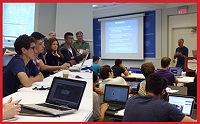
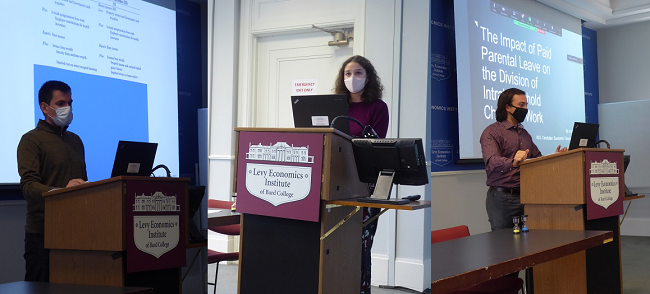
The Levy Economics Institute of Bard College is pleased to announce it will be holding a summer seminar June 11–June 18, 2022. Through lectures, hands-on workshops, and breakout groups, the seminar will provide an opportunity to engage with the theory and policy of Modern Money Theory (MMT) and the work of Institute Distinguished Scholars Hyman Minsky and Wynne Godley. Intended for those who are introducing themselves to these approaches as well as those who are looking to deepen their understanding, the seminar will be of particular interest to graduate students, recent graduates, and those at the beginning of their academic or professional careers.
The seminar will be limited to 60 attendees. For more information, including a preliminary list of speakers and instructions on how to apply, please visit the conference website.
|
  |
Working Paper No. 999, January 2022
Structural Change, Productive Development, and Capital Flows: Does Financial “Bonanza” Cause Premature Deindustrialization?
Alberto Botta, Giuliano Toshiro Yajima, and Gabriel Porcile
Alberto Botta, University of Greenwich, Giuliano Toshiro Yajima, University of Rome-La Sapienza, and Gabriel Porcile, UN-ECLAC, analyze the factors that may have hindered productive development during the four decades prior to the COVID-19 pandemic. Investigate the role of (non-FDI) net capital inflows as a potential source of premature deindustrialization, they consider a sample of 36 developed and developing countries from 1980 to 2017, with major emphasis on the case of emerging and developing economies (EDE) in the context of increasing financial integration to show that periods of abundant capital inflows may have caused the significant contraction of manufacturing share to employment and GDP, as well as the decrease of the economic complexity index.
Read complete text (pdf) |
Working Paper No. 998, January 2022
Technology and Productivity: A Critique of Aggregate Indicators
Fred Block
Fred Block, UC Davis, examines the use of total factor productivity (TFP) for evaluating the effectiveness with which advances in technology are applied in an economy, finding that this measure is problematic on several different dimensions. Contrary to the TFP literature that posits that as an economy faces the headwinds of slowing technological advancement, slower growth will continue into the future, he finds other indicators that suggest the current rates of technological progress might be as strong or stronger than in earlier decades.
Read complete text (pdf) |
Working Paper No. 997, December 2021
Identity and Well-Being in the Skilled Crafts and Trades
Martin Binder and Ann-Kathrin Blankenberg
Research Associate Martin Binder and Ann-Kathrin Blankenberg, Bard Berlin, analyze the extent to which occupational identity is conducive to worker well-being. Using a unique dataset of individuals working in the German skilled crafts and trades, they employ a novel occupational identity measure that captures identity more broadly than just referring to organizational identification and social group membership, finding occupational identity is positively associated with a number of work characteristics and that identity mediates the influence of these characteristics with regard to job satisfaction.
Read complete text (pdf) |
Levy Graduate Programs in Economic Theory and Policy Now Accepting Students for Fall 2022
|
Backed by over 30 years of proven policy impact, the Levy Institute Graduate Programs in Economic Theory and Policy provide innovative approaches to topics such as time use, poverty, gender, student debt, and employment that other programs neglect, encouraging students to evaluate policies, examine behavior, and dig deeper into the social phenomena that underlie economic outcomes. Research from this year’s class focuses on diverse topics including the care economy and the social division of labor; the roots of migration crises in El Salvador; a stock-flow model for Germany; Latin America’s debt and the prospects of an alternate currency; wealth tax incidence in the United States; and unpaid labor in Nepal.
Along with a challenging academic environment, the Levy programs also offer a supporting and caring community where students benefit from sharing their research with faculty and their peers to promote academic exchanges and intellectual collaboration.
To find out more, visit bard.edu/levygrad or follow the program’s Facebook page.
Applications for fall 2022 are now open. Interested students should contact the program recruiter, Martha Tepepa ([email protected]), to discuss their options. Scholarships are available. |
A January 11 piece in MarketWatch cites the latest public policy brief by Institute President Dimitri B. Papadimitriou and Senior Scholar L. Randall Wray, in which they argue that the Fed predicates its policies on the idea that expectations drive inflation when the opposite is true, giving the central bank far less control over inflation than is presumed.
On January 24, Senior Scholar Jan Kregel participated in the Italian Post-Keynesian Network’s roundtable, New Forms of Money and the Structure of the Financial System. More information and a link to watch a recording of the session can be found on the IPKN’s website.
Senior Scholar L. Randall Wray participated in two sessions of the 2nd International European Modern Monetary Theory Conference 2021: Economic Policy in a Post-Pandemic World, with a lecture on the Green New Deal and a then as part of a panel discussion on inequality. On November 6th he discussed the Green New Deal with David Rosenberg for the KPFA Evening News and on November 16th he joined David Swanson on Talk World Radio to discuss the topic “Is Wall Street Taking Over Ownership of Nature?”
Research Scholar Luiza Nassif Pires testified at an online public hearing at the Chamber of Deputies of Brazil on November 30th. She discussed the importance of cash transfer programs in Brazil, with a focus on women of color, who were especially impacted by the COVID-19 crisis. On December 11th, she was interviewed for folha de São Paulo on her newest study with colleagues at MADE-USP, which shows that in Brazil, the top 1 percent of the adult white male population (705,000 individuals) takes home a larger share of income than all adult black women (33 million individuals).
In a new report for the Economic Policy Institute, Marokey Sawo (’20) and coauthors show that child care and home health care workers—a group consisting mainly of women and disproportionately Black, Hispanic, and Asian American/Pacific Islander (AAPI) women and immigrant women—are deeply undervalued and underpaid. The authors estimate what fair and equitable wages would look like in the care sectors and build a framework for thinking about how to achieve them.
Andrew Bunker (’19) coauthored a report for Action Aid USA on “IMF Surveillance and Climate Change Transition Risks: Reforming IMF policy advice to support a just energy transition.” This report, released amidst the overlapping global crises of the COVID-19 pandemic, the worsening climate crisis, and the widening inequality gap within and between countries, argues that current IMF policy advice undermines many countries’ ability to undertake a just energy transition, suggesting that the Fund reevaluate how its advice affects member countries’ vulnerabilities.
Levy scholars mourn the death of Geoff Harcourt, a prominent economist who made immeasurable contributions to the fields of capital theory and economic thought.
|
|
|
|
|
|
|
|
You are receiving this e-mail because you either signed up at the Levy Institute website or filled out a request card asking to be placed on this list. If you have trouble accessing the Levy Institute's website, please send a brief description of the problem to [email protected].
Copyright © 1986–2022, Levy Economics Institute, Annandale-on-Hudson, NY 12504-5000. All rights reserved.
No responsibility is assumed by the publisher for any injury and/or damage to persons or property as a matter of products liability, negligence, or otherwise, or from any use or operation of any methods, products, instructions, or ideas contained in the material herein.
|
|
|