

Research Programs

The State of the US and World Economies
This program's central focus is the use of Levy Institute macroeconomic models in generating strategic analyses of the US and world economies. The outcomes of alternative scenarios are projected and analyzed, with the results—published as Strategic Analysis reports—serving to help policymakers understand the implications of various policy options.The Levy Institute macroeconomic models, created by Distinguished Scholar Wynne Godley, are accounting based. The US model employs a complete and consistent system (in that all sectors “sum up,” with no unaccounted leakages) of stocks and flows (such as income, production, and wealth). The world model is a “closed” system, in which 11 trading blocs—of which the United States, China, Japan, and Western Europe are four—are represented. This model is based on a matrix in which each bloc’s imports are described in terms of exports from the other 10 blocs. From this information, and using alternative assumptions (e.g., growth rates, trade shares, and energy demands and supplies), trends are identified and patterns of trade and production analyzed.
The projections derived from the models are not presented as short-term forecasts. The aim is to display, based on analysis of the recent past, what it seems reasonable to expect if current trends, policies, and relationships continue. To inform policy, it is not necessary to establish that a particular projection will come to pass, but only that it is something that must be given serious consideration as a possibility. The usefulness of such analyses is strategic: they can serve to warn policymakers of potential dangers and serve as a guide to policy instruments that are available, or should be made available, to deal with those dangers, should they arise.
United States
-
Working Paper No. 1042 | February 2024For more than 25 years, the Social Security Trust Fund was projected to run out of money in 2033 (give or take a few years), potentially causing benefits to be severely reduced in the absence of corrective legislative action. Today (February 2024), projections are made by the Social Security Administration that indicate that future benefits will need to be reduced by roughly 25 percent or taxes will need to be increased by about 33 percent, or some combination to avoid benefit curtailment. While Congress will most probably prevent benefits from being reduced for retirees and those nearing retirement, the longer Congress and the president take to address the shortfall, the more politically unpalatable (and possibly draconian) the solutions will be for all others.
Dozens of proposals are being evaluated to address the long-term problem by mainstream benefits experts, economists, think tanks, politicians, and government agencies but, with rare exceptions from a few economists, none address the short-term problem of Trust Fund depletion, provide a workable roadmap for the long-term challenges, or consider fundamental financing differences between the federal government and the private sector.
This paper aims to address these issues by suggesting legislative changes that will protect the Social Security system indefinitely, help ensure the adequacy of benefits for retirees and their survivors and dependents, and remove confusing and misleading legislative and administrative complexity. In making recommendations, this paper will demonstrate that the Social Security Trust Funds, while legally distinct, are essentially an artificial accounting contrivance within the US Treasury that have become a tool to force program changes that, for ideological reasons, will likely shift an increasing financial burden onto those who can least bear it. Finally, while the focus of this paper is on the Social Security system, it would be incomplete without also addressing, albeit in a limited way, the larger political issue of the nation’s debt and deficit along with the implications for inflation.Download:Associated Program(s):Author(s):Edward LaneRelated Topic(s):Deficit financing Deficits Inflation Social Security Tax policy Treasury Welfare economics Welfare policy Welfare stateRegion(s):United States Strategic Analysis | July 2023In this Strategic Analysis, Dimitri B. Papadimitriou, Michalis Nikiforos, Giuliano T. Yajima, and Gennaro Zezza discuss how the current state and structural features of the US economy might affect its future trajectory. The recent recovery after the pandemic has been remarkable, when compared to previous cycles, and offers evidence of the efficacy of fiscal policy. Moreover, the inflation rate has been finally decelerating as the problems in global value chains that emerged after the pandemic are resolving and the price of commodities and oil, which spiked after the pandemic and the war in Ukraine, are stabilizing.
Yet despite the recent success of fiscal policy in promoting output and employment growth, the recent debt ceiling deal—culminating in the 2023 Fiscal Responsibility Act—risks putting the US economy on the austerity path of the previous decade. And given the structural weaknesses of the US economy—including its high current account deficits, high level of indebtedness of firms, and overvalued stock and real estate prices—this projected fiscal policy tightening, combined with the impacts of high interest rates, could lead to a significant slowdown of the US economy.
The US economy, the authors contend, is in need of a structural transformation toward modernizing its infrastructure, promoting industrial policy, and investing in the greening of its economy and environmental sustainability. A necessary condition for achieving these goals is an increase in government expenditure; they show that such an increase could also have positive demand effects on output and employment.Download:Associated Program:Author(s):Related Topic(s):Region(s):United StatesPolicy Note 2023/1 | May 2023In 2022, Greek GDP grew at a higher rate than the eurozone average as the nation’s economy rebounded from the COVID-19 shock.
However, it was not all welcome news. In particular, Greece registered its largest current account deficit since 2009. Despite a widespread focus on fiscal profligacy, it is excessive current account and trade deficits—largely caused by private sector imbalances—that are at the root of Greece’s multiple economic challenges. This policy note identifies the major determinants causing the deterioration of the current account balance in order to devise appropriate corrective policies.Download:Associated Program:Author(s):Related Topic(s):COVID-19 Current account imbalances Deficits Eurozone Greece Greek economic crisis Sectoral balancesRegion(s):United States, EuropeWorking Paper No. 1018 | April 2023How to Deal with the “Demographic Time Bomb”
The aging of the global population is in the headlines following a report that China’s population fell as deaths surpassed births. Pundits worry that a declining Chinese workforce means trouble for other economies that have come to rely on China’s exports. France is pushing through an increase of the retirement age in the face of what is called a demographic “time bomb” facing rich nations, created by rising longevity and low birthrates. As we approach the debt limit in the US, while President Biden has promised to protect Social Security, many have returned to the argument that the program is financially unsustainable. This paper argues that most of the discussion and policy solutions proposed surrounding aging of populations are misfocused on supposed financial challenges when they should be directed toward the challenges facing resource provision. From the resource perspective, the burden of caring for tomorrow’s seniors seems far less challenging. Indeed, falling fertility rates and an end to global population growth should be welcomed. With fewer children and longer lives, investment in the workers of the future will ensure growth of productivity that will provide the resources necessary to support a higher ratio of retirees to those of working age. Global population growth will peak and turn negative, reducing demands on earth’s biosphere and making it easier to transition to environmental sustainability. Rather than facing a demographic “time bomb,” we can welcome the transition to a mature-aged profile.Download:Associated Program:Author(s):Related Topic(s):Birth rate Demographic trends Population control policy Social Security Unpaid care work Unpaid laborRegion(s):United States, AsiaWorking Paper No. 1017 | April 2023This paper revisits a traditional theme in the literature on the political economy of development, namely how to redistribute rents from traditional exporters of natural resources toward capitalists in technology-intensive sectors with a higher potential for innovation and the creation of higher-productivity jobs. Porcile and Lima argue that this conflict has been reshaped in the past three decades by two major transformations in the international economy. The first is the acceleration of technical change and the key role governments play in supporting international competitiveness. This role provides the strategic public goods to foster innovation and the diffusion of technology (what Christopher Freeman called “technological infrastructure”). The second is the impact of financial globalization in limiting the ability of governments in the periphery to tax and/or issue debt to finance those public goods. Capital mobility allows exporters of natural resources to send their foreign exchange abroad to arbitrate between domestic and foreign assets, and to avoid taxation. Using a macroeconomic model for a small, open economy, the authors argue that in this more complex international context, the external constraint on output growth assumes different forms. They focus on two polar cases: the “pure financialization” case, in which legal and illegal capital flights prevent the government from financing the provision of strategic public goods; and the “trade deficit” case, in which private firms in the more technology-intensive sector cannot import the capital goods they need to expand industrial production.Download:Associated Program:Author(s):Gabriel Porcile Gilberto Tadeu LimaRelated Topic(s):Region(s):United StatesWorking Paper No. 1015 | February 2023Fractional reserve regimes generate fragile banking, and full reserve regimes (e.g., narrow banking) remove fragility at the cost of suppressing the role of banks as lenders. A Central Bank Digital Currency (CBDC) could provide safe money, but at the cost of potentially disrupting bank lending. Our aim is to avoid this potential disruption. Building on the recent literature on CBDCs, in this study we propose what we call the “CBDC next-level model,” whereby the central bank creates money by lending to banks, and banks on-lend the proceeds to the economy. The proposed model would allow for deposits to be taken off the balance sheet of banks and into the balance sheet of the central bank, thereby removing significant risk from the banking system without adversely impacting banks’ basic business. Once CBDC is injected in the system, irrespective of however it is used, wherever it accumulates, and whoever holds and uses it, it will always represent central bank equity, and no losses or defaults by individual banks or borrowers can ever dent it or weaken the central bank’s capital position or hurt depositors. Yet, individual borrowers and banks would still be required to honor their debt in full, lest they would be bound to exit the market or even be forced into bankruptcy. The CBDC next-level model solution would eliminate the threat of bank runs and system collapse and induce a degree of financial stability (“super-stability”) that would be unparalleled by any existing banking system.Download:Associated Program:Author(s):Biagio Bossone Michael HainesRelated Topic(s):Banking Banks Central bank policy Central banking Commercial banking Currency issuers vs. currency users Full-reserve banking Monetary policy Money and banking Money creation Seigniorage StabilityRegion(s):United StatesWorking Paper No. 1013 | January 2023A Sectoral Multiplier Analysis for the United States
We assess the sectoral impact of the implementation of a “green” employer of last resort (ELR) program in the US, based on an environmental modification of an extended Kurz’s (1985) multiplier framework and data from OECD Input-Output tables. We use these multipliers to estimate the impact of an “optimal” ELR, designed to maximize the impact on both output and employment while minimizing both imports and carbon emissions. We then test several alternative policy scenarios based upon different compositions of US government expenditure. We provide evidence that (1) investing in the optimal sectors in terms of output, employment, Co2, and import multipliers does not always deliver optimal results in the aggregate; (2) ecological sustainability for the US economy also fosters import sustainability; (3) a rebounding effect in Co2 emissions may be tamed if the ELR satisfies the abovementioned optimality condition, though this undermines its success in terms of output and employment.Download:Associated Program(s):The State of the US and World Economies Climate Change and Economic Policy Economic Policy for the 21st CenturyAuthor(s):Related Topic(s):Climate Change and Economic Policy Employer of Last Resort (ELR) policy Employment guarantee Green jobs Green New Deal Job guarantee Structural changeRegion(s):United StatesOne-Pager | December 2022While the trigger for the Covid recession was unusual—a collapse of the supply side that produced a drop in demand—the inflation the US economy is now facing is not atypical, according to L. Randall Wray. In this one-pager, he explores the causes of the current inflationary environment, arguing that continuing inflation pressures come mostly from the supply side.
Wray warns that, given federal spending had already been declining substantially before the Fed started raising interest rates, rate hikes make a recession—and potentially stagflation—even more likely. A key part of our fiscal policy response should be focused on well-designed public investment addressing the substantial supply constraints still affecting the US economy—constraints that are not just due to the Covid crisis, but also decades of underinvestment in infrastructure. Such an approach, in Wray's view, would reduce inflationary pressures while supporting growth.
Download:Associated Program(s):The State of the US and World Economies Monetary Policy and Financial Structure Federal Budget PolicyAuthor(s):Related Topic(s):Region(s):United StatesStrategic Analysis | August 2022The Fed Conundrum
In this report, Institute President Dimitri B. Papadimitriou, Research Scholar Michalis Nikiforos, and Senior Scholar Gennaro Zezza analyze how and why the US economy has achieved a swift recovery in comparison with the last few economic cycles.
This recovery has nevertheless been accompanied by significant increases in the trade deficit and inflation. Papadimitriou, Nikiforos, and Zezza argue that the elevated rate of inflation has been largely unrelated to the level of demand or the pace of the recovery, and has more to do with pandemic-related disruptions, the war in Ukraine, and the beginning of a new commodity super cycle.
The authors also identify persistent Minskyan processes that mean the US economy remains fundamentally unstable, with a risk of financial crisis and potentially severe consequences in terms of output and employment—a risk heightened by the reversal of the loose monetary policy that has prevailed over the last decade and a half. In their first scenario, they simulate the macroeconomic impact of such a financial crisis and private sector deleveraging. In two additional scenarios, the authors analyze the likely effects of a new round of fiscal stimulus that would be necessary in case of a crisis: a deficit-financed expenditure boost with no offsetting revenue increases, and a deficit-neutral scenario in which taxation of high-income households increases by an amount equivalent to the expansion of public expenditure.Download:Associated Program:Author(s):Region(s):United StatesPublic Policy Brief No. 157 | April 2022The Fed Cannot Engineer a Soft Landing but Risks Stagflation by Trying
Roughly two years into the economic recovery from the COVID-19 crisis, the topic of elevated inflation dominates the economic policy discourse in the United States. And the aggressive use of fiscal policy to support demand and incomes has commonly been singled out as the culprit. Equally as prevalent is the clamor for the Federal Reserve to raise interest rates to relieve inflationary pressures. According to Research Scholar Yeva Nersisyan and Senior Scholar L. Randall Wray, this narrative is flawed in a number of ways. The problem with the US economy is not one of excess of demand in their view, and the Federal Reserve will not be able to engineer a “soft landing” in the way many seem to be expecting. The authors also deliver a warning: excessive tightening, combined with headwinds in 2022, could lead to stagflation. Moreover, while this recovery looks robust in comparison to the jobless recoveries and secular stagnation that have typified the last few decades, in Nersisyan and Wray’s estimation there are few signs of an overheating economy to be found in the macro data. In their view, this inflation is not centrally demand driven; rather dynamics at the micro-level are playing a much more central role in driving the price increases in question, while significant supply chain problems have curtailed productive capacity by disrupting the availability of critical inputs.
The authors suggest there is a better way to conduct policy—one oriented around targeted investments that would increase our real resource space. This will serve not only to address inflationary pressures, according to Nersisyan and Wray, but also the far more pressing climate emergency.Download:Associated Program:Author(s):Region(s):United StatesEurope
-
Strategic Analysis | February 2024In this report, Dimitri B. Papadimitriou, Nikolaos Rodousakis, Giuliano T. Yajima, and Gennaro Zezza investigate the determinants of the recent performance of the Greek economy.
Despite geopolitical instability from the continuing Ukraine-Russia and Israel-Gaza wars and higher-than-expected inflation rates, the country has managed to register the highest growth rates among eurozone member-states in 2021 and 2022.
Yet the authors’ projections, based on 2023Q3 official statistics, show that there will be a deceleration of GDP growth in the upcoming two years. This will be driven mainly by sluggish consumption demand due to the falling trend of real wages and persistent higher imported inflation, coupled with the inability of the government to deploy NGEU funds and a significant loss of production due to climate damage from floods and fires. These dynamics will likely continue the brain drain of skilled workers, who opt to move abroad for better employment opportunities. The overreliance of the Greek economy on tourism is also questioned, given the dependency on foreign industrial inputs.Download:Associated Program:Author(s):Related Topic(s):Region(s):EuropePolicy Note 2023/2 | June 2023Following the recent (June 25, 2023) elections in Greece, Institute President Dimitri B. Papadimitriou and Research Scholar Nikolaos Rodousakis outline the economic and policy challenges facing the Greek government.Download:Associated Program:Author(s):Related Topic(s):Region(s):EuropePolicy Note 2023/1 | May 2023In 2022, Greek GDP grew at a higher rate than the eurozone average as the nation’s economy rebounded from the COVID-19 shock.
However, it was not all welcome news. In particular, Greece registered its largest current account deficit since 2009. Despite a widespread focus on fiscal profligacy, it is excessive current account and trade deficits—largely caused by private sector imbalances—that are at the root of Greece’s multiple economic challenges. This policy note identifies the major determinants causing the deterioration of the current account balance in order to devise appropriate corrective policies.Download:Associated Program:Author(s):Related Topic(s):COVID-19 Current account imbalances Deficits Eurozone Greece Greek economic crisis Sectoral balancesRegion(s):United States, EuropeStrategic Analysis | October 2022In this strategic analysis, Institute President Dimitri B. Papadimitriou, Senior Scholar Gennaro Zezza, and Research Associate Nikolaos Rodousakis discuss the medium-term prospects for the Greek economy in a time of increasing uncertainty—due to the geopolitical turbulence emanating from the Ukraine–Russian conflict, with its impact on the cost of energy, as well as the increase in international prices of some commodities.
Growth projections for the current year are lower than those recorded in 2021, indicating the economy needs to perform much better if it is to continue on the growth path that began in the pre-pandemic period. Similarly, growth projections for 2023 and 2024 appear much weaker, denoting serious consequences may be in store.
With increasing price levels and the euro depreciating, an economy like Greece’s that is highly dependent on increasingly costly imports will become more fragile as the current account deficit widens. In the authors’ view, the continuous recovery of the Greek economy rests with the government’s ability to utilize the NGEU funds swiftly and efficiently for projects that will increase the country’s productive capacity.
Download:Associated Program:Author(s):Related Topic(s):Region(s):EuropeWorking Paper No. 1010 | September 2022Angela Merkel is the second-longest-serving chancellor of modern Germany, with more than 16 years in office. During her tenure there were many years of economic stability, but there were also years of domestic, EU, and geopolitical tensions. Merkel inherited an economy that was recovering after the launching of probusiness policies known as the Hartz I IV Reforms, introduced by the government of the previous chancellor, Gerhard Schröder. Chancellor Merkel was criticized for mishandling the eurocrisis, as she failed to declare support for the financially distressed eurozone countries. Instead she convinced EU officials and country leaders to adopt a contractionary fiscal policy in the midst of a recession. As a result of the austerity measures, Merkel became popular among the German taxpayers and voters. This triggered credit rating agencies to downgrade the government bonds of the periphery eurozone countries and investors to sell these bonds, driving their prices to zero. Periphery eurozone countries came close to bankruptcy but were jointly bailed out by the EU and the IMF, though this prolonged the crisis. As a result of the imposed austerity, which was unnecessary and avoidable, millions of people became unemployed and experienced poverty, loss of dignity, and humiliation and Greece was the country hit hardest. For Merkel, placing national interests above EU interests was the most important mistake in her career; it took, however, a bigger crisis (i.e., the COVID-19 pandemic), to convince Merkel to place EU interests above national interests.Download:Associated Program:Author(s):George Zestos Harrison Whittleton Alejandro Fernandez-RibasRelated Topic(s):Region(s):EuropePolicy Note 2022/2 | April 2022Measuring Income Loss and Poverty in Greece
More than a decade after the 2009 crisis, the standards of living of the Greek population are still contracting and the prospects are gloomy. In this policy note, Vlassis Missos, Research Associate Nikolaos Rodousakis, and George Soklis deal with how to approach the measurement of income loss and poverty in Greece and argue for the use of household disposable income (HDI) in estimating adjustments, which offers a more accurate appreciation of the burden falling on the Greek population. They underline the significance of replacing a “southern-European model” of social protection with a passive safety net model—and the centrality to the latter model of embracing ideas of internal devaluation and fiscal consolidation—and suggest a better measure of poverty, for the case of Greece specifically and in general for developed economies in which front-loaded neoliberal policies are imposed. Finally, they comment on the sacrifice that would be required if fiscal discipline were to return in the aftermath of the COVID-19 pandemic lockdowns.Download:Associated Program:Author(s):Related Topic(s):Region(s):EuropeWorking Paper No. 1005 | April 2022Starting from the seminal works of Wynne Godley (1999; Godley and Lavoie 2005, 2007a, 2007b), the literature adopting stock-flow consistent (SFC) models for two or more countries has been flourishing, showing that consistently taking into account real and financial markets of two open economies will generate different results with respect to more traditional open economy models. However, few contributions, if any, have modeled two regions in the same country, and our paper aims at filling this gap. When considering a regional context, most of the adjustment mechanisms at work in open economy models—such as exchange rate movements, or changes in interest on public debt—are simply not present, as they are controlled by "external” authorities. So, what are the adjustment mechanisms at work?
To answer this question, we adapt the framework suggested in Godley and Lavoie (2007a) to consider two regions that share the same monetary, fiscal, and exchange rate policies. We loosely calibrate our model to Italian data, where the South (Mezzogiorno) has both a lower level of real income per capita and a lower growth rate than the North. We also introduce a fragmented labor market, as discouraged workers in the South will move North in hopes of finding commuting jobs.
Our model replicates some key features of the Italian economy and sheds light on the interactions between financial and real markets in regional economies with “current account” imbalances.Download:Associated Program:Author(s):Related Topic(s):Region(s):EuropeStrategic Analysis | March 2022In this strategic analysis, Institute President Dimitri B. Papadimitriou, Research Scholar Gennaro Zezza, and Research Associate Nikos Rodousakis analyze how the Greek economy started to recover from the shock of the COVID-19 pandemic and the prospects of continuing and sustaining its recovery. A key contribution is linked to tourism, which increased significantly in 2021, notwithstanding the pandemic, but was still very much below its 2019 level; it is expected, however, to continue its recovery in the current year. In addition, a key role will be played by NGEU funds and the Greek government’s capacity to use such funds in an effective and timely manner when starting and completing the already approved capital projects. A potential threat is linked to the possibility that persistent inflation will drive up the cost of borrowing, reducing the government’s fiscal space. Another “known unknown” —not considered in this report—is the geopolitical turbulence emanating from the Ukraine–Russian conflict, adding an additional layer of uncertainty to the medium-term prospects for Europe and Greece.Download:Associated Program:Author(s):Region(s):EuropePolicy Note 2022/1 | February 2022In 2020, the Hellenic Statistical Authority (ElStat) started a revision of the national accounts for Greece to bring them into line with the new European System of Accounts. Data from national accounts have gained more relevance as a crucial set of information for policy, especially in the eurozone, since many indicators—like the size of the public deficit relative to GDP—depend on them. It is therefore crucial that these data provide a realistic description of the actual state of the economy.
Models that aim at understanding the medium-term trajectory of an economy usually need to abstract from short-term volatility due to the seasonal behavior of some variables, and it is therefore common practice to use seasonally adjusted data rather than the observed seasonal data. Research Scholar Gennaro Zezza, Institute President Dimitri Papadimitriou, and Research Associate Nikos Rodousakis recently noticed that the dynamics of relative prices, as measured by the ratios between the deflators of the different seasonally adjusted components of GDP, had an excess volatility, which made it more difficult to obtain meaningful econometric estimates of their determinants. They have therefore decided to investigate whether this excess volatility could be observed in the original seasonal data, and this note documents their results.Download:Associated Program:Author(s):Related Topic(s):Region(s):EuropeAsia
-
Working Paper No. 1047 | April 2024
Analyzing the Tax Buoyancy of the Extractive Sector
Against the backdrop of fiscal transition concomitant to energy transition policies with climate change commitments, revenue from the extractive sector needs a recalibration in the subnational fiscal space. Extractive tax is the payment due to the government in exchange for the right to extract the mineral substance. Extractive tax has been fixed and paid in multiple tax regimes, sometimes on the measures of ad valorem (value-based) or profits or as the unit of the mineral extracted. Using the ARDL methodology, this paper analyzes the buoyancy of extractive revenue across the states in India, for the period 1991–92 to 2022–23 and analyzes the short- and long-run coefficients and their speed of adjustment. There are no identified structural breaks in the series predominantly because of the homogenous extractive policy regime shift to ad valorem from a unit-based regime. Our findings revealed that extractive tax is a buoyant source of own revenue, though there are distinct state-specific differentials. The policy implication of our study is crucial for a “just transition” related to climate change commitments where extractive industries’ tax buoyancy is compared to other tax buoyancy across Indian states, and can be used as the base scenario to estimate the loss of revenue when fiscal transition sets in with “just transition” policies.Download:Associated Program:Author(s):Lekha S. Chakraborty Emmanuel ThomasRelated Topic(s):Region(s):AsiaWorking Paper No. 1040 | February 2024Against the backdrop of COP28, this paper investigates the impact of intergovernmental fiscal transfers (IGFT) on climate change commitments in India. Within the analytical framework of environmental federalism, we tested the evidence for the Environmental Kuznets Curve (EKC) using a panel model covering 27 Indian states from 2003 to 2020. The results suggest a positive and significant relationship between IGFT and the net forest cover (NFC) across Indian states. The analysis also suggests an inverse-U relationship between Gross State Domestic Product (GSDP) and the environmental quality, indicating a potential EKC for India. The findings substantiate the fiscal policy impacts for climate change commitments within the fiscal federal frameworks of India, and the significance of IGFT in increasing the forest cover in India. This has policy implications for the Sixteenth Finance Commission of India in integrating a climate change–related criterion in the tax-transfer formula in a sustainable manner.Download:Associated Program(s):Author(s):Related Topic(s):Region(s):AsiaWorking Paper No. 1039 | February 2024An Assessment Based on the Estimation of the Balance-of-Payments–Constrained Growth Rate
We expand the standard balance-of-payments–constrained (BOPC) growth rate model in three directions. First, we take into account the separate contributions of exports in goods, exports in services, overseas remittances, and foreign direct investment (FDI) inflows. Second, we use state-space estimation techniques to obtain time-varying parameters of the relevant coefficients. Third, we test for the endogeneity of output in the import equation. We apply this framework to assess the feasibility of the target set by the new Philippine administration of President Marcos (elected in 2022) to attain an annual GDP growth rate of 6.5–8 percent during 2024–28. We obtain an estimate of the growth rate consistent with equilibrium in the basic balance of the Philippines of about 6.5 percent in 2021 (and declining during the years prior to it). This BOPC growth rate is below the 6.5–8 percent target. We also find that exchange-rate depreciations will not lead to an improvement in the BOPC growth rate. The Philippines must lift the constraints that impede a higher growth of exports. In particular, it must shift its export structure toward more sophisticated products with a higher income elasticity of demand.Download:Associated Program:Author(s):Jesus Felipe Manuel L. AlbisRelated Topic(s):Region(s):AsiaWorking Paper No. 1030 | October 2023An Analysis of Political Settlements, Rents, and Deals
The main gateway for the Philippines to develop and become an upper-middle-income economy—and eventually, a high-income economy—is to expedite the shift of workers out of agriculture and to produce and export more complex products with a higher income elasticity of demand. The actual growth rate is constrained by the balance-of-payments equilibrium growth rate, about 6 percent—the maximum the country can attain without incurring balance-of-payments problems. We use the Pritchett-Sen-Werker political-economy framework to analyze the roles of different types of firms and the deals environment from successive Philippine administrations until the current one. Due to their economic size and political power, only the nation’s conglomerates will be able to lead the transformation of the economy. However, the country’s large groups do not have incentives nor do they see the need to shift to the production and export of tradables. Without this transformation, the country will be able to register positive growth but will not become an internationally competitive economy, and will not be able to achieve, and especially maintain, the growth rate targeted by the current administration: 6.5–8 percent per annum during 2023–28.Download:Associated Program:Author(s):Related Topic(s):Region(s):AsiaWorking Paper No. 1029 | September 2023The year 2023 commemorates the 30th anniversary of the publication of the influential, yet controversial, study The East Asian Miracle report by the World Bank (1993). An important part of the report’s analysis was concerned with the sources of growth in East Asia. This was based on the neoclassical decomposition of growth into productivity and factor accumulation. At about the same time, the publication of Alwyn Young’s (1992, 1995) and J. I. Kim and Lawrence Lau’s (1994) studies, and Paul Krugman’s (1994) popularization of the “zero total factor productivity growth” thesis, led to a very important debate within the profession, on the sources of growth in East Asia. The emerging literature on China’s growth during the 1990s also used the neoclassical growth model to decompose overall growth into total factor productivity growth and factor accumulation. This survey reviews what the profession has learned during the last 30 years about East Asia’s growth, using growth-accounting exercises and estimations of production functions. It demystifies this literature by pointing out the significant methodological problems inherent in the neoclassical growth-accounting approach. We conclude that the analysis of growth within the framework of the neoclassical model should be seriously questioned. Instead, we propose that researchers look at other approaches, for example, the balance-of-payments–constrained growth rate approach of Thirlwall (1979) or the product space of Hidalgo et al. (2007), together with the notion of complexity of Hidalgo and Hausmann (2009).Download:Associated Program:Author(s):Jesus Felipe John McCombieRelated Topic(s):Region(s):AsiaPolicy Note 2023/4 | August 2023Nischal Dhungel examines the impact of India’s demonetization experiment—an effort at “forced formalization” of the economy. He urges a more organic approach to formalization, pairing efforts to bring the unbanked population into the banking system with greater funding and accessibility for India’s signature employment guarantee program.Download:Associated Program:Author(s):Nischal DhungelRelated Topic(s):Banking Banking system Banks COVID-19 Currency devaluation Currency revaluation Economic crisis Employment guarantee GDP growth IndiaRegion(s):AsiaWorking Paper No. 1018 | April 2023How to Deal with the “Demographic Time Bomb”
The aging of the global population is in the headlines following a report that China’s population fell as deaths surpassed births. Pundits worry that a declining Chinese workforce means trouble for other economies that have come to rely on China’s exports. France is pushing through an increase of the retirement age in the face of what is called a demographic “time bomb” facing rich nations, created by rising longevity and low birthrates. As we approach the debt limit in the US, while President Biden has promised to protect Social Security, many have returned to the argument that the program is financially unsustainable. This paper argues that most of the discussion and policy solutions proposed surrounding aging of populations are misfocused on supposed financial challenges when they should be directed toward the challenges facing resource provision. From the resource perspective, the burden of caring for tomorrow’s seniors seems far less challenging. Indeed, falling fertility rates and an end to global population growth should be welcomed. With fewer children and longer lives, investment in the workers of the future will ensure growth of productivity that will provide the resources necessary to support a higher ratio of retirees to those of working age. Global population growth will peak and turn negative, reducing demands on earth’s biosphere and making it easier to transition to environmental sustainability. Rather than facing a demographic “time bomb,” we can welcome the transition to a mature-aged profile.Download:Associated Program:Author(s):Related Topic(s):Birth rate Demographic trends Population control policy Social Security Unpaid care work Unpaid laborRegion(s):United States, AsiaWorking Paper No. 999 | January 2022Does Financial “Bonanza” Cause Premature Deindustrialization?
The outbreak of COVID-19 brought back to the forefront the crucial importance of structural change and productive development for economic resilience to economic shocks. Several recent contributions have already stressed the perverse relationship that may exist between productive backwardness and the intensity of the COVID-19 socioeconomic crisis. In this paper, we analyze the factors that may have hindered productive development for over four decades before the pandemic. We investigate the role of (non-FDI) net capital inflows as a potential source of premature deindustrialization. We consider a sample of 36 developed and developing countries from 1980 to 2017, with major emphasis on the case of emerging and developing economies (EDE) in the context of increasing financial integration. We show that periods of abundant capital inflows may have caused the significant contraction of manufacturing share to employment and GDP, as well as the decrease of the economic complexity index. We also show that phenomena of “perverse” structural change are significantly more relevant in EDE countries than advanced ones. Based on such evidence, we conclude with some policy suggestions highlighting capital controls and external macroprudential measures taming international capital mobility as useful tools for promoting long-run productive development on top of strengthening (short-term) financial and macroeconomic stability.Download:Associated Program:Author(s):Related Topic(s):Region(s):United States, Latin America, Europe, Middle East, Africa, AsiaWorking Paper No. 938 | October 2019Nominal yields for Japanese government bonds (JGBs) have been remarkably low for several decades. Japanese government debt ratios have continued to increase amid a protracted period of stagnant nominal GDP, low inflation, and deflationary pressures. Many analysts are puzzled by the phenomenon of JGBs’ low nominal yields because Japanese government debt ratios are elevated. However, this paper shows that the Bank of Japan’s (BoJ) highly accommodative monetary policy is primarily responsible for keeping JGB yields low for a protracted period. This is consistent with Keynes’s view that the short-term interest rate is the key driver of the long-term interest rate. This paper also relates the BoJ’s monetary policy and economic developments in Japan to the evolution of JGBs’ long-term interest rates.Download:Associated Program(s):Author(s):Tanweer Akram Huiqing LiRelated Topic(s):Government bond yields Japan Japanese government bonds (JGBs) John Maynard Keynes Long-term interest rates Monetary policy Nominal bond yieldsRegion(s):AsiaBook Series | October 2019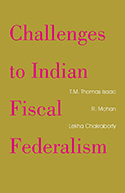 The principle of fiscal federalism enshrined in India's Constitution is under severe strain today. This book is a key addition to understanding the challenges involved. The authors capture the implications of the abolition of the Planning Commission, the introduction of the controversial Goods and Services Tax regime, and formulation of Terms of Reference of the 15th Finance Commission. These include the increase in vertical fiscal inequity, distortion of fairness in inter-State distribution, and erosion of policy autonomy at the level of the States.
Published by: Leftword PressAssociated Program:Related Topic(s):Region(s):AsiaLatin America
-
Working Paper No. 1031 | October 2023This study aims to develop an ecological stock-flow consistent (SFC) model based on the Latin American–stylized facts regarding economic, financial, and environmental features. We combine the macro-financial theoretical framework by Pérez-Caldentey et al. (2021, 2023) and the ecological modeling of Carnevali et al. (2020) and Dafermos et al. (2018). We discuss two scenarios that test exogenous climate-related shocks. The first scenario presents the case in which international regulation on commodity trade becomes more stringent due to environmental concerns, thus worsening the balance-of-payment constraint of the region. The second scenario concerns the increase in frequency and intensity of adverse climate events in the region. Both scenarios show that the financial external constraint that determines the growth path of Latin American economies may be further exacerbated due to environmental-related issues.Download:Associated Program(s):Author(s):Lorenzo Nalin Giuliano Toshiro Yajima Leonardo Rojas Rodriguez Esteban Pérez Caldentey José Eduardo AlatorreRelated Topic(s):Climate change Climate Change and Economic Policy Latin America Stock-flow consistency Stock-flow consistent (SFC) modelingRegion(s):Latin AmericaPolicy Note 2022/3 | May 2022In the second round of the Chilean presidential elections, the coalition led by Gabriel Boric secured a victory under the premise of delivering long-awaited reforms to a financially volatile, structurally fragile, and deeply unequal economic structure. In this policy note, Giuliano Toshiro Yajima sheds light on these three aspects of the Chilean economy, showing that its external and internal fragility feeds back on the excessive specialization and heterogeneity of the productive sectors, which in turn influence income and wealth distribution.Download:Associated Program:Author(s):Region(s):Latin AmericaWorking Paper No. 999 | January 2022
Does Financial “Bonanza” Cause Premature Deindustrialization?
The outbreak of COVID-19 brought back to the forefront the crucial importance of structural change and productive development for economic resilience to economic shocks. Several recent contributions have already stressed the perverse relationship that may exist between productive backwardness and the intensity of the COVID-19 socioeconomic crisis. In this paper, we analyze the factors that may have hindered productive development for over four decades before the pandemic. We investigate the role of (non-FDI) net capital inflows as a potential source of premature deindustrialization. We consider a sample of 36 developed and developing countries from 1980 to 2017, with major emphasis on the case of emerging and developing economies (EDE) in the context of increasing financial integration. We show that periods of abundant capital inflows may have caused the significant contraction of manufacturing share to employment and GDP, as well as the decrease of the economic complexity index. We also show that phenomena of “perverse” structural change are significantly more relevant in EDE countries than advanced ones. Based on such evidence, we conclude with some policy suggestions highlighting capital controls and external macroprudential measures taming international capital mobility as useful tools for promoting long-run productive development on top of strengthening (short-term) financial and macroeconomic stability.Download:Associated Program:Author(s):Related Topic(s):Region(s):United States, Latin America, Europe, Middle East, Africa, AsiaPolicy Note 2021/2 | May 2021The Impact of the Emergency Benefit on Poverty and Extreme Poverty in Brazil
Research Scholar Luiza Nassif-Pires, Luísa Cardoso, and Ana Luíza Matos de Oliveira analyze the importance of the “emergency benefit” (Auxílio Emergencial) in containing the increase in poverty and extreme poverty in Brazil during the COVID-19 pandemic. They find the emergency benefit mitigated the loss of income, brought the poverty rate to historically low levels, and reduced inequality: poverty gaps in terms of gender and (to a lesser degree) race narrowed in 2020. However, their simulations show that a planned reduction in transfer levels for 2021 will result in the emergency benefit providing substantially less social protection against loss of income than its more robust 2020 version.Download:Associated Program(s):Author(s):Related Topic(s):Region(s):Latin AmericaWorking Paper No. 980 | December 2020A Stock-Flow Consistent Framework for Mexico
This working paper empirically and theoretically analyzes the exchange rate’s role in Mexico’s development for the period 2004–19. We test the hypothesis of the re(emergence) of the balance sheet effect due to an increase in external debt in the nonfinancial corporate sector; higher foreign debt would affect private investment after episodes of real currency depreciation, in the spirit of the literature put forward by Gertler, Gilchrist, and Natalucci (2007) and Céspedes, Chang, and Velasco (2004). We build a stock-flow consistent (SFC) model, following the OPENFLEX model proposed in Godley and Lavoie (2006), to explore the balance sheet implications from a theoretical perspective. We simulate the 2014 fall in the Mexican peso generated by the drop in oil prices to replicate stylized facts for Mexico for the period under investigation. The scenario analysis points to a hysteresis effect of the real exchange rate (RER) depreciation on investment flows. That is, firms’ investment ratio does not completely recover from negative shocks in the currency.Download:Associated Program:Author(s):Lorenzo Nalin Giuliano Toshiro YajimaRelated Topic(s):Foreign exchange International finance forecasting Macro-based behavioral economics Modeling methodologyRegion(s):Latin AmericaWorking Paper No. 975 | November 2020Some Insights from an Empirical Stock-Flow Consistent Model
The Argentinean economy has just ended another lost decade. After the peak registered in 2011, the per capita GDP has oscillated with a decreasing trend, leaving the economy poorer than it was ten years before. During these ten years, different governments with conflicting macroeconomic programs were in power, none of them able to save the economy from stagflation. The goal of this paper is to address to what extent the economic performance would have been better had other policy combinations been implemented. The analysis is made through an empirical quarterly stock-flow consistent (SFC) model for the period 2007–19 in order to ensure the coherence of the results and to give the outcomes of the simulations a holistic and dynamically consistent interpretation. From the results of the simulations it seems that the problem that is keeping Argentina in stagflation goes beyond the domain of macroeconomics. The fact that in practice two divergent macroeconomic programs were implemented—neither of them being able to produce good and sustainable macroeconomic performance—is a first symptom that favors the case for that hypothesis. When the model is used to counterfactually test the policy recommendations of these approaches with the external conditions that prevailed while the opposite program was implemented, none of them yield results that can be deemed sustainable. Yet, the model developed in this paper can be useful for studying the different policy combinations that, given a specific context, can bring about more stable and sustainable dynamics for the Argentinean economy.Download:Associated Program:Author(s):Sebastian ValdecantosRelated Topic(s):Region(s):Latin AmericaPublic Policy Brief No. 153 | September 2020After spending over 6 percent of GDP responding to the COVID-19 crisis, Brazil has suffered among the worst per capita numbers in the world in terms of cases and deaths. In this policy brief, Luiza Nassif-Pires, Laura Carvalho, and Eduardo Rawet explore how stark inequalities along racial, regional, and class lines can help account for why the pandemic has had such a damaging impact on Brazil. Although they find that fiscal policy measures have so far neutralized the impact of the crisis with respect to income inequality, the existence of structural inequalities along racial lines in particular have resulted in an unequally shared public health burden. Broader policy changes are necessary for addressing dimensions of inequality that are rooted in structural racism.Download:Associated Program(s):Author(s):Related Topic(s):Region(s):Latin AmericaWorking Paper No. 960 | July 2020Fiscal policy is useful as a government instrument for supporting the economy, contributing to an increase in employment, and reducing inequality through more egalitarian income distribution. Over the past 30 years, developing countries have failed to increase their real wages due to the lack of domestic value-added in the era of globalization, where global supply chains are the driving factor for attracting foreign direct investment. Under such circumstances, the role of fiscal policy has become an important factor in creating the necessary conditions for boosting the economy. With the end of commodity-export-led growth, Mexico experienced a moderate reduction of 5 percent in poverty between 2014 and 2018 due to the structural adjustment of social policies and its economic and trade relationship with the United States; during the same period there has been no change in poverty in Argentina, and Brazil has suffered a rise in poverty. Following the global financial crisis, greater attention has been paid to fiscal policy in developed and developing countries—specifically Argentina, Brazil, and Mexico (ABM)—in order to attain macroeconomic stability. One of the consequences of the financial crisis is rising income inequality and its negative effects on economic growth. Over the past decade, fiscal policy has been adopted for the economic recovery. However, the recovery has been accompanied by a decrease in real wages of the middle class. The purpose of the present research is to critically examine the results of fiscal policy in ABM and the United Nations’ 2030 Agenda for Sustainable Development.Download:Associated Program(s):Author(s):Bendreff DesilusRelated Topic(s):Fiscal policy Full employment Government policy and regulation Inequality Productivity Sustainability WagesRegion(s):Latin AmericaPress Releases | March 2019Download:Associated Program:Author(s):Mark PrimoffRegion(s):United States, Latin America, EuropeWorking Paper No. 919 | January 2019While the literature on theoretical macroeconomic models adopting the stock-flow-consistent (SFC) approach is flourishing, few contributions cover the methodology for building a SFC empirical model for a whole country. Most contributions simply try to feed national accounting data into a theoretical model inspired by Wynne Godley and Marc Lavoie (2007), albeit with different degrees of complexity.
In this paper we argue instead that the structure of an empirical SFC model should start from a careful analysis of the specificities of a country’s sectoral balance sheets and flow of funds data, given the relevant research question to be addressed. We illustrate our arguments with examples for Greece, Italy, and Ecuador.
We also provide some suggestions on how to consistently use the financial and nonfinancial accounts of institutional sectors, showing the link between SFC accounting structures and national accounting rules.Download:Associated Program:Author(s):Related Topic(s):Region(s):Latin America, EuropeRussia and Eastern Europe
-
Working Paper No. 909 | July 2018
Applying Minsky’s Theory of Financial Fragility to International Markets
This inquiry argues that the successful completion of the transition process in the post-Soviet economies is constrained by the prevailing social structure and low levels of technological progress, both of which require institutional reforms aimed at increasing growth in national income, productivity, and the degree of export competitiveness. Domestic policy implementation has not shown significant improvements on these fronts, given its short-term orientation, but instead resulted in stagnating growth rates, continuously accumulating levels of external debt, and decreasing living standards. The key to a successful completion of the transition process is therefore a combination of policies targeted at the dynamic transformation of production structures within an environment of financial stability and favorable macroeconomic conditions.Download:Associated Program(s):Author(s):Related Topic(s):Region(s):Russia and Eastern EuropePacific Rim
-
Working Paper No. 910 | August 2018
An Empirical Analysis
The short-term interest rate is the main driver of the Commonwealth of Australia government bonds’ nominal yields. This paper empirically models the dynamics of government bonds’ nominal yields using the autoregressive distributed lag (ARDL) approach. Keynes held that the central bank exerts decisive influence on government bond yields because the central bank’s policy rate and other monetary policy actions determine the short-term interest rate, which in turn affects long-term government bonds’ nominal yields. The models estimated here show that Keynes’s conjecture applies in the case of Australian government bonds’ nominal yields. Furthermore, the effect of the budget balance ratio on government bond yields is small but statistically significant. However, there is no statistically discernable effect of the debt ratio on government bond yields.Download:Associated Program(s):Author(s):Tanweer Akram Anupam DasRelated Topic(s):Region(s):Pacific RimMiddle East
-
Working Paper No. 999 | January 2022
Does Financial “Bonanza” Cause Premature Deindustrialization?
The outbreak of COVID-19 brought back to the forefront the crucial importance of structural change and productive development for economic resilience to economic shocks. Several recent contributions have already stressed the perverse relationship that may exist between productive backwardness and the intensity of the COVID-19 socioeconomic crisis. In this paper, we analyze the factors that may have hindered productive development for over four decades before the pandemic. We investigate the role of (non-FDI) net capital inflows as a potential source of premature deindustrialization. We consider a sample of 36 developed and developing countries from 1980 to 2017, with major emphasis on the case of emerging and developing economies (EDE) in the context of increasing financial integration. We show that periods of abundant capital inflows may have caused the significant contraction of manufacturing share to employment and GDP, as well as the decrease of the economic complexity index. We also show that phenomena of “perverse” structural change are significantly more relevant in EDE countries than advanced ones. Based on such evidence, we conclude with some policy suggestions highlighting capital controls and external macroprudential measures taming international capital mobility as useful tools for promoting long-run productive development on top of strengthening (short-term) financial and macroeconomic stability.Download:Associated Program:Author(s):Related Topic(s):Region(s):United States, Latin America, Europe, Middle East, Africa, AsiaAfrica
-
Working Paper No. 999 | January 2022
Does Financial “Bonanza” Cause Premature Deindustrialization?
The outbreak of COVID-19 brought back to the forefront the crucial importance of structural change and productive development for economic resilience to economic shocks. Several recent contributions have already stressed the perverse relationship that may exist between productive backwardness and the intensity of the COVID-19 socioeconomic crisis. In this paper, we analyze the factors that may have hindered productive development for over four decades before the pandemic. We investigate the role of (non-FDI) net capital inflows as a potential source of premature deindustrialization. We consider a sample of 36 developed and developing countries from 1980 to 2017, with major emphasis on the case of emerging and developing economies (EDE) in the context of increasing financial integration. We show that periods of abundant capital inflows may have caused the significant contraction of manufacturing share to employment and GDP, as well as the decrease of the economic complexity index. We also show that phenomena of “perverse” structural change are significantly more relevant in EDE countries than advanced ones. Based on such evidence, we conclude with some policy suggestions highlighting capital controls and external macroprudential measures taming international capital mobility as useful tools for promoting long-run productive development on top of strengthening (short-term) financial and macroeconomic stability.Download:Associated Program:Author(s):Related Topic(s):Region(s):United States, Latin America, Europe, Middle East, Africa, Asia
-
-
Program Scholars
Research Programs




-