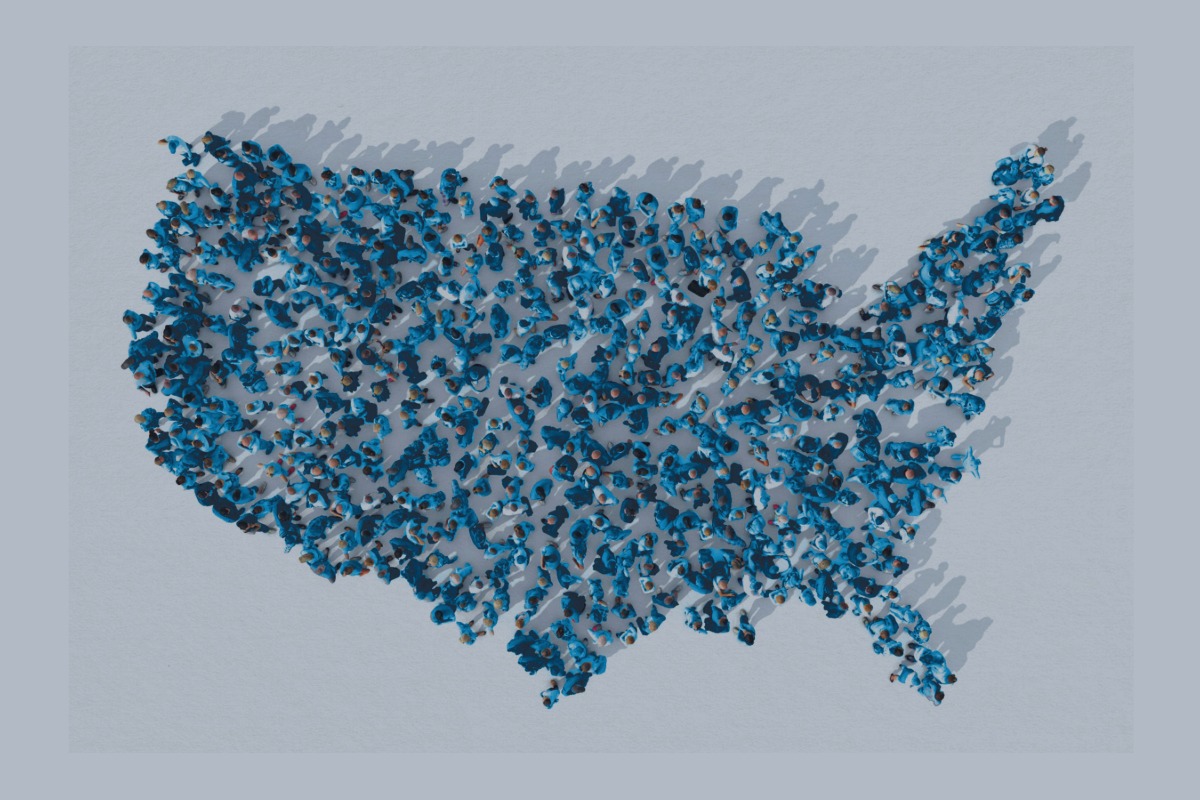
That Vision Thing: Winning with Progressive Economics
On November 3, 2026, the political pendulum swung back in the United States. In a definitive rebuke of Trump and his policies, voters flipped enough seats to give Democrats control of both houses of Congress until the next presidential election. The sort of political realignment that brought Trump to power was driven by what we might call “anger economics”—a deep frustration with an economy that for decades has failed to work for most Americans. The same economic insecurity that gave rise to Trump in 2016 and then again in 2024 is what powered the blue wave in 2026.
But do these election results amount to an endorsement of a Democratic platform and new governing agenda? Not necessarily. The results however, offer the winning party both a mandate and an opportunity to formulate a vision capable of delivering what voters want and to win the next presidential election. We are not interested in predicting that outcome or prescribing a specific political strategy. What we aim to do in this book is provide an anatomy of the long-term trends that turned much of the nation red and brought Trump to power, trace the broken economics behind our broken politics, and make the case that a bold vision based on voter’s economic priorities is a winning message. This analysis could provide the basis for construction of a winning vision for candidates in the 2028 election cycle.
The US candidates who flipped seats in 2026 made direct promises to tackle some of the most antagonizing aspects of a rigged economy (unaffordability, price gouging, corporate power, rising inequality) and to support worker friendly policies (paid leave, wage increases, affordable housing and care, and union support). These proposals—scattered across platforms of newly elected candidates (mostly Democrats)—provide the beginning of a coherent economic vision for economic transformation. Our view is that only an agenda that addresses the real economic challenges facing most Americans can meet voters’ demands for meaningful change.
The midterms also corroborated a central argument in this book — that voters are more progressive than commonly understood and that there are hardly any undecided voters, only disaffected ones. The midterm outcomes were largely driven by opposition to Trump’s policies rather than a vote for the policies promoted by the Democratic party in the past few decades. The voter turnout and election wins by candidates who challenged the Democratic establishment (both in the 2026 primaries and midterms) further reinforce this conclusion.
We provide the framework for an economic agenda that resonates with voters and that would transform the economy. We are calling it a Populist Progressive approach. In recent years, the term populist has been used by elites to denigrate the needs and wants of working class voters and it is also often associated with authoritarian governments. Likewise, the term progressive is used as a pejorative to indicate far left magical thinking—a free pony for every child. We are using these terms differently: populist indicates policy that is targeted to deliver what the voters want. What is wrong with that? This is a democracy. Government’s policy ought to be popular. By progressive we mean that policy should be biased against the inequality that market forces naturally produce. Public policy should offer a hand-up to those who need it most—rather than serving only those who already have it made. Progressive policy must be based on both vision as well as the best available science and reasoning. Populist Progressive Policy is guided by the democratic process to determine what Americans want in order to formulate the policies that can deliver equitable results.
This book is also a cautionary tale – what happens the morning after a sweeping election matters greatly. This is not the first midterm election whose outcome was driven by widespread rejection of an administration’s policies. As we argue, the precarity that so concerns Americans today has developed over many decades regardless of the affiliation of the party taking power–both parties have consistently failed to deliver. The question facing us today is whether policy makers will settle for small measures or will they pursue structural change?
We set out what a comprehensive agenda — and a new social contract — might look like informed by the wishes of voters. Unless this affirmative project is undertaken, American politics will remain trapped in anger economics: with votes oscillating between parties as economic distress continues to decide the next election.
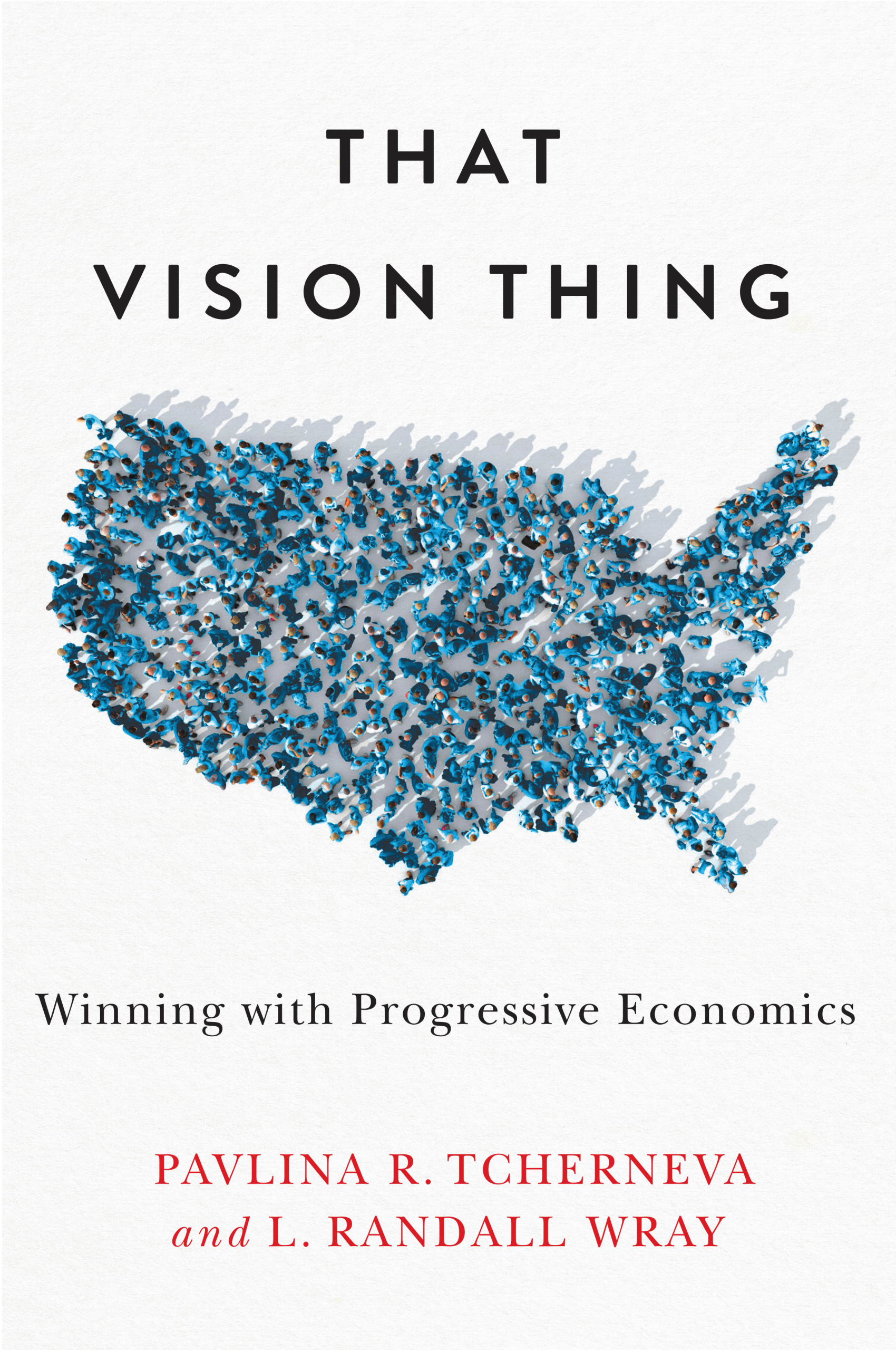
That Vision Thing: Winning with Progressive Economics, by Pavlina Tcherneva and L. Randall Wray, will be available from Polity Books in the UK on April 23, 2027, and in the US on June 29, 2027.